If lower fat is the priority, compare crisps per 100g: Walkers lists 13g fat per 100g for Oven Baked Sea Salt, against 29.5g for Tyrrells Naked and 30.0g for REAL Sea Salt on their manufacturers’ labels. A no-salt crisp is not necessarily lower in fat, and a multipack’s flavour-specific ingredients, allergens and pack format matter when choosing refreshments to sell. Check the organiser’s conditions and ask the relevant local authority about food-business requirements before trading.
Who is choosing these crisps?
Sellers looking for lower-fat refreshments
If fat content drives the choice, use the figure per 100g rather than the brand name or pack size. Walkers lists 13g fat per 100g for Oven Baked Sea Salt and describes it as having 50% less fat than regular potato crisps.
Sellers serving people with different dietary needs
Keep the packaging available so buyers can check the ingredients and allergen statement for the exact flavour. A suitability statement on one crisp does not establish the same status for another flavour or product.
Occasional refreshment sellers
Before buying stock, check whether the organiser permits food sales and ask the relevant local authority what applies to your activity. Food Standards Agency guidance for community and charity events in England, Northern Ireland and Wales says very limited, infrequent activity may be treated differently from food-business trading; Business Companion also notes variation in local car boot conditions.
What should you compare?
Decide whether fat, salt or individual pack format matters most, then compare the exact flavours you intend to sell. Nutrition figures below are manufacturer-stated values per 100g, not figures for every product in a brand’s range.
| Priority | What to check | Your needs |
|---|
| Fat content |
Compare fat per 100g on the exact flavour. Walkers lists 13g for Oven Baked Sea Salt; REAL lists 30.0g for Sea Salt and Seabrook lists 30.4g for Sea Salted. |
I’m choosing crisps with a lower stated fat figure, rather than relying on a smaller packet to make a different product seem comparable. |
| Salt content |
Read salt and fat figures separately. Tyrrells Naked lists 0.06g salt and 29.5g fat per 100g; Walkers Oven Baked Sea Salt lists 0.85g salt and 13g fat per 100g. |
If salt is my priority, I’ll compare salt figures directly. I won’t assume that a no-salt crisp also has less fat. |
| Pack format |
Check whether each portion remains in its own unopened bag. The Walkers Oven Baked Sea Salt listing describes six 22g inner packs; Tyrrells Naked is a 150g bag described as five servings. |
I want individual packs to hand over without dividing a larger bag, while keeping the product’s packaging available for ingredient checks. |
| Flavour and selling conditions |
Check ingredients and allergens for each flavour, then confirm the organiser’s food-sale conditions. Ask the relevant local authority about registration if the nature or regularity of your selling makes its status unclear. |
With mixed flavours and buyers, I need to give accurate product information and know the conditions that apply before I sell refreshments. |
What is easy to overlook?
-
Assuming less salt means less fat
Tyrrells lists 0.06g salt but 29.5g fat per 100g for Naked. Walkers lists 13g fat per 100g for Oven Baked Sea Salt, alongside 0.85g salt.
Choose the nutrient you want to compare, then read fat, saturates and salt per 100g on the exact pack.
-
Choosing a sharing bag for individual sales
Dividing a larger bag separates portions from their original packaging and makes ingredient information harder to keep with the product. Tyrrells Naked is a 150g bag described as five servings, while the Walkers Oven Baked Sea Salt listing describes six 22g inner packs.
If you need individual portions, choose intact inner packs and keep the outer packaging available until they have all been sold.
-
Applying one flavour’s dietary label to a whole range
Walkers says Oven Baked Sea Salt may contain several allergens, while Seabrook labels its Sea Salted product gluten-free and suitable for vegetarians and vegans. Those statements identify particular products, not every flavour either brand makes.
Check each flavour’s own label before describing it as suitable for a dietary requirement.
-
Assuming every car boot sale follows the same conditions
Business Companion says car boot sale requirements can vary with trader status and local authority treatment. Food Standards Agency guidance for community and charity events in England, Northern Ireland and Wales says selling or supplying food may amount to food-business activity, while a local authority may decide registration is unnecessary for very limited, infrequent activity.
Ask the organiser whether food sales are permitted and contact the relevant local authority about the nature of your trading before buying stock.
Relevant brand references
These are comparisons between specific products on their manufacturers’ labels; they are not claims about every crisp made by each brand.
Walkers
Walkers describes Oven Baked Sea Salt as having 50% less fat than regular potato crisps and lists 13g fat per 100g.
- The Oven Baked Sea Salt multipack listing describes six 22g inner packs.
- The Sea Salt product lists 0.85g salt per 100g and may contain milk, wheat, gluten, barley, soya, celery and mustard; check the exact flavour’s label.
Tyrrells
Naked (no salt) is a salt-focused comparison: Tyrrells lists 0.06g salt per 100g for this product.
- Its listed ingredients are potatoes and sunflower oil.
- It lists 29.5g fat per 100g and comes in a 150g bag described as five servings, rather than individual inner packs.
Seabrook
Seabrook labels its Sea Salted flavour gluten-free and suitable for vegetarians and vegans.
- Those suitability statements are specified for the Sea Salted product.
- Sea Salted lists 30.4g fat per 100g; check other flavours separately.
REAL Hand Cooked Crisps
REAL lists potatoes, vegetable oils and sea salt as ingredients for its Sea Salt product.
- The Sea Salt product is stated to be suitable for vegetarians.
- It lists 30.0g fat per 100g, so its label does not provide the same lower-fat comparison as Walkers Oven Baked Sea Salt.
Crisp multipacks on Joybuy
These multipacks offer individual portions for car boot sale refreshments. The Oven Baked choices address the reduced-fat question; the conventional variety packs offer a different choice when lower fat is not the deciding requirement. Compare each flavour’s current label before buying.
 No image available
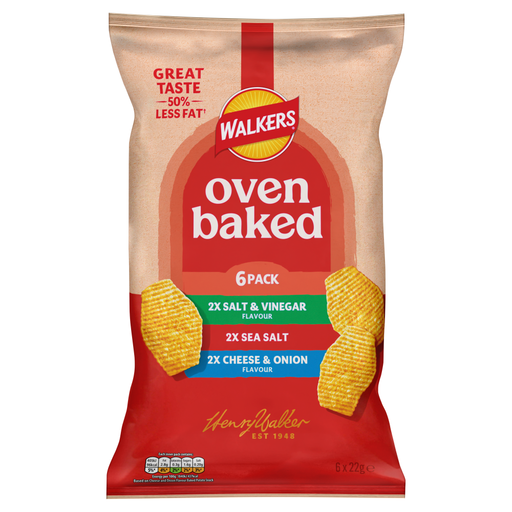
Walkers Oven Baked Variety Pack Crisps 6 x 22g
The six 22g packs provide individual portions for refreshments. Walkers describes this variety pack as having 50% less fat than regular potato crisps; it includes Sea Salt, Cheese & Onion, and Salt & Malt Vinegar flavours. Check each flavour’s ingredients and allergens: the variety-pack information identifies barley, milk and cereals containing gluten among its allergens.
View on Joybuy
 No image available
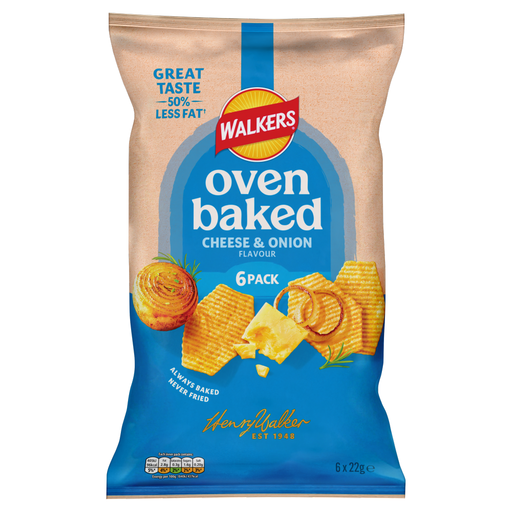
Walkers Oven Baked Cheese & Onion Crisps 6 x 22g
This single-flavour Oven Baked multipack is an option if you want six 22g portions rather than a variety pack. Check the Cheese & Onion pack’s fat and salt figures and its own allergen statement before selecting it for buyers with dietary requirements.
View on Joybuy
 No image available
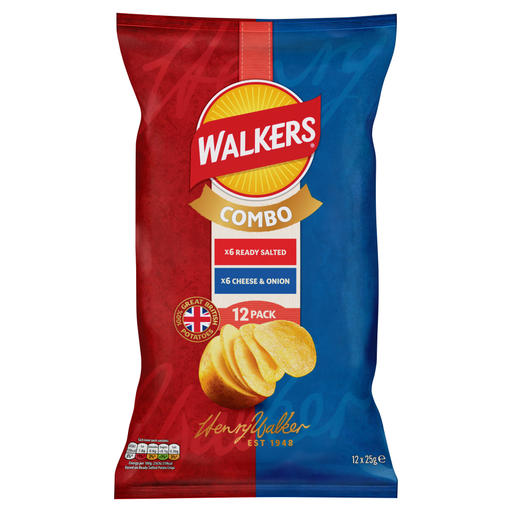
Walkers Ready Salted and Cheese & Onion Crisps 12 x 25g
The 12 x 25g format offers portions in two flavours when a reduced-fat claim is not your selection criterion. Compare each flavour’s nutrition panel with a baked option if fat matters, and check their allergen statements separately.
View on Joybuy
 No image available
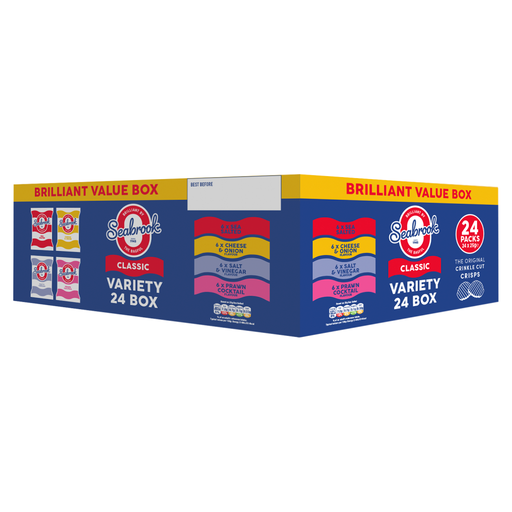
Seabrook Classic Variety Box 24 x 25g
This 24 x 25g variety box offers individual portions when pack format matters more than a reduced-fat claim. Check the nutrition and allergen information for each included flavour; the dietary statements for Seabrook Sea Salted should not be assumed to cover the whole box.
View on Joybuy
Questions before you buy or sell
Does “50% less fat” mean a crisp is low in fat?
No: it describes a comparison, not an automatic low-fat classification. Walkers states that Oven Baked Sea Salt has 50% less fat than regular potato crisps and lists 13g fat per 100g. Use the nutrition panel to compare it with the exact alternative you are considering.
Should I choose no-salt crisps instead of reduced-fat crisps?
Choose according to the nutrient you intend to compare. Tyrrells lists 0.06g salt and 29.5g fat per 100g for Naked; Walkers lists 0.85g salt and 13g fat per 100g for Oven Baked Sea Salt. Check both figures on the packs rather than treating either claim as a substitute for the other.
Why keep crisp packs sealed and the outer packaging available?
Unopened individual packs avoid dividing a larger bag, while the packaging lets buyers check the product name, ingredients and allergen information. Keep the outer pack available when it carries information needed to identify or check the inner portions.
Do I need to register to sell crisps at a car boot sale?
Ask the relevant local authority about your activity rather than assuming one answer applies to every sale. Food Standards Agency guidance for community and charity events in England, Northern Ireland and Wales says people selling or supplying food may be considered food businesses, but a local authority may decide registration is unnecessary when activity is very limited and infrequent. Its registration service says a new food business should register at least 28 days before trading; Business Companion notes that car boot conditions can also vary locally, so check with the organiser.


