What should you check before buying?
Compare fat on a per-100-g basis first, then choose a pack format and check the label information that buyers will need.
| Priority | What to check | Your needs |
|---|
| Reduced-fat claim |
Read the stated comparison and fat per 100 g for the exact product. Walkers UK states 50% less fat than regular potato crisps and 13 g per 100 g for Oven Baked Sea Salt; Marks & Spencer states 30% less fat and 21.3 g per 100 g for Reduced Fat Ready Salted. |
I want a reduced-fat choice whose nutrition I can compare across different packet sizes, rather than relying on a flavour name. |
| Pack format |
Check packet weight, whether portions are individually sealed and the stated servings in a sharing bag. Walkers UK gives values for a 22 g Oven Baked Sea Salt pack; Marks & Spencer lists a 40 g ready-salted pack, while Asda lists five servings for the 150 g Tyrrells Lightly Sea Salted sharing bag. |
For quick individual sales, I would choose sealed packets; for a shared refreshment table, I need to decide how a larger bag will be served. |
| Ingredients and allergens |
Check the current ingredient list and allergen advice for each flavour. Keep the original packet available; a vegan or gluten-free designation does not replace a check of the full label. |
Anyone buying from my stall should be able to inspect the information for the particular snack they receive. |
Which brand examples are useful?
These product-level examples help distinguish stated reduced-fat choices from crisps selected for other reasons; they do not describe every flavour a brand makes.
Walkers
Oven Baked Sea Salt provides a named reduced-fat comparison and nutrition for an individual packet.
- Walkers UK states 50% less fat than regular potato crisps, 13 g fat per 100 g and 2.8 g fat per 22 g pack.
- Check allergen advice on the particular flavour and packet; the Sea Salt information does not establish suitability across the range.
M&S
Reduced Fat Ready Salted is a 40 g packet with a stated reduced-fat comparison.
- Marks & Spencer states 30% less fat, lists 21.3 g fat per 100 g and names potatoes, vegetable oil and sea salt as ingredients.
- Its stated fat per 100 g is higher than the figure Walkers UK gives for Oven Baked Sea Salt. Read the current packet label when buying.
Simply Roasted
A roasted-crisp option to investigate when vegan and gluten-free labelling also matters.
- Simply Roasted describes its crisps as roasted rather than fried, vegan and gluten-free, and claims 50% less fat than an average fried crisp.
- Check the exact packet for fat per 100 g and serving weight before comparing it numerically with the Walkers or M&S examples.
KETTLE Chips
Lightly Salted is a hand-cooked option to assess on its own label, not its salt-related name.
- KETTLE Chips labels Lightly Salted suitable for vegans and vegetarians and lists 29.5 g fat per 100 g.
- “Lightly Salted” does not itself mean reduced fat; check dietary and allergen information on the packet.
Tyrrells
Lightly Sea Salted is a sharing-bag example rather than a stated reduced-fat choice.
- Asda lists a 150 g bag, five servings and 29.3 g fat per 100 g for this product.
- Asda’s product information says it may contain milk. Check the packet if dietary suitability matters.
Seabrook
Sea Salted illustrates why dietary labelling and fat content need separate checks.
- Seabrook labels this product gluten-free and suitable for vegetarians and vegans.
- Seabrook lists 30.4 g fat per 100 g for Sea Salted; do not treat its dietary designations as a reduced-fat claim.
McCoy's
Salted is a further named product to compare using its nutrition panel.
- McCoy's lists nutrition for its Salted flavour, including fat per 100 g.
- That figure is 32 g per 100 g; a reduced-fat requirement calls for checking another specifically labelled product rather than assuming this flavour meets it.
REAL Hand Cooked Crisps
A hand-cooked crisp brand whose exact packet should be assessed if reduced fat is the buying priority.
- REAL describes its crisps as hand cooked.
- Check the chosen flavour’s nutrition panel and any reduced-fat claim rather than inferring one from the cooking description.
Joybuy packs to consider
These individual-packet multipacks include Walkers Oven Baked flavours and other snacks for a car boot sale refreshment selection. Do not assume the Sea Salt nutrition figures above apply to a different flavour or brand; check each pack’s own reduced-fat claim and label.
 No image available
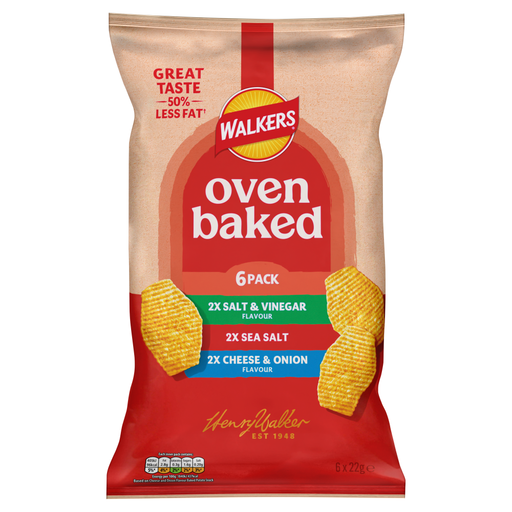
Walkers Oven Baked Variety Pack Crisps, 6 x 22 g
The six 22 g packets offer separate portions for handing out or selling individually. As this is a variety pack, check each flavour’s own nutrition and allergen information before offering it as a reduced-fat choice.
 No image available
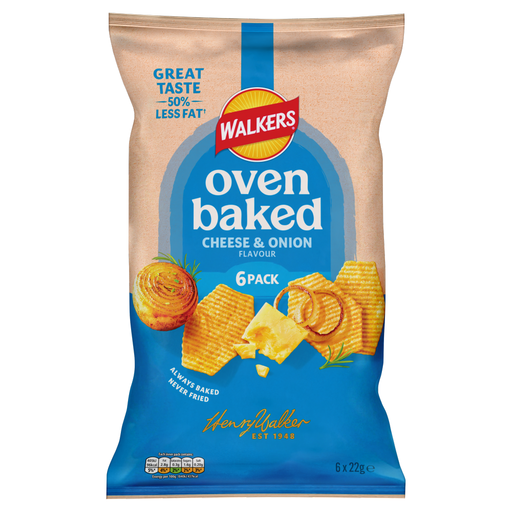
Walkers Oven Baked Cheese & Onion Crisps Flavour, 6 x 22 g
Six 22 g packets provide a single-flavour option for individual handover. Check the Cheese & Onion packet for its own fat value, ingredients and allergen advice rather than using the figures for Oven Baked Sea Salt.
 No image available
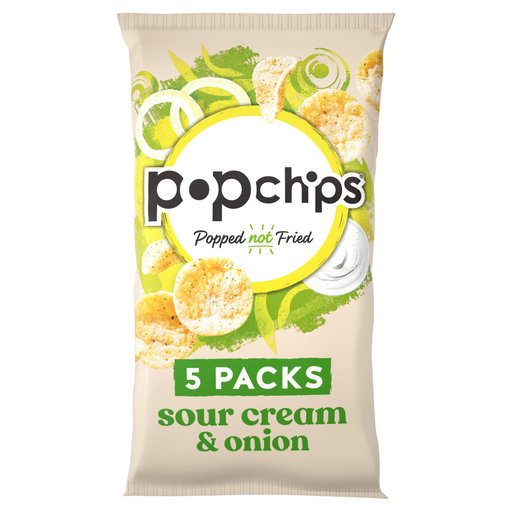
PopChips Sour Cream & Onion, 5 x 17 g
The five 17 g packets are another individual-portion format for refreshments. Check this flavour’s fat per 100 g, any reduced-fat comparison and allergen statement on the pack before choosing it for those requirements.
 No image available
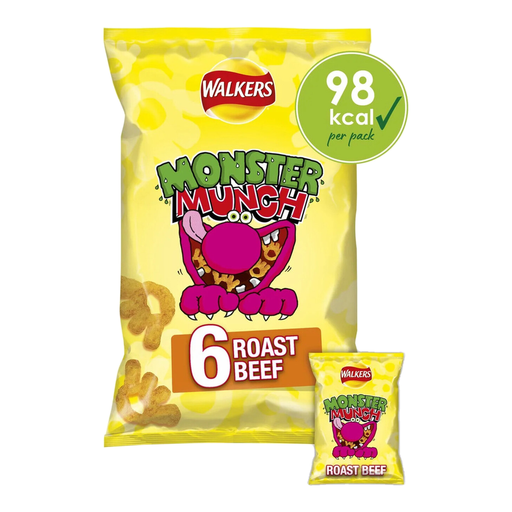
Walkers Monster Munch Roast Beef, 6 x 20 g
Six 20 g packets provide another individually packed snack format. If reduced fat is the deciding requirement, compare this product’s own label with the specifically reduced-fat options rather than relying on its pack format.
 No image available
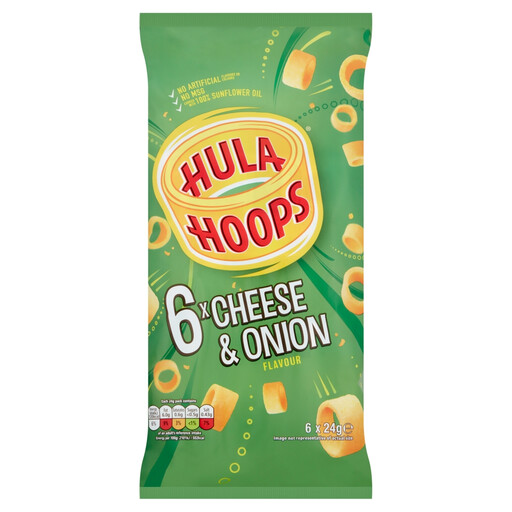
Hula Hoops Cheese & Onion Multipack Crisps, 6 x 24 g
The six 24 g packets suit individual handover. Treat reduced-fat status and dietary suitability as separate label checks for this Cheese & Onion product.
Frequently asked questions
Are “lightly salted” crisps reduced fat?
Not necessarily: the wording describes salt or flavour, not a fat comparison. KETTLE Chips lists 29.5 g fat per 100 g for Lightly Salted and Asda lists 29.3 g per 100 g for Tyrrells Lightly Sea Salted. Check the exact product’s reduced-fat claim and nutrition panel.
Which figures help compare reduced-fat crisps in different packet sizes?
Compare fat per 100 g, then use packet weight to plan portions. Walkers UK lists 13 g fat per 100 g for Oven Baked Sea Salt and gives nutrition for a 22 g pack; Marks & Spencer lists 21.3 g per 100 g for its 40 g Reduced Fat Ready Salted packet. Those figures apply to the named products, not every flavour in their ranges.
Should I divide a sharing bag into portions for sale?
Manufacturer-sealed individual packets keep the product’s ingredient, nutrition and allergen information with each item and avoid the need to portion a sharing bag. If you plan to open bags and prepare portions for direct sale, describe that setup to your local authority before trading so you can check the applicable food-business and labelling requirements.
Do I need to register to sell crisps at a car boot sale?
If your activity is a food business, the Food Standards Agency says you must register with your local authority at least 28 days before trading or food operations begin. Whether a particular occasional sale falls within that requirement depends on the setup, so confirm your plan with the relevant local authority before selling.
Does a vegan or gluten-free label replace an allergen check?
No. Those labels and allergen advice address different information about the exact product. Keep each flavour’s original packet available and read its current ingredients and allergen statement before buying or offering it.


