Late-night crisp eaters comparing fat
If you want a small savoury snack, compare fat per 100g across products and then check how much is in the pack you expect to eat. A reduced-fat claim describes a comparison, not the whole supper.


If you want a small late-night crisp snack with less fat than regular potato crisps, a baked option with a clear comparison claim is worth considering: Walkers says its Oven Baked Sea Salt crisps contain 50% less fat than regular potato crisps and lists 13g fat per 100g. That is not low fat under the NHS guide of 3g or less per 100g, so also compare salt, the portion you will eat and the exact flavour’s ingredients. A reduced-fat pack should not stand in for a more substantial supper if that is what you need.
If you want a small savoury snack, compare fat per 100g across products and then check how much is in the pack you expect to eat. A reduced-fat claim describes a comparison, not the whole supper.
If salt, saturated fat or energy also matters to your choice, read those values on the same pack. A lower-fat option can still have other nutritional trade-offs.
Check the exact flavour’s ingredients, dietary declarations and allergen warnings. A statement about one crisp in a brand’s range does not necessarily apply to another.
Start with fat on a common per-100g basis, then assess the portion you would actually eat and the other information on that pack.
| Priority | What to check | Your needs |
|---|---|---|
| Fat comparison | Compare fat per 100g, fat in your intended portion and the product used as the basis of any reduced-fat claim. The NHS low-fat guide for solid food is 3g fat or less per 100g; a relative reduction is a different measure. | I want to know how much fat is in the crisps I will eat, not rely on a claim on the front of the bag. |
| Salt and energy | Read salt and saturated fat per 100g, then check energy and salt for the portion you intend to eat. Use traffic-light information where it appears on the pack. | I compare salt as well as fat. In a Food Standards Agency and Ipsos Northern Ireland survey of 611 people interviewed from September to November 2024, 49% said they actively used traffic-light labelling when shopping for food. That measures food-label use in Northern Ireland, not demand for reduced-fat crisps. |
| Portion and supper | Check the weight of an individual pack or decide how much to serve from a sharing bag. If you need a more substantial supper, consider what else you will eat. | A defined small pack suits me when I want a crisp snack; a larger bag means deciding on a portion myself. |
| Dietary suitability | Read the current flavour’s ingredients, allergen and “may contain” statements. Check vegetarian, vegan or gluten-free wording on that exact product if you rely on it. | I need the pack I choose to fit my dietary requirements, rather than assuming every flavour in a range is alike. |
A comparison claim does not tell you whether a food meets an absolute low-fat guide. Walkers UK lists 13g fat per 100g for Oven Baked Sea Salt, while the NHS low-fat guide for solid food is 3g or less per 100g.
Use the claim to identify the comparison, then read fat, salt and energy on the nutrition panel for the portion you plan to eat.
The base ingredient does not establish the finished crisp’s fat, salt or sugars. REAL Hand Cooked Crisps lists 28g fat and 26g sugars per 100g for its Veg Crisps.
Compare nutrition values for the exact flavour with the potato crisps you are considering.
Values stated for a manufacturer’s serving may not describe the amount you eat from a larger bag.
Choose an individual pack if a defined portion matters to you, or serve the amount you want from a sharing bag before eating.
Ingredients and cross-contact statements can differ between flavours. Walkers Oven Baked Sea Salt, for example, carries “may contain” warnings for several allergens.
Read the current pack’s ingredient and allergen information before buying or serving it to someone with an allergy.
These examples describe particular crisps and manufacturer-stated figures, not every product made by each brand.
Walkers Oven Baked Sea Salt is a baked crisp with a manufacturer-stated 50% less fat than regular potato crisps.
Tyrrells states that its lentil crisps contain 30% less fat than standard potato crisps on average; this is the manufacturer’s comparison.
KETTLE describes its Lightly Salted crisps as gluten-free and suitable for vegans and vegetarians.
Seabrook describes its Sea Salted crinkle-cut crisps as gluten-free and suitable for vegetarians and vegans.
McCoy’s Salted is a ridged potato crisp option for shoppers choosing that format and flavour.
REAL’s Veg Crisps provide a vegetable-based comparison with potato and lentil crisps.
These options include baked crisp multipacks and other crisp-style snacks in individual packs or sharing bags. Compare the exact flavour’s label and the amount you would eat before choosing on the basis of reduced fat.
 No image available
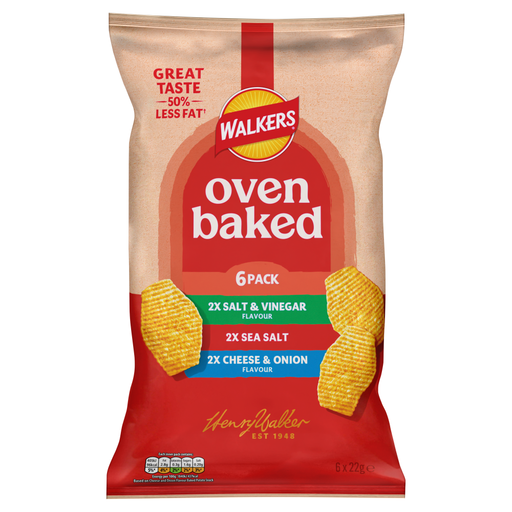
The 6 x 22g format lets you choose one pack for a late-night crisp portion. Check the nutrition and allergen information for each flavour in the variety pack.
 No image available
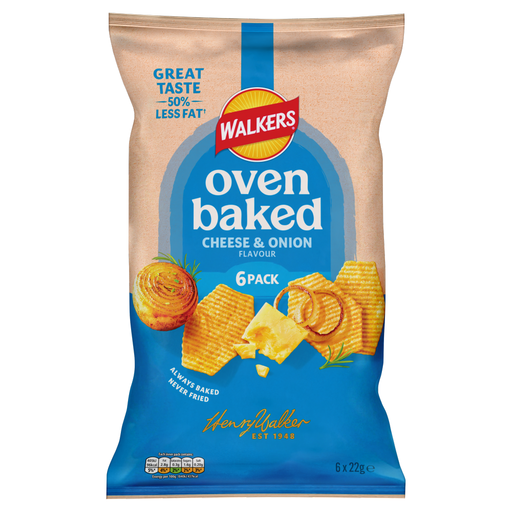
This Cheese & Onion option also comes as six individual 22g packs. Check this flavour’s fat and salt values and read its ingredient and allergen statements, particularly if milk is a concern.
 No image available
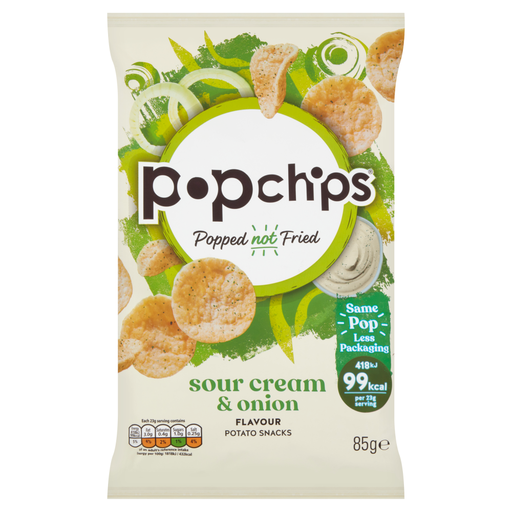
The 85g bag gives you room to choose your own late-night portion rather than taking an individual pack. Compare its fat and salt per 100g and check the flavour’s ingredient and allergen list.
 No image available
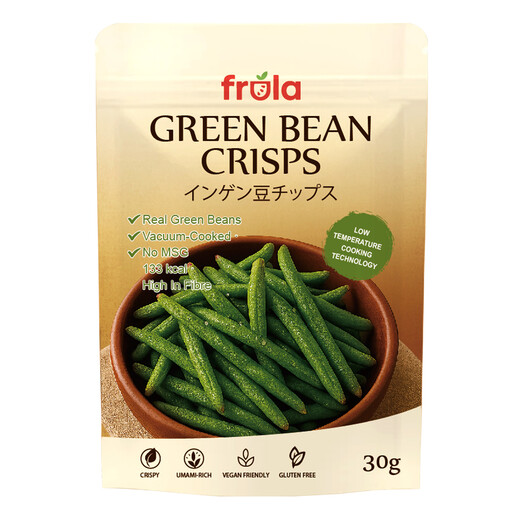
A 30g pack provides a defined portion if you want a vegetable-based crisp snack. Compare fat, salt and sugars per 100g with the other crisps you are considering rather than judging it by its vegetable base.
 No image available
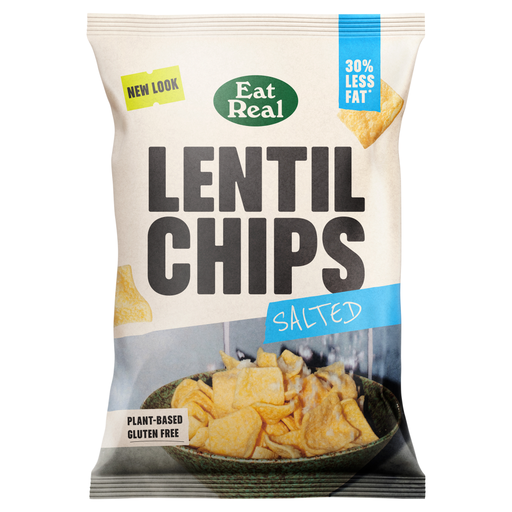
This 95g lentil-based option suits a shopper willing to portion a sharing bag. Compare its fat and salt per 100g with the potato crisps you have in mind, and check the exact pack’s dietary and allergen information.
No. Reduced fat compares one product with another, while the NHS low-fat guide for solid food is 3g fat or less per 100g. Walkers UK lists 13g fat per 100g for Oven Baked Sea Salt despite its manufacturer-stated 50% less-fat comparison with regular potato crisps.
Compare fat, salt and energy per 100g across the crisps you are considering, then check the amount you expect to eat. An individual pack states a defined weight; with a sharing bag, decide on your portion rather than assuming its serving information describes the whole bag.
No. Salt and fat are separate comparisons. Tyrrells lists 0.06g salt but 29.5g fat per 100g for Naked No Salt, so check both values on the product you choose.
A reduced-fat claim describes fat relative to another product; it does not assess the rest of your supper. If you want something more substantial than a crisp snack, plan what else you will eat rather than relying on that claim alone.
Read the current pack for the exact flavour, including its ingredients, dietary declarations and “may contain” wording. For example, Walkers Oven Baked Sea Salt carries possible cross-contact warnings, whereas KETTLE describes its Lightly Salted crisps as gluten-free, vegan and vegetarian; neither statement should be transferred to another flavour.