Home workers comparing fat
If crisps are a side to your desk lunch and you want to stay within the potato-crisp category, compare fat per 100g to distinguish products. Then read the pack figure for the amount you plan to eat.


If reducing fat is your main priority, compare baked potato crisps by their fat content per 100g: Walkers UK lists 13g per 100g for its Oven Baked Sea Salt, Salt & Vinegar and Cheese & Onion flavours. A reduced-fat claim does not mean low fat, and a lower-fat choice is not necessarily lower in salt. Check both nutrients, the amount you expect to eat and the exact flavour’s ingredients before adding a pack to lunch.
The useful comparison depends on whether fat, salt, portion size or the ingredients of a particular flavour determine what you can choose.
If crisps are a side to your desk lunch and you want to stay within the potato-crisp category, compare fat per 100g to distinguish products. Then read the pack figure for the amount you plan to eat.
A reduction in one nutrient does not establish a reduction in the other. Read both figures on the same per-100g basis before deciding between a reduced-fat and a lower-salt crisp.
Ingredients and allergen statements can differ between flavours in the same range. Check the packet for the flavour you intend to eat, alongside any vegetarian, vegan or gluten-free statement you rely on.
Start with the nutrient that matters to your choice, using per-100g figures to compare products. Use the pack information separately to judge the amount you would add to lunch.
| Priority | What to check | Your needs |
|---|---|---|
| Fat content | Compare fat per 100g and the amount in your pack. NHS guidance describes low fat as 3g or less per 100g and high fat as more than 17.5g per 100g; a reduced-fat claim is a different comparison. | I want a potato crisp with less fat than a conventional option, without assuming that a reduced-fat label means low fat. Walkers UK lists 13g fat per 100g for its Oven Baked Sea Salt, Salt & Vinegar and Cheese & Onion flavours. |
| Salt content | Read salt per 100g for the exact flavour, independently of its fat claim. NHS guidance describes more than 1.5g salt per 100g as high and 0.3g or less as low. | Salt matters to my choice too, so I would compare its figure rather than treating baked, reduced-fat or lightly salted as interchangeable descriptions. |
| Pack portion | Check the individual bag or container size and its per-pack nutrition figures. If you eat a different amount, the stated portion may not describe your lunch. | A single pack makes it easier for me to see how much I am adding to lunch; a larger container calls for a closer look at the amount I serve. |
| Ingredients and suitability | Read the ingredients, allergen advice and dietary-suitability statement on the exact flavour. Do not carry a statement over from another flavour in the range. | Before choosing a reduced-fat flavour, I need to know whether its ingredients fit my requirements. Walkers Oven Baked Cheese & Onion contains milk, while its Salt & Vinegar flavour includes barley malt vinegar extract and lactose, according to Walkers UK. |
Walkers UK lists 13g fat per 100g for its Oven Baked flavours. That is above the NHS low-fat criterion of 3g or less per 100g, even though Walkers states that the products have 50% less fat than regular potato crisps.
Compare the exact crisp’s per-100g figure with other products, then check the fat amount for the pack you expect to eat.
The two figures can point in different directions. Tyrrells says its Lentil Crisps have 30% less fat than standard potato crisps on average, while the listed flavours contain 2.0g to 2.1g salt per 100g—above the NHS high-salt threshold of 1.5g per 100g. They are lentil crisps, not potato crisps.
If salt is your main priority, compare salt figures directly rather than using a fat-reduction claim to make the choice.
Walkers UK identifies milk in Oven Baked Cheese & Onion and barley malt vinegar extract and lactose in Oven Baked Salt & Vinegar. A flavour change can therefore affect suitability.
Read the ingredients and allergen advice on each flavour, including any may-contain statement, before choosing a multipack.
The specified KETTLE Lightly Salted, Seabrook Sea Salted and Pipers Anglesey Sea Salt products list 29.5g, 30.4g and 30.7g fat per 100g respectively in their brand information. Those figures do not make them equivalent to the Walkers Oven Baked flavours listed at 13g per 100g.
If reducing fat is decisive, compare the exact products’ nutrition panels rather than relying on a flavour name or cooking-style description.
These references concern particular products and flavours, not every crisp made by each brand. Compare the current pack label for the one you are considering.
Walkers UK states that its Oven Baked Sea Salt, Salt & Vinegar and Cheese & Onion potato crisps have 50% less fat than regular potato crisps; each is listed at 13g fat per 100g.
Tyrrells offers distinct choices: Naked (no salt) potato crisps and Lentil Crisps, which are outside the potato-crisp category.
KETTLE Lightly Salted is a conventional potato crisp labelled gluten-free and suitable for vegans and vegetarians.
Seabrook Sea Salted is a conventional crisp option labelled gluten-free and suitable for vegetarians and vegans.
Pipers Anglesey Sea Salt is a conventional potato crisp labelled gluten-free and suitable for vegetarians and vegans.
These options include Walkers Oven Baked multipacks for a reduced-fat potato-crisp comparison, alongside other potato-based snacks whose pack formats may suit a lunch. A small pack or a familiar crisp shape does not, by itself, establish reduced-fat status.
 No image available
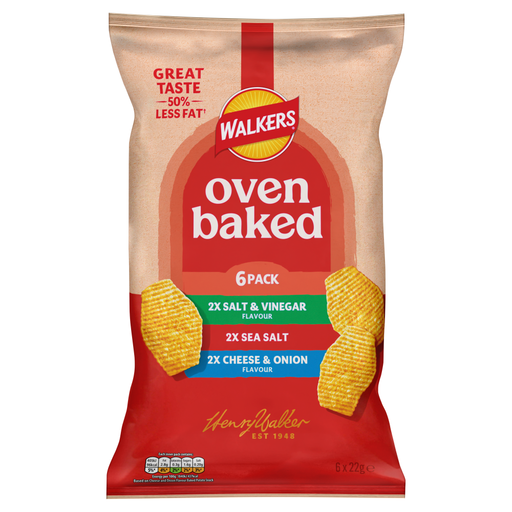
The six individual 22g bags offer a defined amount to add to a home-working lunch. Check the nutrition and allergen information on each flavour in the variety pack rather than assuming every bag has the same ingredients.
 No image available
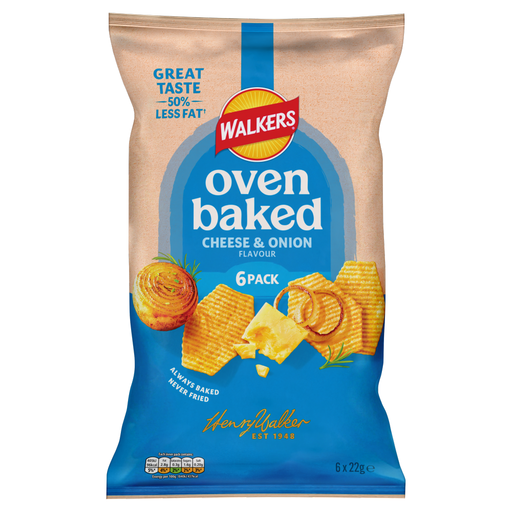
This six-pack provides individual 22g bags for adding one pack to lunch. Walkers UK lists 13g fat and 0.89g salt per 100g for this flavour; it contains milk. At 13g fat per 100g, it does not meet the NHS low-fat criterion.
 No image available
The pack contains three 90g cans in different flavours. If you intend to add less than a can to lunch, decide on the amount you would serve and check each flavour’s nutrition and ingredients separately.
 No image available
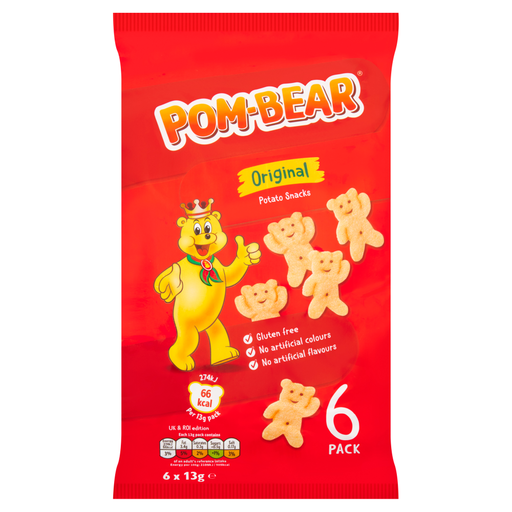
Each of the six 13g packs gives you a defined amount to add to lunch. If reducing fat is the reason for choosing crisps, compare its per-100g fat figure with a reduced-fat potato crisp rather than using the smaller bag size as a substitute for that check.
 No image available
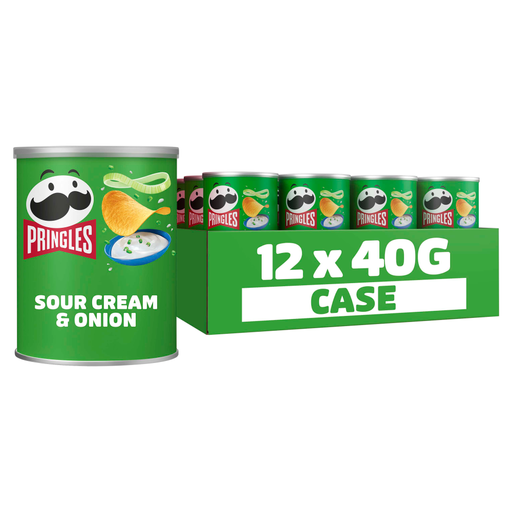
The multipack contains twelve 40g cans, so the container size gives a clear starting point for a lunch portion. Check its per-100g fat and salt figures against the reduced-fat options if those nutrients are driving your choice.
No. NHS guidance distinguishes a reduced-fat claim from a low-fat classification: it describes low fat as 3g or less per 100g. Walkers UK lists 13g fat per 100g for its Oven Baked Sea Salt, Salt & Vinegar and Cheese & Onion flavours, while stating that they have 50% less fat than regular potato crisps.
Use per-100g figures to compare different crisps, then use the pack figures for the amount you expect to eat. NHS guidance notes that a manufacturer’s stated portion may differ from your own, which matters if you eat only part of a container or more than one small bag.
Yes. Tyrrells says its Lentil Crisps have 30% less fat than standard potato crisps on average, but the listed flavours contain 2.0g to 2.1g salt per 100g. That exceeds the NHS high-salt threshold of 1.5g per 100g. They are lentil crisps rather than potato crisps, so compare both the product type and its salt figure.
No. Walkers UK identifies milk in Oven Baked Cheese & Onion, while Oven Baked Salt & Vinegar includes barley malt vinegar extract and lactose. Read the ingredients, allergen advice and any may-contain statement on the exact packet you plan to eat.