Runners wanting a savoury, lower-fat snack
A reduced-fat potato crisp may suit you as an occasional alternative to a regular crisp. Consider the pack as one part of what you plan to eat and drink, rather than a complete training snack.


A reduced-fat potato crisp can be an occasional savoury snack during marathon training, but it should not replace a plan for food and drink on a long run. Walkers UK lists 16 g carbohydrate and 2.8 g fat in a 22 g pack of Oven Baked Sea Salt; World Athletics lists 30–60 g carbohydrate per hour for endurance events lasting 1–2.5 hours, and up to 90 g per hour for events lasting longer than 2.5 hours.
A reduced-fat potato crisp may suit you as an occasional alternative to a regular crisp. Consider the pack as one part of what you plan to eat and drink, rather than a complete training snack.
The carbohydrate in one small crisp pack needs to be considered alongside the duration of your run and the rest of your fuelling plan. A packet also provides no fluid.
The exact flavour and pack matter if you need to check allergens, dietary suitability or salt. A reduced-fat statement answers none of those questions on its own.
Decide when you would eat the crisps, then check both the pack you would carry and the per-100 g figures used to compare products.
| Priority | What to check | Your needs |
|---|---|---|
| Carbohydrate | Read carbohydrate per pack and consider the run’s duration and your other planned food and drinks. Walkers UK lists 16 g in a 22 g Oven Baked Sea Salt pack; World Athletics lists 30–60 g per hour for 1–2.5-hour endurance events and up to 90 g per hour beyond 2.5 hours. | For a long run, I need to know what the whole fuelling plan provides, not assume a crisp packet covers it. |
| Fat | Check fat per pack and per 100 g, including the basis of any reduced-fat claim. Walkers UK says Oven Baked Sea Salt has 50% less fat than regular potato crisps; its 22 g pack contains 2.8 g fat. | I would like a savoury snack with less fat than a regular potato crisp, particularly around a training session. |
| Portion size | Compare products on the same per-100 g basis, then read the values for the pack you would actually eat. Walkers Oven Baked Sea Salt is described per 22 g pack, while KETTLE Chips lists Lightly Salted nutrition per 100 g. | If I carry one small bag, its pack values matter more to my plan than a figure for an amount I will not eat. |
| Salt | Read salt separately from fat and compare the serving size. Walkers UK lists 0.19 g salt per 22 g Oven Baked Sea Salt pack; UK government guidance gives 6 g per day as the adult salt limit, not a race-day sodium prescription. | I want to account for salt in my other food and drinks as well as in the crisps. |
| Ingredients | Check the current flavour’s ingredients, allergy statement and any dietary-suitability label. Do not transfer the details from Sea Salt to another flavour or a variety pack. | Before taking crisps on a key run, I need a flavour whose ingredients suit me and that I have tried in training. |
A 22 g Walkers Oven Baked Sea Salt pack contains 16 g carbohydrate. World Athletics lists 30–60 g per hour for endurance events lasting 1–2.5 hours and up to 90 g per hour for longer events, so that pack alone does not cover those amounts.
Check the carbohydrate in everything you plan to take and plan drinks separately. Try your choices during training before relying on them for an event.
A per-pack figure for a 22 g product and a per-100 g figure for another product describe different quantities. Reading them side by side can mislead you about the difference.
Compare the per-100 g labels first, then look at the nutrients in the pack size you intend to eat.
Fat and salt are separate label values. Walkers UK lists 0.19 g salt in a 22 g Oven Baked Sea Salt pack; that value does not describe every reduced-fat crisp.
Check salt on the exact pack and consider it alongside your other food and drinks, rather than using a fat claim to judge it.
Different flavours can have different ingredients and allergy statements. A reduced-fat claim does not establish whether a particular flavour suits your requirements or preferences during a run.
Read the current pack label and try your chosen snack during ordinary training first.
Walkers Oven Baked Sea Salt is a potato-crisp example for comparing a reduced-fat claim with nutrition per pack.
Tyrrells makes potato crisps, but its cited lower-fat comparison concerns lentil crisps, which are a different type of product.
KETTLE Lightly Salted provides a regular potato-crisp reference when reduced fat is not the deciding requirement.
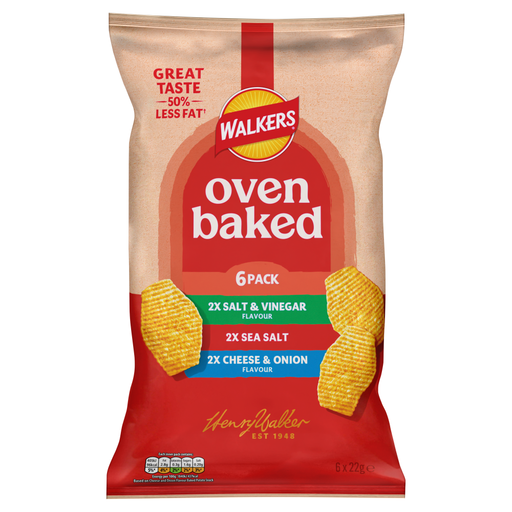
These Walkers Oven Baked multipacks offer individually sized savoury crisps to consider as an occasional snack during marathon training. Check the nutrition and ingredients for each included flavour when deciding where a pack fits alongside your other food and drinks.
 No image available
Six 22 g bags give you individual portions to consider as an occasional savoury snack. Check each included flavour’s nutrition and allergy statement rather than applying the Sea Salt figures to the whole variety pack.
 No image available
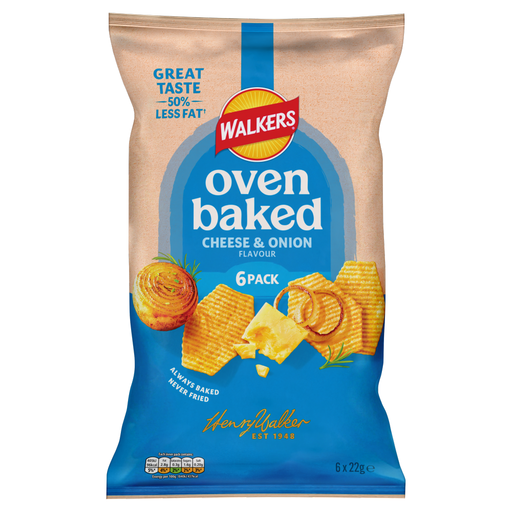
This Cheese & Onion multipack contains six 22 g bags for individual snack portions. Read its own nutrition and allergy information before choosing it for training; the Sea Salt figures describe a different flavour.
A crisp pack can contribute carbohydrate, but it should not be your only planned food or drink for a long run. Walkers UK lists 16 g carbohydrate in a 22 g Oven Baked Sea Salt pack, while World Athletics lists 30–60 g per hour for endurance events lasting 1–2.5 hours and up to 90 g per hour beyond 2.5 hours. Consider the pack alongside the rest of a fuelling and fluid plan you have tried in training.
It may fit as an occasional savoury part of a larger snack, rather than the whole snack. University College London Hospitals NHS Foundation Trust advises including carbohydrate and protein with minimal fat in an exercise snack; check what else you plan to eat and allow for your own tolerance.
No: Walkers UK’s 50% less fat statement compares Oven Baked Sea Salt with regular potato crisps on fat, not salt. The same product lists 0.19 g salt per 22 g pack, so read the salt value separately on the flavour you choose.
Use the food-and-exercise plan agreed with your diabetes team rather than treating a crisp packet or general endurance guidance as a basis for medication adjustments. Check with that team about how a proposed snack fits your individual plan.