Hosts comparing fat content
If you want a familiar crisp for the table while reducing fat relative to conventional potato crisps, compare the stated claim with fat per 100g and the size of each bag.


For a street party where reducing fat is the priority, compare baked and lentil-crisp options by fat per 100g, then choose a pack format that works for serving. Walkers lists 13g fat per 100g for Oven Baked Sea Salt, while Tyrrells lists 19g per 100g for Sour Cream & Onion Lentil Crisps; their different reduced-fat claims do not make either product low fat under the NHS per-100g guide. Check salt and the exact pack’s ingredients and allergen statements before serving guests.
If you want a familiar crisp for the table while reducing fat relative to conventional potato crisps, compare the stated claim with fat per 100g and the size of each bag.
Check each flavour’s ingredients and precautionary allergen statements. A reduced-fat description does not establish whether a crisp meets a guest’s dietary or allergy requirements.
Small bags make the stated per-pack amount visible to guests and keep product information close at hand. Use per-100g figures when comparing different bag sizes.
Compare nutrition on the same per-100g basis first, then check how the packs will be served and whether their ingredients suit your guests.
| Priority | What to check | Your needs |
|---|---|---|
| Fat | Read total fat per 100g and the reference used for any reduced-fat claim. The NHS food-label guide describes 3g or less per 100g as low fat and more than 17.5g as high fat. | I want to compare crisps on the same basis, rather than assuming a smaller bag or a reduced-fat claim means a product is low fat. |
| Salt | Compare salt per 100g alongside fat. The NHS guide describes 0.3g or less per 100g as low salt and more than 1.5g as high salt. | Lower fat is not my only consideration when I put several snacks on the table. |
| Ingredients | Check the exact flavour’s ingredients and precautionary allergen statements, including any milk, gluten-containing cereals, soya, mustard or sulphites declarations. | Guests need to be able to identify what is in each crisp, especially if I serve them outside their original packs. |
| Pack format | Check the net weight and any stated serving size. Use per-pack figures to plan portions, not to compare products with different pack weights. | Individual bags would keep labels with each portion; for a sharing bag, I can retain its packaging beside the serving bowl. |
A reduced-fat claim compares a product with a reference food. Walkers lists 13g fat per 100g for Oven Baked Sea Salt, above the NHS low-fat guide of 3g or less per 100g.
Use the claim as a starting point, then compare the shortlisted products’ total fat per 100g.
A 17g bag and an 80g sharing bag contain different amounts of food, so their per-pack figures do not provide a like-for-like nutrition comparison.
Compare per 100g first; use bag size to decide how you will serve the crisps.
Seabrook lists 30.4g fat per 100g for Sea Salted potato crisps, and REAL lists 30.0g per 100g for Sea Salt. Dietary descriptions and fat content answer different questions.
Check both the dietary declaration and the nutrition panel on the exact product.
Some of the Walkers, Tyrrells and Seabrook products discussed here contain or may contain allergens. Guests cannot check those statements from an unlabelled bowl.
Keep each original pack available or place its label beside its bowl, and avoid mixing products when guests need to identify ingredients.
These figures describe particular products, not every crisp made by each brand.
Oven Baked Sea Salt is a baked potato-crisp reference sold in 22g portions.
Sour Cream & Onion Lentil Crisps offer a lentil-based sharing-bag format.
The product type matters: Sour Cream & Chive Lentil Hoops are baked snacks in 17g bags, while Sea Salted is a potato crisp.
Salted Flavour is a ridged potato-crisp reference rather than a reduced-fat example.
Sea Salt is a hand-cooked potato crisp listed by REAL as suitable for vegetarians and vegans.
These are individually packed crisp options and a lentil-chip sharing bag to consider for a street-party table. Check each exact flavour’s nutrition and allergen label against your priorities.
 No image available
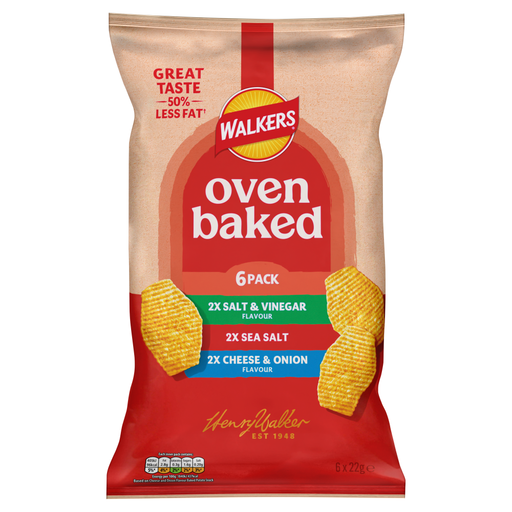
Six 22g bags offer individual portions for a street-party table. Check the nutrition and allergen information for each flavour in the variety pack.
 No image available
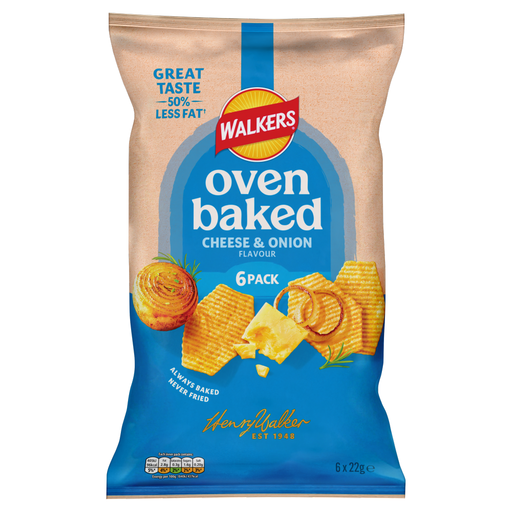
Six 22g bags provide a single-flavour, individually packed option. Check this Cheese & Onion variant’s fat, salt and allergen declarations rather than applying figures from another flavour.
 No image available
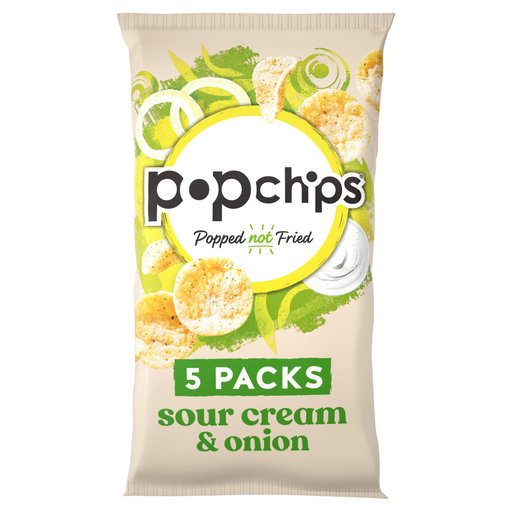
Five 17g bags are another individual-pack format. Compare the exact product’s fat and salt per 100g with other options, and check its milk and precautionary allergen statements before serving.
 No image available
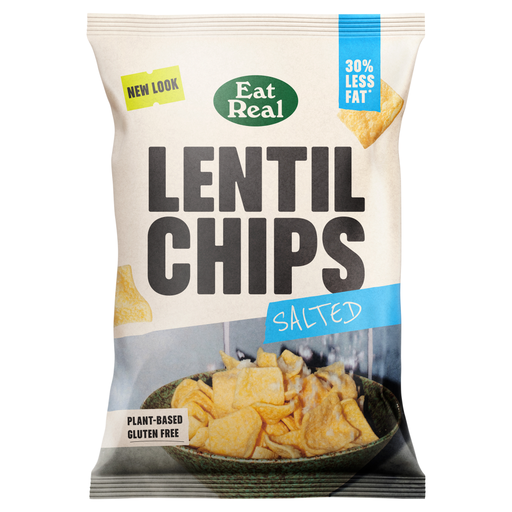
This 95g lentil-chip bag offers a sharing format rather than individual portions. Lentils alone do not establish a reduced-fat claim or dietary suitability: check the exact pack’s fat, salt, ingredients and allergen statements.
No. A reduced-fat claim compares a product with a stated reference food. The NHS food-label guide describes 3g fat or less per 100g as low fat; Walkers Oven Baked Sea Salt lists 13g per 100g despite its 50%-less-fat claim against regular potato crisps.
Compare the nutrition figures per 100g first, then use the net weight and any per-pack figures to plan serving. A manufacturer’s stated portion may differ from the amount a guest eats.
Check the ingredients and precautionary allergen statements for each exact flavour, and keep its original pack available beside the bowl. Some crisps discussed here contain or may contain milk, gluten-containing cereals, soya, mustard or sulphites; reduced-fat and dietary descriptions do not replace an allergen check.
The Department of Health & Social Care’s England guidance concerns restrictions on specified promotions by businesses operating in and selling to England, not a ban on purchases by private hosts. Its location restrictions took effect on 1 October 2022 and its volume-price-promotion restrictions on 1 October 2025; whether a particular product falls within those rules depends on the applicable criteria.