Late-night snackers comparing fat and energy
If you have a particular fat or energy figure in mind, compare nutrition per 100g and for the amount you expect to serve. A ‘light’ name alone does not tell you either figure.


Choose by the amount you expect to eat, not the word ‘light’ alone. M&S Low Fat Birthday Cake Ice Cream lists 1.1g fat and 18.1g sugars per 100g; Wall's Soft Scoop Vanilla Light offers a larger, 1.8L sharing tub with a manufacturer claim of 30% less fat than similar ice creams. If a whole-tub energy figure matters more, Halo Top Golden Blondie lists 380kcal for its 460ml tub, alongside 37g sugars for that amount.
If you have a particular fat or energy figure in mind, compare nutrition per 100g and for the amount you expect to serve. A ‘light’ name alone does not tell you either figure.
A larger tub may suit several servings. Check its size and the nutrition for each portion rather than treating the whole pack as a single snack.
Check the ingredient list and allergen declaration on the exact pack before serving it to anyone with a dietary exclusion. Do not use a lower-fat description as a substitute for those checks.
Start with the figure that matters for your planned portion, then check the other nutrition values and the pack instructions.
Consider it: M&S Low Fat Birthday Cake Ice Cream is a 234g tub listing 1.1g fat per 100g.
Check alongside it: M&S also lists 18.1g sugars per 100g, so the fat figure does not describe the whole nutrition panel.
Consider it: Tesco and Asda list Wall's Soft Scoop Vanilla Light as a 1.8L tub for a household serving several portions.
Check alongside it: Wall's claims 30% less fat than similar ice creams, while the listed nutrition is 4.3g fat per 100g.
Consider it: Tesco and Joybuy list 380kcal for a whole 460ml tub of Halo Top Golden Blondie.
Check alongside it: The same tub lists 14g fat and 37g sugars; its whole-tub energy figure does not establish that it is low in fat.
| Priority | What to check | Your needs |
|---|---|---|
| Fat claims | Compare fat per 100g and read whether the claim says ‘low fat’ or makes a comparison with other products. The nutrition-claims annex published on legislation.gov.uk describes no more than 3g fat per 100g as the low-fat threshold for solid foods. | I want to check the label rather than rely on ‘light’ wording. In the Food Standards Agency and Ipsos Northern Ireland survey of 611 adults interviewed in Northern Ireland from 16 September to 23 November 2024, 49% said they actively used traffic-light labelling when shopping for food; that is not a frozen-dessert-specific figure. |
| Portion and energy | Compare energy per 100g, then use the stated serving or whole-tub figure only if it matches the amount you plan to eat. Check pack size when comparing tubs. | For one scoop, I need the figure for that portion; if I expect to eat a small tub, the whole-tub figure is more useful. |
| Sugars and saturates | Read sugars and saturates separately from total fat. Compare products using the same unit, then consider the amount served. | A lower-fat description does not settle what I think about the other values on the nutrition panel. |
| Ingredients and storage | Read the current pack’s ingredient and allergen declaration. Follow its frozen-storage and thawing instructions. | Before sharing a tub, I need to know whether its ingredients suit everyone eating it and how to keep it until serving. |
A comparison with another ice cream does not, by itself, tell you the product’s fat content per 100g. Tesco and Asda list Wall's Soft Scoop Vanilla Light at 4.3g fat per 100g alongside its manufacturer’s 30%-less-fat claim.
Compare the per-100g fat figure and the wording of the claim, then check energy, sugars and saturates for your planned portion.
A fat or energy figure cannot tell you whether a product meets someone’s ingredient or allergen requirements.
Read the declaration on the current pack of the exact flavour and variant before serving it.
These examples show where to compare particular products and labels; a retailer category is not itself a nutrition claim about every item in it.
M&S lists a 234g Low Fat Birthday Cake Ice Cream tub.
Tesco lists both Wall's Soft Scoop Vanilla Light and Halo Top Golden Blondie.
Waitrose groups products including Carte D'Or Vanilla Light and Halo Top Gooey Brownie with other frozen desserts.
Sainsbury's lists light-labelled vanilla tubs alongside other ice creams.
Asda lists Wall's Soft Scoop Vanilla Light as a 1.8L frozen dessert.
Sainsbury's lists Häagen-Dazs tubs within its wider ice-cream selection.
These Halo Top 460ml tubs are options to consider if you want to check nutrition for a planned tub-sized snack. Their inclusion does not establish that either is reduced-fat; compare the current label if fat is your main criterion.
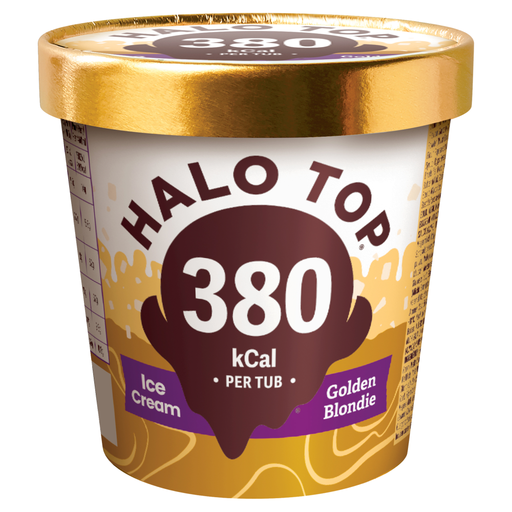 Image unavailable
If you might eat the whole tub, Joybuy lists 380kcal and 37g sugars per 460ml. It also lists 5.5g fat per 100g, so check the current pack rather than treating the whole-tub energy figure as a reduced-fat claim.
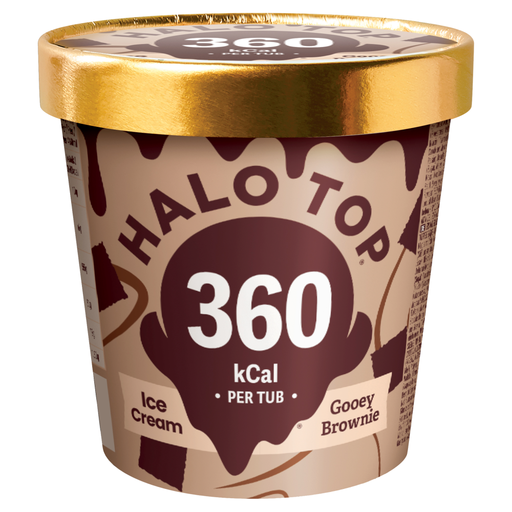 Image unavailable
For this 460ml tub, compare the current pack’s per-100g figures with the amount you expect to eat. Check fat, sugars, ingredients and allergens independently of the product name.
No: one states a fat level, while the other compares fat with another product. The nutrition-claims annex published on legislation.gov.uk describes no more than 3g fat per 100g for a low-fat claim on solid foods. Tesco and Asda list Wall's Soft Scoop Vanilla Light at 4.3g fat per 100g alongside its manufacturer’s claim of 30% less fat than similar ice creams.
Check energy, sugars and saturates for the amount you expect to eat. M&S lists 18.1g sugars per 100g for its Low Fat Birthday Cake Ice Cream, while Tesco and Joybuy list 380kcal and 37g sugars for a whole 460ml Halo Top Golden Blondie tub.
Follow the instructions on its current pack. M&S and Joybuy list frozen storage at or below −18°C for the referenced M&S and Halo Top Golden Blondie products, and say not to refreeze them once thawed; check the pack for its best-before information too.