TV diners watching fat content
If you want a small sweet accompaniment with your meal, compare fat and sugars separately: a low fat figure does not tell you the sugar content.


For a TV-dinner accompaniment, compare dried fruit by fat and sugars on the same per-100g basis rather than relying on a reduced-fat claim. Whitworths Favourites Prunes list 0.4g fat and 34.0g sugars per 100g, while Sainsbury's Mixed Dried Fruit lists 0.7g fat and 67.7g sugars per 100g. Check the ingredients and your serving size too; the NHS counts 30g of dried fruit as one 5 A Day portion and advises eating it with a meal.
If you want a small sweet accompaniment with your meal, compare fat and sugars separately: a low fat figure does not tell you the sugar content.
Use the per-100g figures to compare packs, then look at the amount you plan to serve and read the ingredients.
Check the current pack for sulphites, other allergen statements, candied peel, syrups and preservatives before serving.
Start with comparable nutrition figures, then check the portion you will serve and the ingredients in that particular pack.
| Priority | What to check | Your needs |
|---|---|---|
| Fat and sugars | Compare both figures per 100g, then read the per-serving figures for the amount you intend to eat. For example, Whitworths Favourites Prunes list 0.4g fat and 34.0g sugars per 100g; Sainsbury's Mixed Dried Fruit lists 0.7g fat and 67.7g sugars per 100g. | I want a low-fat accompaniment without assuming it is also low in sugars. In the Food Standards Agency and Ipsos Making Food Better Tracker interviews conducted in 2024, 49% of 611 respondents said they actively use traffic-light labelling when shopping for food; that figure concerns food shopping generally, not dried-fruit preferences. |
| Serving size | Check the pack size and any individual portion weight. The NHS counts 30g of dried fruit as one 5 A Day portion and advises having dried fruit at mealtimes. | A small box gives me a defined amount, or I can put a measured portion from a larger bag in a bowl with dinner. |
| Ingredients and allergens | Read the current ingredient and allergen statements for sulphites, candied peel, syrup, oils and preservatives. Check whether a statement applies to the exact pack you are buying. | What is in the pack matters to me as much as the fruit named on the front, particularly if someone at the table has an allergy or ingredient restriction. |
Whitworths Favourites Prunes list 34.0g sugars per 100g, while Sainsbury's Mixed Dried Fruit lists 67.7g and M&S Dried Pineapple lists 73.2g per 100g. A low fat figure does not settle the sugar comparison.
Compare fat and sugars on the same per-100g basis, then check the figures for the portion you intend to serve.
Some mixed products include candied peel, syrup, oils or preservatives. Their ingredients differ from those of a single-fruit product.
Read the ingredient list on the exact pack, including its allergen declarations, before choosing for the household.
A large bag makes it harder to keep track of the amount served. The NHS counts 30g of dried fruit as one 5 A Day portion and advises eating it at mealtimes rather than between meals to reduce tooth-decay risk.
Put the amount you plan to eat in a bowl with dinner and close the bag before watching.
Ingredients, nutrition and allergen information can change between listings and packs.
Check the pack you receive, especially where sulphites, other allergens or added ingredients affect your choice.
These examples show why the details of a particular dried-fruit product matter more than a brand name alone.
The range includes prunes, raisins and mixed fruit.
Its own-label examples include mini raisin boxes and a larger mixed-fruit bag.
Tesco Everyday Value Dried Mixed Fruit is an example of a mixed-fruit option.
The cited range includes mixed dried fruit, Orchard Fruits Medley and dried pineapple.
These prune and raisin packs offer different ways to serve dried fruit with a TV dinner, from individual boxes or wrappings to larger packs you can portion yourself. Compare the current nutrition and ingredient labels before choosing.
 No image available
Individually wrapped prunes let you take out a few pieces to serve with dinner. Check their weight against your intended portion, and use the nutrition and ingredient panels to assess sugars and additives rather than relying on wording on the front of the pack.
 No image available
Each of the twelve 14g boxes gives you a defined amount to serve with a meal. Check sugars per box as well as per 100g when comparing these raisins with a larger pack.
 No image available
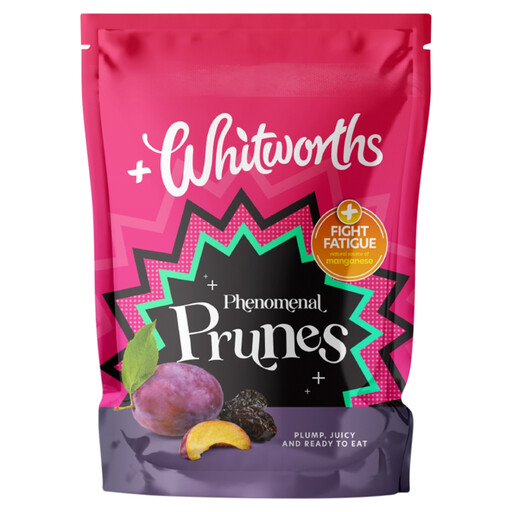
Set aside a measured amount from this snacking-prune pack to serve with dinner. Read its own nutrition and preservative information; figures for Whitworths Favourites Prunes describe a different product.
 No image available
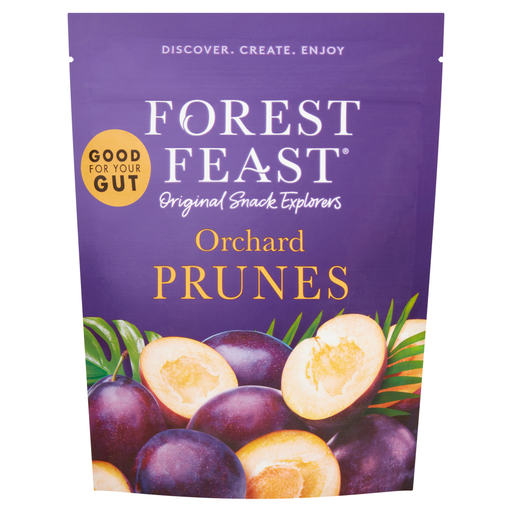
For a serving alongside dinner, portion these prunes from the 200g pack before sitting down. Compare the pack's sugars and ingredients with other prune options.
 No image available
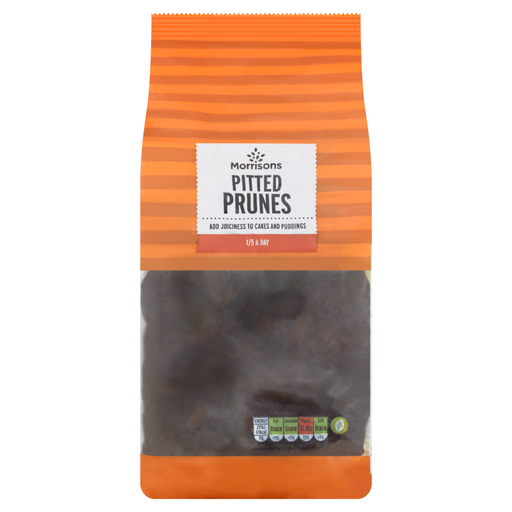
The 500g pack can be divided into smaller servings for dinner rather than eaten from throughout the programme. Check its current nutrition and ingredient labels when comparing it with the other prunes.
Not necessarily for this TV-dinner choice. Whitworths Favourites Prunes list 0.4g fat per 100g and Sainsbury's Mixed Dried Fruit lists 0.7g per 100g, but their sugars differ: 34.0g and 67.7g per 100g respectively. Compare both figures and the ingredients on the packs you are considering.
The NHS counts 30g of dried fruit as one 5 A Day portion and advises having dried fruit at mealtimes rather than between meals to reduce tooth-decay risk. If you are using a larger bag, measure out the amount you intend to serve instead of eating directly from it.
No. M&S describes its Dried Pineapple as having no added sugars, while its nutrition information lists 73.2g total sugars per 100g. Check the sugars figure separately from any statement about added sugar.
Read the current pack's ingredient, allergen and suitability statements before serving. M&S Orchard Fruits Medley, for example, lists sulphur dioxide and states that it is not suitable for people with nut, peanut or sesame allergies; that statement applies to the medley, not every dried-fruit pack.
Follow the instructions for the particular pack. Tesco advises keeping its Everyday Value Dried Mixed Fruit in an airtight container after opening, while M&S gives a three-day after-opening instruction for Orchard Fruits Medley.