Relevant brand examples
These product lines illustrate different label choices; a brand name alone does not establish fat content, salt content or suitability for weaning.
Tesco
Tesco’s Reduced Fat Smooth Peanut Butter illustrates a retailer-relative reduced-fat claim for an adult shopper.
- Tesco states 30% less fat than Tesco smooth peanut butter and lists 35.1g fat per 100g.
- Its ingredients include 67% roasted peanuts, dried glucose syrup, maltodextrin, palm oil and salt; it is not a 100% peanut butter.
KP
KP Unsalted Peanuts illustrate a whole-nut option when an adult shopper is comparing salt rather than looking for reduced fat.
- Tesco lists less than 0.01g salt per 30g serving for KP Unsalted Peanuts.
- The same serving lists 15g fat. Whole peanuts are not suitable for children under 5 because of choking risk, according to the NHS.
Nuts About Nature
Its 100% smooth peanut butter illustrates the short-ingredient route rather than the reduced-fat route.
- Tesco lists peanuts as the sole ingredient and 0.00g salt per 100g for the smooth product.
- The product lists 48g fat per 100g. For a baby, nut butter must be spread onto or mixed into other food, not served on its own.
M&S
M&S lists both a standard smooth peanut butter and a separate 100% crunchy peanut butter.
- Marks & Spencer lists 90% peanuts, 53.8g fat and 0.70g salt per 100g for its standard smooth product.
- Its 100% crunchy line is a different product. Do not use whole or large nut pieces as a baby or young-child snack; the NHS warns against whole nuts for children under 5.
Joybuy product options
These options cover smooth peanut butter for household use and unsalted whole peanuts for an adult snack. Compare each pack’s ingredients and nutrition information if reducing total fat is your priority; a smooth or unsalted name is not a reduced-fat claim.
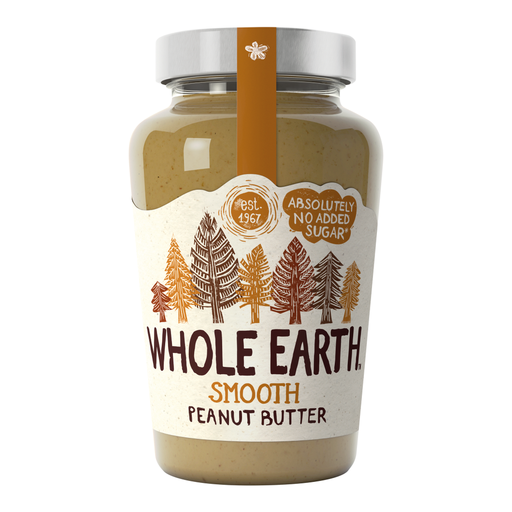 Image unavailable
Whole Earth Smooth Peanut Butter 454g
A smooth peanut butter for household use. If preparing it for a baby from around the start of weaning, follow NHS guidance to spread it onto or mix it into other food, not serve it on its own. Check the pack’s ingredients and nutrition panel if fat or salt content matters to your choice.
View on Joybuy
 Image unavailable
Morrisons Smooth Peanut Butter 1kg
A 1kg smooth peanut butter for household use. Smooth nut butter can be used in weaning food when spread onto or mixed into another food; the NHS advises against giving it on its own. Check the exact pack for ingredients, allergens and nutrition.
View on Joybuy
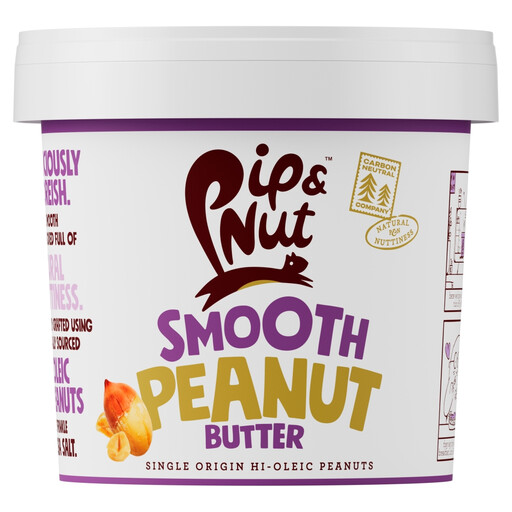 Image unavailable
Pip & Nut Smooth Peanut Butter 1 kg
A smooth peanut butter for an adult spread or for preparation with other food during weaning. Read the pack’s salt and fat figures rather than assuming that a smooth texture indicates a particular recipe. Do not offer nut butter to a baby on its own, according to the NHS.
View on Joybuy
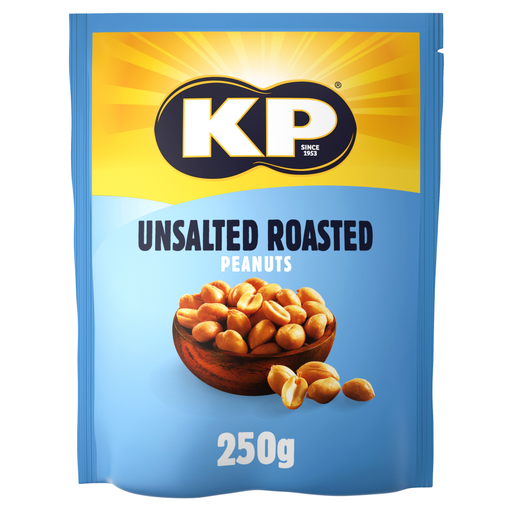 Image unavailable
KP Snacks Unsalted Roasted Peanuts 250g
An unsalted whole-peanut option for an adult snack, not a reduced-fat or weaning option. Tesco lists less than 0.01g salt and 15g fat per 30g serving for KP Unsalted Peanuts. The NHS says whole nuts must not be given to children under 5 because they can choke.
View on Joybuy
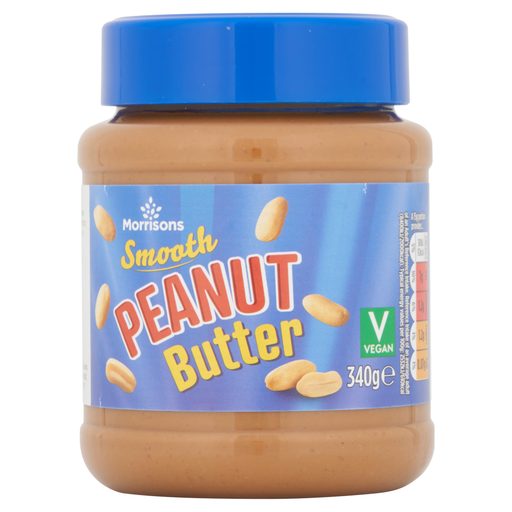 Image unavailable
Morrisons Smooth Peanut Butter 340g
A 340g smooth peanut butter for household use. If choosing it for weaning preparation, spread it thinly onto or mix it into other food rather than offering it by itself, in line with NHS guidance. Check the pack’s ingredients, allergens and nutrition before serving.
View on Joybuy
Questions about nuts and weaning
Can I give whole peanuts or other whole nuts to my baby?
No. The NHS says whole nuts should not be given to children under 5 because they can choke. From around the start of weaning, nuts can instead be crushed or ground and added to food; offer nut butter spread onto another food, not on its own.
When can I introduce peanut during weaning?
NHS guidance says foods that can trigger allergic reactions, including peanuts served finely ground or as nut butter, can be introduced from around 6 months. Introduce such foods one at a time and in small amounts; once a food is tolerated, the NHS advises continuing to offer it as part of the baby’s usual diet.
Does unsalted peanut butter or an unsalted nut snack contain less fat?
“Unsalted” describes salt, not fat. For example, Tesco lists 15g fat per 30g serving for KP Unsalted Peanuts, while its listing for Nuts About Nature 100% smooth peanut butter gives 48g fat per 100g. Use the same measurement basis when comparing products and check the pack you intend to buy.
Is “may contain” the same as listing an allergen as an ingredient?
No. The Food Standards Agency describes “may contain” as precautionary information about an allergen that could be unintentionally present; an ingredient declaration identifies what is used in the product. Check both parts of the current pack when allergen information matters.


