For half-term snacks, do not treat “unsalted” or “dry roasted” as a reduced-fat label: Tesco’s unsalted mixed nuts list 55g fat per 100g, while KP dry-roasted peanuts list 48g per 100g. Choose the format for the child’s age first—NHS guidance says not to give whole nuts or peanuts to under-5s—then compare portions, salt, ingredients and allergens on the pack.
Who is choosing the snack?
Parents choosing snacks for children aged 5 and over
If you are comparing plain nuts with salted or dry-roasted peanuts, check the stated portion as well as fat and salt. Tesco’s unsalted mixed nuts, for example, list less than 0.01g salt but 13.8g fat in a 25g portion.
Parents and carers of children under 5
Texture comes before a reduced-fat claim. NHS guidance says not to give whole nuts or peanuts to children under 5 because they can choke; crushed or ground nuts mixed into food are a different format.
Families packing snacks for a school or club
Check the setting’s allergy policy before packing nuts, and read the current pack for named allergens and advisory statements. A prepacked snack does not remove the need to consider other children’s allergies.
What should you check before choosing?
Start with age and the place where the snack will be eaten, then compare nutrition on the same per-100g and stated-serving basis.
| Priority | What to check | Your needs |
|---|
| Fat and salt |
Compare fat and salt per 100g, then check the stated serving and any traffic-light labels. “Unsalted” describes salt, not fat content; dry roasting is not a low-fat claim. |
I want to see what changes when I choose a different flavour or format, rather than rely on the name. In the Food Standards Agency and Ipsos Northern Ireland’s survey of 611 people interviewed from September to November 2024, 49% said they actively used traffic-light labels when shopping for food; that figure is not specific to nuts. |
| Age and texture |
Identify whether the snack contains whole nuts or peanuts. NHS guidance says not to give these to under-5s; crushed or ground nuts mixed into food are an alternative format where appropriate. |
For a younger child, I need to settle the texture question before comparing nutrition labels. |
| Allergens and setting |
Read the current ingredients and “may contain” statements. Ask the school, club or childcare provider about its allergy policy before packing a nut snack. |
If the snack is leaving home, I need to know whether nuts are allowed there and which allergens the pack identifies. |
| Serving and pack |
Check the maker’s serving size against the amount you plan to offer. If choosing a sharing bag, portion the snack into a bowl or container first. |
A large bag is convenient to buy, but I want to decide the serving before opening it. |
Common mistakes to avoid
-
Reading “unsalted” or “dry roasted” as “reduced fat”
Tesco’s unsalted mixed nuts list 55g fat per 100g, and KP dry-roasted peanuts list 48g per 100g. The descriptions tell you about seasoning or preparation, not that either product is low in fat.
Compare fat and salt per 100g and per stated serving; use an unsalted label to guide the salt check, not to settle the fat comparison.
-
Offering whole nuts to a child under 5
Whole nuts and peanuts present a choking risk for this age group, according to the NHS.
Do not serve whole nuts or peanuts to under-5s. Where nuts are appropriate, the NHS describes crushed or ground nuts mixed into food; nut butter should be spread onto food rather than given on its own.
-
Assuming a prepacked snack is suitable for every setting
A sealed pack can still contain allergens relevant to another child. England’s Department for Education says schools must have arrangements to reduce contact with pupils’ known allergens.
Ask the school, club or childcare provider about its policy, and check the current pack’s ingredients and allergen statements.
-
Using the bag as the serving
Pack size and stated serving size are different: Tesco lists nutrition for a 25g portion of its 200g unsalted mixed nuts, including 158kcal and 13.8g fat.
Check the serving on the label and put the amount you intend to offer into a separate bowl or container.
Brand and retailer references
These examples show why the product label matters more than a brand name when comparing half-term snacks.
Tesco
Tesco’s unsalted mixed-nut example provides a direct comparison between salt and fat.
- Tesco Groceries lists less than 0.01g salt in a 25g portion.
- The same portion lists 13.8g fat, and the pack warns that small children can choke on nuts.
KP
KP’s salted and dry-roasted peanuts illustrate two seasoned formats.
- KP lists peanuts, sunflower oil and salt as the ingredients in its Original Salted Peanuts.
- KP lists 51g fat and 1.3g salt per 100g for that product; Tesco lists 14g fat and 0.48g salt per 30g serving of KP Dry Roasted Peanuts.
M&S
M&S cashews are another example for comparing fat and salt separately.
- Marks & Spencer lists 0.05g salt per 100g for its 70g cashew pack.
- It also lists 47.2g fat per 100g and identifies nut and peanut allergy restrictions.
Sainsbury's
Sainsbury's listing for KP Dry Roasted Peanuts gives serving-level nutrition and a child-safety warning.
- The listed 30g serving contains 14g fat and 0.48g salt.
- The listing warns that small children can choke on peanuts; check the current pack for ingredients and nutrition.
Planters
Planters Protein Nuts Mix is a peanut, almond and cashew mix listed by Tesco Groceries.
- Tesco lists nutrition for a 30g serving, making portion-level comparison possible.
- That serving lists 14.3g fat; the listing is not evidence of a reduced-fat mix.
Asda
Asda’s listing for KP Original Salted Peanuts highlights the need to check allergen advice as well as the product name.
- The listing identifies the 415g salted-peanut product.
- It also gives advisory allergen information for other nuts, milk, soya and gluten; read the pack at purchase.
Joybuy product options
These Joybuy options include chestnut snacks, a peanut bar and unsalted peanuts. Their formats matter for different half-term needs; a product name alone does not establish a reduced-fat claim or suitability for a young child.
 No image available
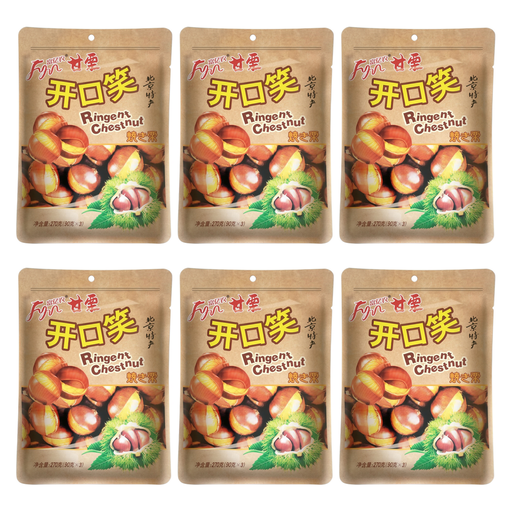
Fu Yi Nong Shelled Chestnuts 270g (3 packs) × 6
For a chestnut snack, check the current pack’s nutrition and allergen information before choosing it. Shelled chestnuts are still whole nuts, which NHS guidance says not to give to children under 5.
View on Joybuy
 No image available
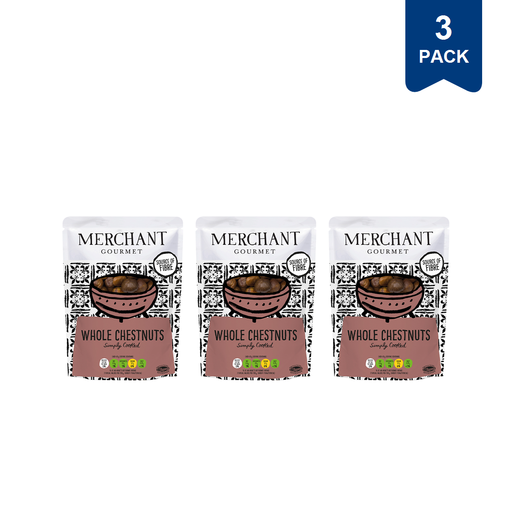
Merchant Gourmet Whole Chestnuts 180g (3 packs)
The three-pack format may suit a household planning separate snack occasions. Compare the pack’s fat and salt values per 100g and per serving; do not give whole chestnuts to children under 5.
View on Joybuy
 No image available
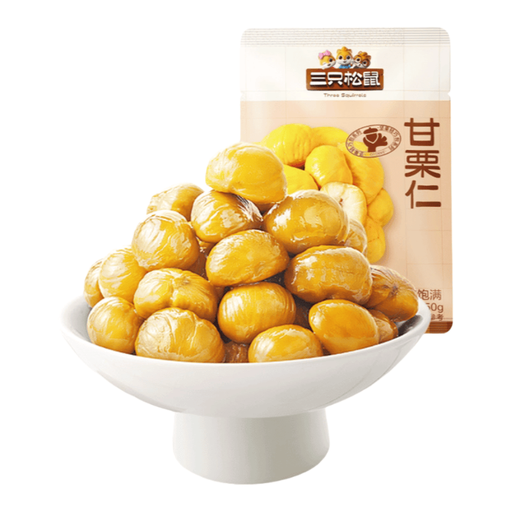
Three Squirrels Light Pack Sweet Chestnut Kernels 50g
This 50g chestnut pack is an option when pack size matters for a snack away from home. Check its nutrition and allergens on the pack, and do not serve whole kernels to children under 5.
View on Joybuy
 No image available
Nakd Peanut Delight 4 × 35g
The individually sized bars offer a different format from a bag of whole nuts. Check the current ingredients, allergen statement and age suitability before offering one to a child; the bar format does not establish a reduced-fat claim.
View on Joybuy
 No image available
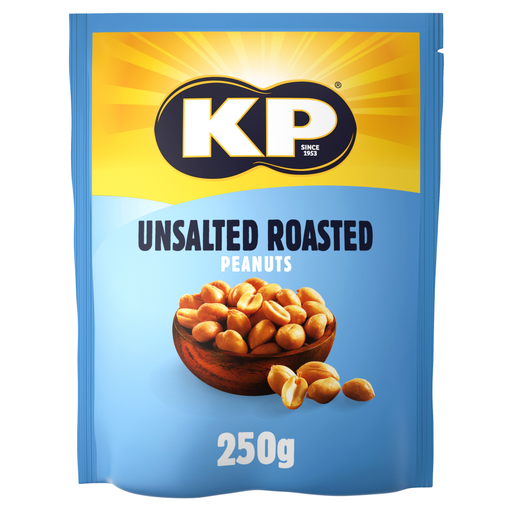
KP Snacks Unsalted Roasted Peanuts 250g
Consider these when unsalted peanuts, rather than a reduced-fat claim, are the priority. Check fat and serving size on the pack, portion from the 250g bag, and do not give whole peanuts to children under 5.
View on Joybuy
Questions about nut snacks
Does “unsalted” mean nuts are low in fat?
No. Tesco Groceries lists 55g fat per 100g for its unsalted mixed nuts, despite listing just 0.02g salt per 100g. Compare the two nutrients separately on the pack.
Can a child under 5 have whole nuts or peanuts?
No. The NHS says children under 5 should not be given whole nuts or peanuts because they can choke. Where nuts are appropriate, crushed or ground nuts can be mixed into food; spread nut butter onto food rather than offering it on its own.
Are dry-roasted peanuts a lower-fat choice?
Do not assume so from “dry roasted”. Tesco Groceries lists 48g fat per 100g for KP Dry Roasted Peanuts, with 14g fat and 0.48g salt in a 30g serving. Compare the particular products’ labels on the same basis.
Can I pack nuts for a school or holiday club?
Ask the individual setting before packing them. England’s Department for Education says schools must have an allergy safety policy and arrangements to reduce contact with known allergens; that does not tell you what a particular school or club permits. Check the snack’s current allergen label too.
How do I compare two nut snacks with different bag sizes?
Use the per-100g figures to compare fat and salt, then check each product’s stated serving and the amount you intend to offer. Read the ingredients and allergens as well, and make age-appropriate texture the first check for a child.


