Shoppers tracking carbohydrate
If you are choosing nuts for a keto-style plan, compare total carbohydrate per 100g and for the portion you expect to eat. A reduced-fat description cannot answer that question on its own.


For a keto-style eating plan, compare total carbohydrate and the portion you intend to eat before choosing nuts for a reduced-fat claim. HEART UK describes a ketogenic diet as very low in carbohydrate and high in fat, so reducing fat does not, by itself, tell you whether a nut snack fits your plan. Salt, flavourings and allergens can also change which product suits your needs.
If you are choosing nuts for a keto-style plan, compare total carbohydrate per 100g and for the portion you expect to eat. A reduced-fat description cannot answer that question on its own.
If salt matters to you, compare the exact products rather than relying on a brand name. ASDA Groceries lists 0.03g salt per 100g for KP Unsalted Peanuts; that figure does not make them a reduced-fat product.
Check the current pack for ingredients, allergens and may-contain statements, particularly with mixed nuts. Whole nuts also need care around small children because of choking risk.
Start with carbohydrate for a like-for-like product comparison, then check your portion and any separate requirements for fat, salt or ingredients.
| Priority | What to check | Your needs |
|---|---|---|
| Carbohydrate | Compare labelled total carbohydrate per 100g, then check the figure for the portion you will eat. Tesco Groceries lists 5.1g per 100g for Tesco Macadamia Nuts; ASDA Groceries lists 5.7g per 100g for KP Unsalted Peanuts; Marks & Spencer lists 9.7g per 100g for M&S Natural Nut Medley. These figures describe those products, not every nut of each type. | I want to see how a specific snack portion fits the carbohydrate allowance in my plan. |
| Fat | Read the fat figure separately from carbohydrate. Tesco Groceries lists 77.8g fat per 100g for Tesco Macadamia Nuts, ASDA Groceries lists 51g for KP Unsalted Peanuts, and Marks & Spencer lists 56.2g for M&S Natural Nut Medley. HEART UK describes ketogenic diets as high in fat. | If reducing fat is a separate requirement for me, I need to assess it directly rather than assuming a reduced-fat label helps with carbohydrate. |
| Salt and seasoning | Compare salt per 100g and read the ingredient list. ASDA Groceries lists 0.03g salt and 5.7g carbohydrate per 100g for KP Unsalted Peanuts, versus 1.6g salt and 7.3g carbohydrate for KP Dry Roasted Peanuts, which contain a flavouring mixture. | I would choose between unsalted and seasoned peanuts using the figures on those exact packs, not the words ‘dry roasted’ alone. |
| Allergens and format | Read the current pack’s ingredient and may-contain statements. Tesco Macadamia Nuts may contain peanuts, other nuts and sesame; M&S Natural Nut Medley is labelled unsuitable for people with nut, peanut or sesame allergy. | My household may need to avoid particular allergens, and whole nuts are not a suitable snack to offer to small children. |
Fat and carbohydrate answer different questions. HEART UK describes a ketogenic diet as very low in carbohydrate and high in fat; a reduced-fat description does not establish the carbohydrate content of a snack.
Compare total carbohydrate per serving and per 100g first. If reducing fat is also important to you, assess that as a separate requirement.
ASDA Groceries lists different figures for two KP peanut products: the dry-roasted variety has 7.3g carbohydrate and 1.6g salt per 100g, while the unsalted variety has 5.7g carbohydrate and 0.03g salt per 100g.
Read the ingredients, carbohydrate and salt on the exact pack you are buying.
A per-100g comparison does not tell you how much carbohydrate is in the amount you eat. Tesco Groceries lists 1.3g carbohydrate and 19.5g fat per 25g serving of Tesco Macadamia Nuts.
Check the labelled serving size against your intended portion and use that portion’s carbohydrate figure in your plan.
Ingredients and may-contain statements differ between nut products. Whole nuts can also pose a choking risk for small children.
Read the current pack’s allergen information each time, and do not offer whole nuts to small children.
These product-specific label examples help illustrate different checks; a brand name alone does not establish the nutrition or allergen details of another product.
The two KP peanut varieties listed by ASDA Groceries provide an unsalted-versus-seasoned comparison.
Tesco Groceries’ macadamia listing provides a plain-nut example for comparing labelled carbohydrate and fat.
Marks & Spencer’s Natural Nut Medley illustrates the checks involved when choosing several nut types in one pack.
These options include nut snacks and whole chia seeds for adding to food. Compare each product’s current label with your intended portion and needs; the chia seeds are an alternative ingredient, not a nut snack.
 No image available
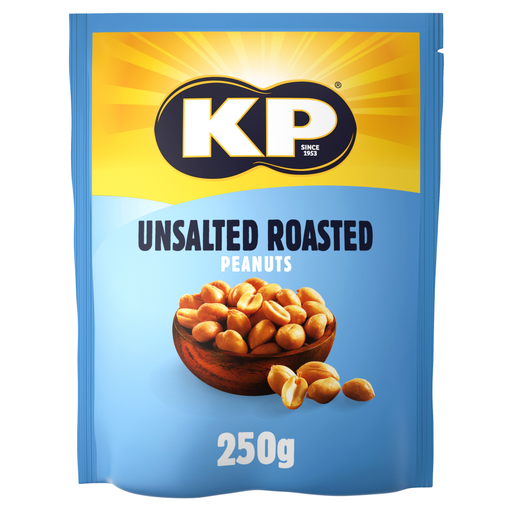
An unsalted peanut option if you want to compare salt as well as carbohydrate. The pack is 250g; check its current nutrition and allergen label for the portion you plan to eat.
 No image available
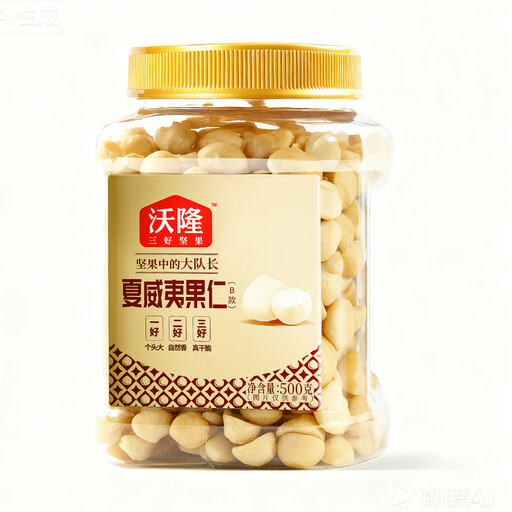
A macadamia option if you prefer this nut type. Check this 500g tin’s own carbohydrate and fat figures rather than applying figures from a different macadamia product.
 No image available
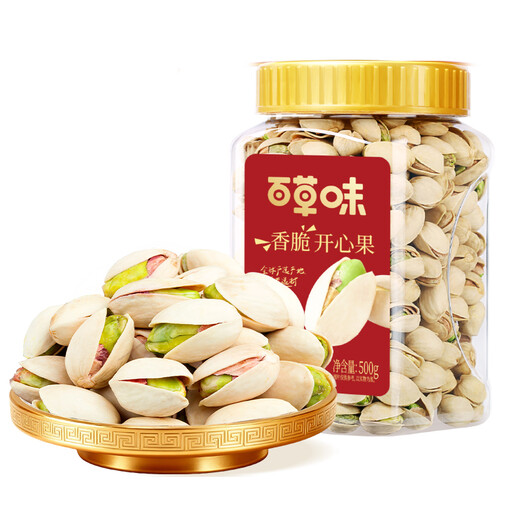
A pistachio option if that is the nut you want to snack on. Use this 500g product’s current label to check carbohydrate, salt, allergens and a suitable portion for your plan.
 No image available
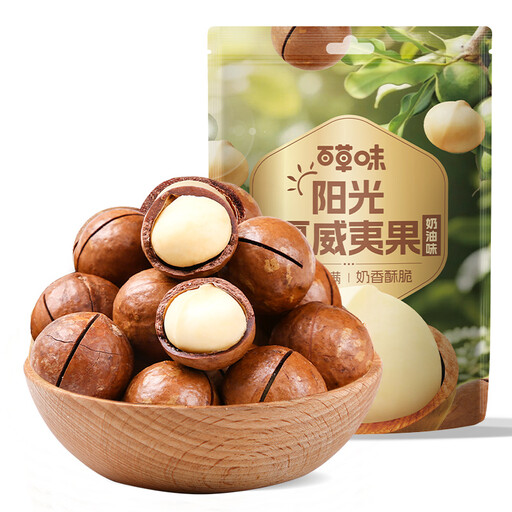
A flavoured macadamia option rather than a plain one. For this 100g pack, check the ingredient list alongside total carbohydrate and salt before deciding whether it suits your plan.
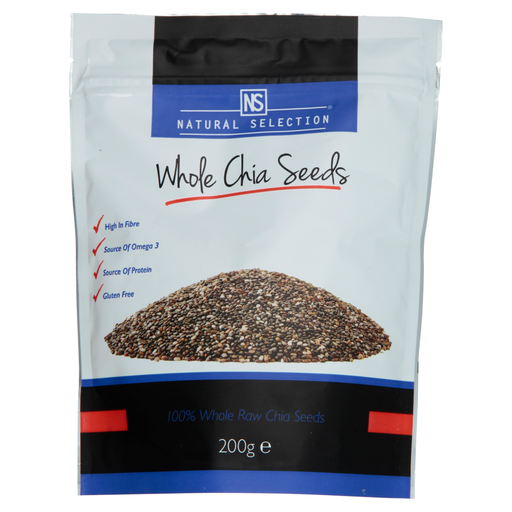 No image available
Whole chia seeds are an ingredient to consider for adding to food, not a substitute for a ready-to-eat nut snack. Check this 200g pack’s preparation directions and nutrition label before use.
No. HEART UK describes a ketogenic diet as very low in carbohydrate and high in fat, so a reduced-fat claim does not establish whether a particular snack fits your carbohydrate allowance. Check the exact pack’s total carbohydrate, ingredients and serving size.
Of the three retailer products compared here, Tesco Groceries lists the lowest total carbohydrate per 100g for Tesco Macadamia Nuts: 5.1g, or 1.3g per labelled 25g serving. ASDA Groceries lists 5.7g per 100g for KP Unsalted Peanuts, and Marks & Spencer lists 9.7g for M&S Natural Nut Medley. This is a comparison of those labels, not of every macadamia, peanut or mixed-nut product.
Choose between these specific products using the nutrient figures and ingredients that matter to you. ASDA Groceries lists 0.03g salt and 5.7g carbohydrate per 100g for KP Unsalted Peanuts, compared with 1.6g salt and 7.3g carbohydrate for KP Dry Roasted Peanuts; the dry-roasted product also contains a flavouring mixture. Check the current pack when buying.
Yes, if allergens matter in your household: read the current pack’s ingredients and may-contain statement rather than assuming products from the same brand are alike. For example, Tesco Groceries says its Macadamia Nuts may contain peanuts, other nuts and sesame, while Marks & Spencer labels its Natural Nut Medley unsuitable for people with nut, peanut or sesame allergy.
Speak with your diabetes healthcare team before making significant changes to a low-carbohydrate eating plan. Diabetes UK says this is especially important if you use insulin or diabetes medicines that increase the risk of hypos.