Commuters deciding how much to take
A sharing bag may be more than you intend to eat with one coffee. The British Heart Foundation describes a small handful of nuts as 30g and says that amount contains 180–225kcal, depending on the nut.


If you specifically want reduced-fat nuts with your commuter coffee, look for an explicit comparative claim and check the nutrition panel; plain or unsalted nuts do not qualify simply because of how they are prepared. If your aim is to control how much of a nut snack you eat, take a measured portion instead, recognising that portioning does not reduce its fat content. Legislation.gov.uk sets a threshold of at least 30% less of the named nutrient than a similar product for a reduced-nutrient claim.
A sharing bag may be more than you intend to eat with one coffee. The British Heart Foundation describes a small handful of nuts as 30g and says that amount contains 180–225kcal, depending on the nut.
If you want to avoid salted or coated varieties, check the ingredients rather than relying on words such as “roasted”. The British Heart Foundation advises choosing whole, plain nuts and avoiding salted nuts.
A smaller portion and a reduced-fat product answer different questions. Check the exact product’s claim, its comparison with a similar product and its fat declaration before deciding whether it meets your aim.
Decide whether you need a comparative fat claim or simply a manageable amount for the journey, then check the ingredients and label of the pack you would actually carry.
| Priority | What to check | Your needs |
|---|---|---|
| Reduced-fat claim | Look for an explicit claim and its comparison with a similar product. Legislation.gov.uk specifies at least a 30% reduction in the named nutrient; also compare fat per 100g and per portion. | If I want reduced-fat nuts, a plain or unsalted description alone does not answer that question. |
| Amount to carry | Check the pack weight and serving information. The British Heart Foundation uses 30g as a small-handful reference for nuts; Tesco Mixed Nuts list 165kcal and 14.5g fat per 25g. | For one coffee break, I would rather decide on an amount before leaving than eat directly from a larger bag. |
| Ingredients and salt | Read the ingredients and salt declaration, particularly for flavoured or coated products. A fruit-and-nut mix also needs its own sugars check: M&S Fruit and Nuts lists 35.5g sugars per 100g. | I want to know whether my snack is plain, salted or coated, rather than assuming every nut mix has the same ingredients. |
| Chestnut format | Check the chestnut pack’s own nutrition panel and serving size. Do not treat a different type of snack as a reduced-fat version of mixed nuts without an explicit, substantiated claim. | A chestnut pack could suit my journey, but I still need to compare the figures for the amount I plan to eat. |
| Allergen information | Read the current pack’s ingredients, allergen statements and any “may contain” wording. The Food Standards Agency explains that precautionary wording signals possible unintended allergen presence. | If an allergen matters to me, I need the wording for this exact pack, not a general description of the brand. |
Those words describe preparation or salt, not a comparative fat claim. Tesco Mixed Nuts, for example, list 58.0g fat per 100g on the Tesco product page.
For a reduced-fat purchase, check the exact pack’s claim and comparison basis, then read its fat declaration per 100g and per portion.
Pack size is not a portion recommendation. The British Heart Foundation’s small-handful reference is 30g of nuts, while an M&S cashew snack pack contains 70g.
Decide how much to take before the commute, and check the serving figures for that amount.
Salted and coated varieties differ from plain nuts, while fruit changes a mix’s sugars figures. M&S Fruit and Nuts lists 35.5g sugars per 100g; that figure alone does not say how much is added sugar.
Compare ingredient lists and the relevant salt and sugars declarations when choosing between packs.
A product’s name does not convey every ingredient or possible cross-contact warning. The Food Standards Agency says “may contain” wording communicates possible unintended allergen presence.
Check the current physical pack’s allergen information before eating, especially if you need to avoid nuts, peanuts or sesame.
These named products illustrate differences in pack format and labelling; a brand reference does not establish that its other products have the same nutrition or ingredients.
Tesco Mixed Nuts 250g provide an example of a larger bag to portion separately for a commute.
M&S product pages show both a larger natural-almond bag and a 70g cashew snack pack.
A Tesco listing for KP Nut-Tastic Fruit & Nut Mix describes a 4 x 30g format.
Planters’ US product page for Unsalted Dry Roasted Peanuts illustrates why an unsalted description should not be read as a fat claim.
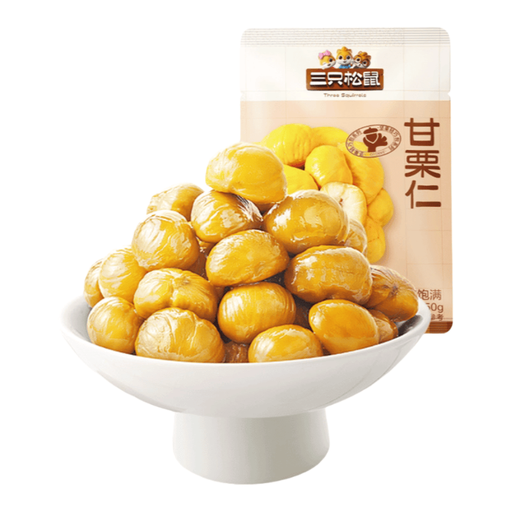
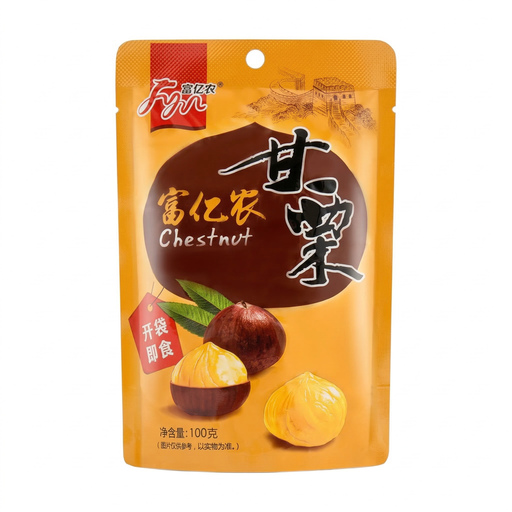
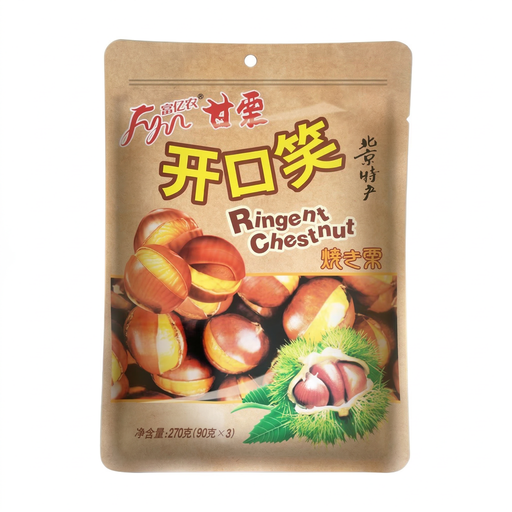
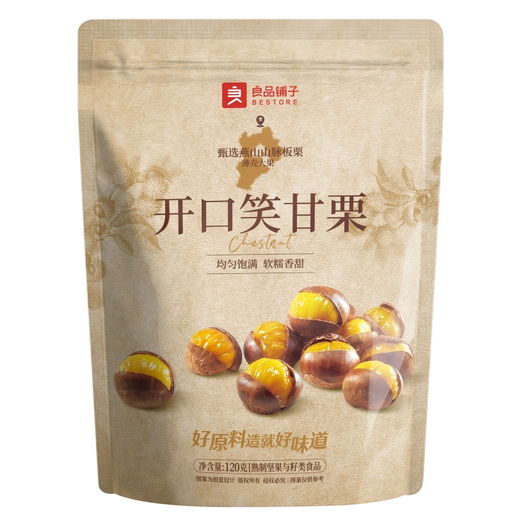
These Joybuy options are chestnut snacks in different pack sizes for a coffee commute. Check each pack’s nutrition and ingredients for your own comparison; their chestnut descriptions do not make them verified reduced-fat versions of ordinary mixed nuts.
 No image available
The 50 g pack is a size to consider for a coffee break; check its serving size and nutrition figures for the amount you intend to eat.
 No image available
For a single coffee break, decide how much to take from this 100g chestnut pack and compare its per-100g and per-serving nutrition with other snacks.
 No image available
The 270g split-shell chestnut bundle contains three packs that can be carried on separate commutes; check the serving information for an individual pack before treating it as one snack.
 No image available
If taking this 120g chestnut bag with coffee, decide on the amount you will carry and read its nutrition, ingredients and allergen information on the pack.
No. A reduced-fat claim compares a product with a similar one: legislation.gov.uk sets a threshold of at least 30% less of the named nutrient. It does not, by itself, tell you that the finished snack is low in fat, so check the per-100g and per-portion figures.
The British Heart Foundation uses 30g, or a small handful, as a reference portion for nuts and says it can contain 180–225kcal depending on the type. Check your pack’s serving information and decide how much to carry; a 70g snack pack is not automatically one 30g portion.
Those descriptions do not establish a reduced-fat claim. Tesco Mixed Nuts list 58.0g fat per 100g, while the US page for Planters Unsalted Dry Roasted Peanuts lists 14g per serving. Check the fat declaration and any explicit comparison on the particular pack you are considering.
Read the current pack’s ingredients, allergen statements and any precautionary wording before eating. The Food Standards Agency explains that peanuts are distinct from tree nuts and that “may contain” wording communicates possible unintended allergen presence.
Use a product page to narrow your choices, then check the physical pack before eating if allergens matter to you. Ingredients and allergen wording need to match the product you actually have.