Lunch packers comparing fat values
If reducing fat is your main criterion, check the amount per 100g and per serving. An unsalted label tells you about salt, not whether the nuts have less fat.


Unsalted nuts are not necessarily reduced-fat nuts: KP Unsalted Peanuts list 15g fat per 30g serving, while Sainsbury's Unsalted Mixed Nuts list 14.9g per 25g serving. If a reduced-fat claim matters most, Tesco's reduced-fat peanut butter is a spread rather than a ready-to-eat bag of nuts. If portability and salt are the priorities, compare unsalted nuts by their labelled serving and pack only the amount you intend to take.
If reducing fat is your main criterion, check the amount per 100g and per serving. An unsalted label tells you about salt, not whether the nuts have less fat.
If you want nuts you can eat straight from your lunchbox, compare salt on the label and decide how much to pack. A large bag and an individual sachet offer different ways to manage the portion you bring.
Check the ingredients, allergy statement and any workplace rules before bringing nuts into a shared space. The Food Standards Agency distinguishes peanuts, which are legumes, from tree nuts; a mixed snack can contain both.
Consider it when: a spread fits your lunch and you want a stated fat reduction against a named peanut butter.
Trade-off: Tesco says its Reduced Fat Smooth Peanut Butter has 30% less fat than Tesco smooth peanut butter; that comparison does not make it a ready-to-eat nut snack.
Consider them when: you want a ready-to-eat snack and salt matters more to your choice than a reduced-fat claim.
Trade-off: the labelled servings of KP Unsalted Peanuts and Sainsbury's Unsalted Mixed Nuts contain 15g and 14.9g fat respectively.
| Priority | What to check | Your needs |
|---|---|---|
| Fat claim | Read fat per 100g and per serving. If the pack says reduced-fat, identify the product it is compared with. | If reducing fat drives my choice, I need the comparison to apply to the product I would otherwise buy. Tesco describes its reduced-fat peanut butter as having 30% less fat than Tesco smooth peanut butter, not than every nut snack. |
| Salt and serving | Compare salt for the labelled serving, then check the serving size and whether the pack contains individual portions. | I want nuts I can put straight in a lunchbox without mistaking an unsalted label for a reduced-fat one. Sainsbury's Unsalted Mixed Nuts list less than 0.01g salt and 14.9g fat per 25g serving. |
| Ingredients and allergens | Read the current ingredient and allergy statements, including any may-contain wording. Check workplace rules before packing nuts. | For a shared workplace, I need to know which nuts are in the pack. Sainsbury's Unsalted Mixed Nuts list almonds, peanuts, hazelnuts and walnuts; the Food Standards Agency distinguishes peanuts from tree nuts. |
| Lunch format | Decide whether you need a ready-to-eat snack or a spread with something to put it on. Check how much a large bag or sachet lets you pack. | Some days I want a snack without preparation; on others, a spread may fit the lunch I am already making. The format matters independently of a reduced-fat claim. |
KP Unsalted Peanuts list 15g fat per 30g serving, and Sainsbury's Unsalted Mixed Nuts list 14.9g per 25g serving. Their salt descriptions do not change those fat values.
Compare fat on the same per-100g basis and check what any reduced-fat claim uses as its reference product.
The labelled nutrition figures apply to a stated serving, which may be smaller than the amount taken from a larger bag.
Check the serving size and put the amount you intend to eat into a separate container, or consider an individually packed portion.
A mixed-nut pack may contain both peanuts and tree nuts. Its allergy statement can also identify possible cross-contact with other allergens.
Read the physical pack's ingredients and allergy statement, and follow any workplace restrictions on bringing in nuts.
Tesco Reduced Fat Smooth Peanut Butter is a spread. Its comparison with Tesco smooth peanut butter does not make the two lunch formats interchangeable.
Choose a spread only if it works with the food you plan to pack, and check its current ingredients and nutrition label.
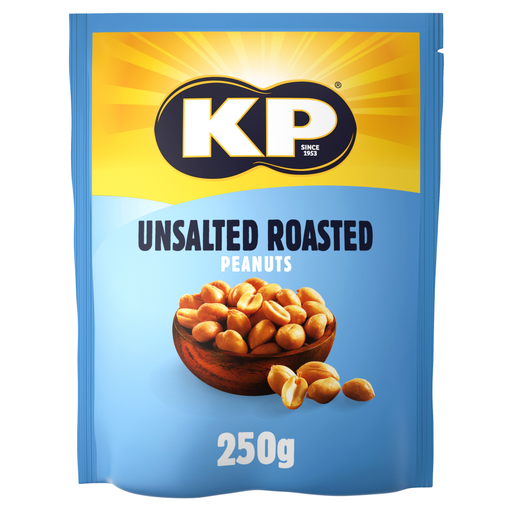
KP Unsalted Roasted Peanuts are a bagged peanut option for a ready-to-eat lunch snack.
Its Unsalted Mixed Nuts 200g offer a ready-to-eat mix of almonds, peanuts, hazelnuts and walnuts.
ASDA Peanuts 200g are a plain-peanut example rather than a flavoured mix.
Tesco's Reduced Fat Smooth Peanut Butter is relevant if a spread, rather than whole nuts, suits your packed lunch.
M&S Food describes single-portion packets, sharing tubs and larger packs in its roasted-nuts range.
These ready-to-eat peanut and nut-mix options illustrate pack and portion choices for an office lunch. An unsalted product or individual sachet should not be mistaken for a reduced-fat product.
 No image available
A ready-to-eat unsalted peanut option if you plan to pack a serving from a larger bag. ASDA's listing gives 15g fat per 30g serving, so it is not a reduced-fat choice.
 No image available
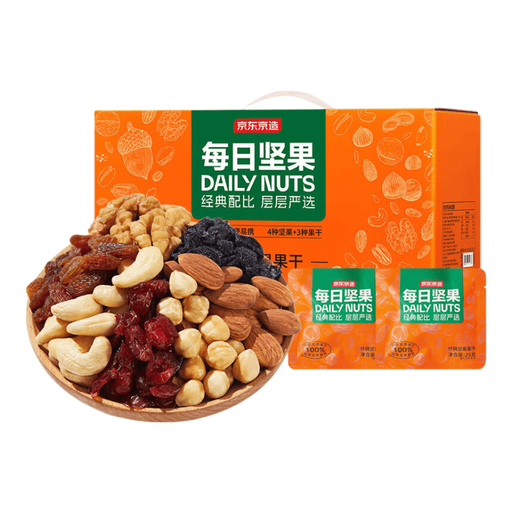
The nut and dried-fruit mix comes in 30 sachets, so you can pack one without portioning it from a larger bag. Check its fat, sugar, ingredients and allergens on the pack; the sachet format is not a reduced-fat claim.
 No image available
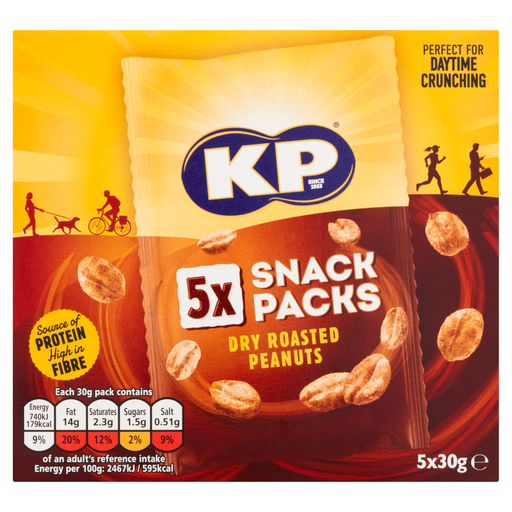
The five individual 30g packs offer a ready-to-pack serving. This flavoured peanut product is not presented as reduced-fat or low-salt; compare its fat and salt values with the other snacks you are considering.
No: “unsalted” describes salt, not fat. KP Unsalted Peanuts list 15g fat per 30g serving, and Sainsbury's Unsalted Mixed Nuts list 14.9g per 25g serving. Compare fat per 100g as well as for the amount you plan to pack.
Only if a spread suits your lunch. Tesco says its Reduced Fat Smooth Peanut Butter has 30% less fat than Tesco smooth peanut butter, but it is not a ready-to-eat bagged snack; check the current product details before buying.
Start by checking the serving size used for the pack's nutrition figures, then portion out the amount you intend to take. If you eat a different amount, the per-serving figures will not describe that amount.
No. The Food Standards Agency identifies peanuts as legumes and distinguishes them from tree nuts such as almonds and hazelnuts. A mix can contain both, so read the particular pack's ingredients and allergy statement.