What should you check?
Start with the nutrition panel and ingredients, then decide how much of the pack you would actually take and eat on a day out.
| Priority | What to check | Your needs |
|---|
| Portion and calories |
Compare calories per 100g and per serving; check how many servings the pack contains. The British Heart Foundation gives roughly 180–225kcal for 30g of nuts, depending on type. |
For a journey or picnic, I would rather pack a measured amount than eat without keeping track from a sharing bag. |
| Salt |
Read the salt value on the nutrition panel and check whether the nuts are labelled salted or unsalted. The NHS suggests unsalted nuts as a swap when cutting down on salt. |
If I am choosing between savoury snacks, I want to see the salt value for each pack rather than assume all nuts are alike. |
| Fat and coatings |
Compare total fat, saturates, sugars and calories on the same per-100g basis, then read the ingredients. UK government guidance says front-of-pack traffic-light labels, where displayed, indicate high, medium or low amounts of fat, saturates, sugars and salt. |
A reduced-fat claim would not settle my choice if another product has different saturates, sugars or calories. I also want to know whether flavourings or coatings have been added. |
| Allergens |
Check the exact pack’s ingredients, allergen declarations and any precautionary statement before eating or sharing. The Food Standards Agency explains that statements such as “may contain” can flag possible unintended allergen presence. |
When sharing with someone who has a nut or sesame allergy, I cannot rely on a familiar product name or the appearance of the nuts. |
Brand and retailer references
These examples show formats worth distinguishing; a brand name does not establish the nutrition or ingredients of every product it sells.
Sainsbury’s
Sainsbury’s Mixed Nuts 300g provides a specific plain mixed-nut example with a stated 30g serving.
- Its product page lists almonds, walnuts, cashews and Brazil nuts, with 195kcal, 17.5g fat, 2.4g saturates and less than 0.01g salt per 30g.
- It is not presented as a reduced-fat product. The product page also warns about possible other nuts and sesame arising from manufacturing methods.
Tesco
Tesco’s nut listings provide examples of mixed, unsalted, salted and flavoured formats to compare.
- Its listings include mixed nuts, unsalted mixed nuts and raisins, dry-roasted peanuts and a 60g cashew snack pack.
- Check the exact product’s ingredients and nutrition panel: a category listing does not establish those details for every pack.
KP
KP provides flavoured peanut examples for shoppers comparing roasted snacks with plain nuts.
- Tesco lists KP Dry Roasted Peanuts 415g and KP Honey Roasted Peanuts 375g.
- Neither listing alone establishes that the product is reduced-fat; compare the current labels before drawing a nutrition conclusion.
M&S
M&S lists several roasted mixed-nut formats that make the plain-versus-salted distinction relevant.
- Its food-cupboard listing includes Oven Roasted Mixed Nuts, Roasted and Salted Mixed Nuts and Roasted and Salted Pistachios.
- The listing does not establish that any of these particular products is reduced-fat; use the individual pack to compare them.
Joybuy nut and chestnut options
These Joybuy options include mixed nuts, macadamias and chestnut packs for holiday snacking. Their pack sizes and named varieties offer different starting points; compare each current label for nutrition, ingredients and allergens before choosing.
 No image available
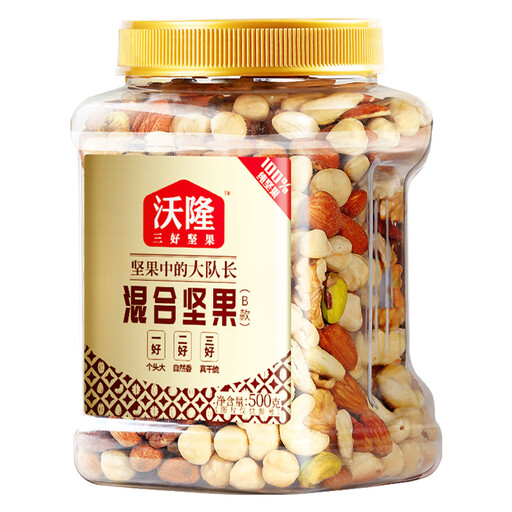
Wo Long Assorted Pure Nuts Tin, 500g
The 500g tin is a larger format for sharing or packing several portions. If you want a measured snack for a day out, portion it separately and check the current nutrition and allergen information.
 No image available
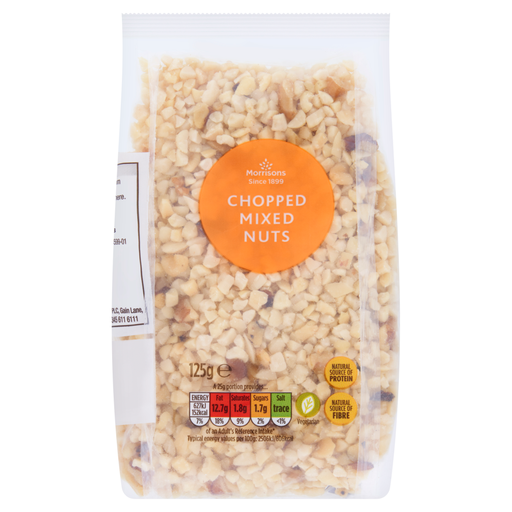
Morrisons Chopped Mixed Nuts 125g
Choose this 125g chopped mix if that texture suits the snack you are packing. It is not a stated single portion; check the serving size, ingredients and allergen label before sharing.
 No image available
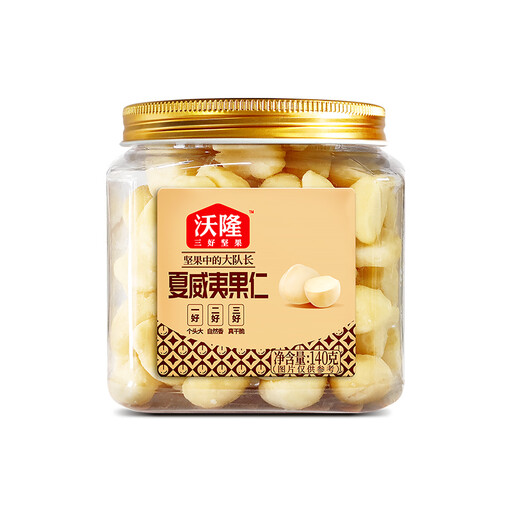
Wolong Macadamia Nuts 140g
This 140g pack offers a named nut variety rather than a mixed-nut selection. Compare its calories and fat per 100g with other packs on your shortlist, then check the amount you plan to take.
 No image available
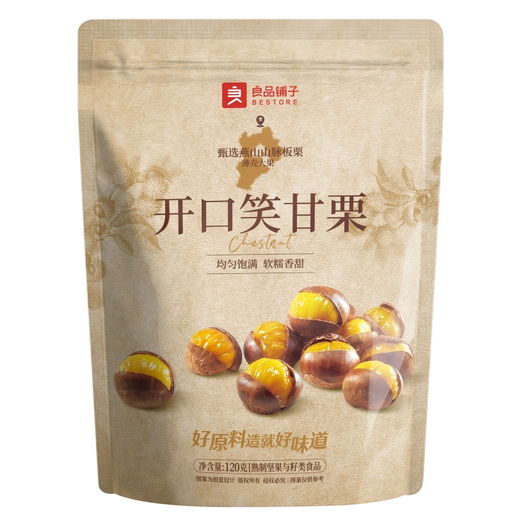
Bestore Smiling Chestnuts, 120g Bag
This is a 120g chestnut pack rather than a mixed-nut pack. If fat content is your deciding factor, compare its stated per-100g nutrition with the exact nut products you are considering; check the current ingredients and allergens too.
 No image available
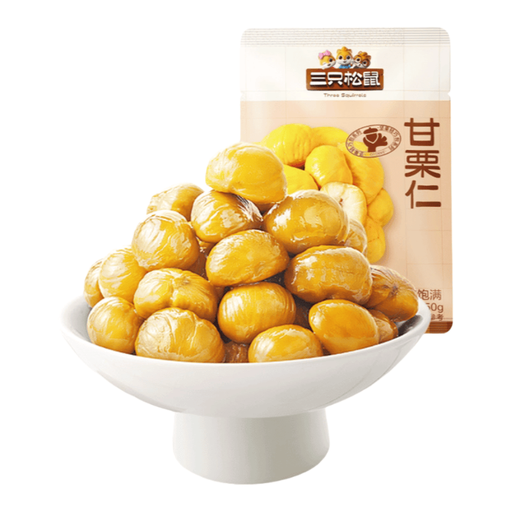
Three Squirrels Light Pack Sweet Chestnut Kernels 50 g
The 50 g pack is easier to carry individually than a larger sharing container, but its size does not establish that it is a single serving for your purposes. Read its nutrition panel before comparing it with other chestnut or nut packs.
Questions about choosing nuts
Are nuts a low-fat snack?
Do not assume they are. The British Heart Foundation describes nuts as containing mainly unsaturated fat and puts a 30g portion at roughly 180–225kcal, depending on the type. Compare the particular pack’s fat, saturates and calories per serving.
What should I choose if salt matters to me?
Compare plain, unsalted nuts with the salted option and read both salt values. The NHS specifically suggests swapping salted nuts for unsalted nuts when cutting down on salt.
Does dry-roasted mean lower in calories?
No lower-calorie conclusion follows from “dry-roasted” alone. The British Heart Foundation notes that dry-roasted or honey-roasted coatings can add calories, sugar and saturated fat, so compare the exact ingredients and nutrition panels.
How can I compare two packs in a shop?
Compare calories, fat, saturates, sugars and salt per 100g first, then look at the amount you expect to eat. UK government guidance explains that front-of-pack traffic-light labels, where displayed, indicate high, medium or low amounts of fat, saturates, sugars and salt; the nutrition panel provides the figures for a closer comparison.
Can I choose mixed nuts for someone with an allergy?
Do not choose them on the basis of the name alone. Read the exact current pack’s ingredients and precautionary allergen statements against that person’s requirements. Sainsbury’s Mixed Nuts 300g, for example, lists several tree nuts and warns about possible other nuts and sesame arising from manufacturing methods.


