Office buyers watching salt and ingredients
If you stock a desk drawer or shared snack area, compare salt and ingredients separately from total fat. An unsalted peanut snack can still contain substantial fat per 100g.


Neither dry-roasted nor unsalted automatically means reduced fat: Marks & Spencer lists 47.0g fat per 100g for its dry-roasted peanuts, while Waitrose lists 51g per 100g for KP unsalted roasted peanuts. For office snacks, choose unsalted nuts when salt is the priority and a measured portion when serving size matters; if low total fat is essential, consider a different snack category.
If you stock a desk drawer or shared snack area, compare salt and ingredients separately from total fat. An unsalted peanut snack can still contain substantial fat per 100g.
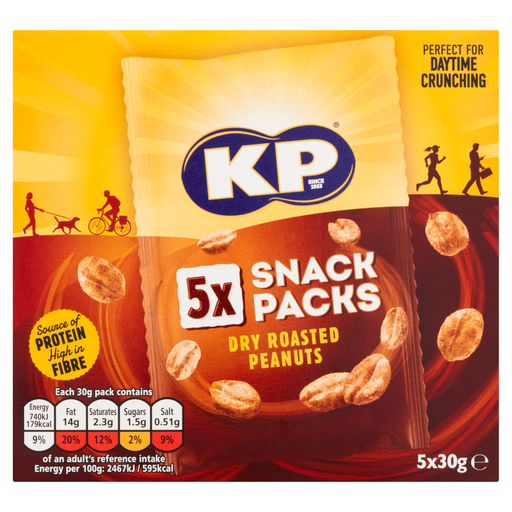
Individual packs make the amount taken to a desk clear. KP Nuts lists 14g fat and 179kcal for one 30g Dry Roasted Snack Pack, so the pack size does not make it a reduced-fat snack.
Check workplace allergy arrangements before supplying nuts. Anaphylaxis UK advises individual workplace risk assessments for employees with allergies; a communal snack choice needs to fit those arrangements.
Start with the requirement that matters most—total fat, salt, serving size or whether nuts are appropriate in the workplace—then compare packs on the same basis.
| Priority | What to check | Your needs |
|---|---|---|
| Total fat | Compare total fat per 100g across similar products, then check the amount in the portion you intend to eat. Marks & Spencer declares 47.0g per 100g for its dry-roasted peanuts and 49.6g for its plain roasted peanuts; that difference alone does not establish a reduced-fat claim. | I want to compare actual fat figures, not assume that “dry roasted” or “unsalted” means reduced fat. |
| Salt and ingredients | Read salt per 100g and the ingredient list as well as the fat figure. Marks & Spencer lists 1.18g salt per 100g for its dry-roasted peanuts and 0.03g for its plain roasted peanuts. | If salt or seasoning is my main concern, I would rather compare those details directly than choose on the basis of the roasting method. |
| Serving size | Check the stated serving size and its nutrition values, or measure a portion from a larger pack. KP Nuts declares 14g fat, 179kcal and 0.51g salt per 30g Dry Roasted Snack Pack. | A single pack helps me see how much I am taking to my desk; with a sharing pack, I would portion it out first. |
| Workplace allergies | Check the product’s ingredients and allergen label, alongside the workplace’s allergy arrangements. Anaphylaxis UK advises individual risk assessments for employees with allergies. | Before putting nuts in a communal area, I need to know whether they fit the arrangements for colleagues with allergies. |
Marks & Spencer lists 47.0g fat per 100g for its dry-roasted peanuts, while Tesco lists 48g per 100g for KP Dry Roasted Peanuts. The cooking description does not tell you whether a product meets a low-total-fat requirement.
Compare the nutrition tables per 100g and per intended serving. If low total fat is essential, consider another snack category.
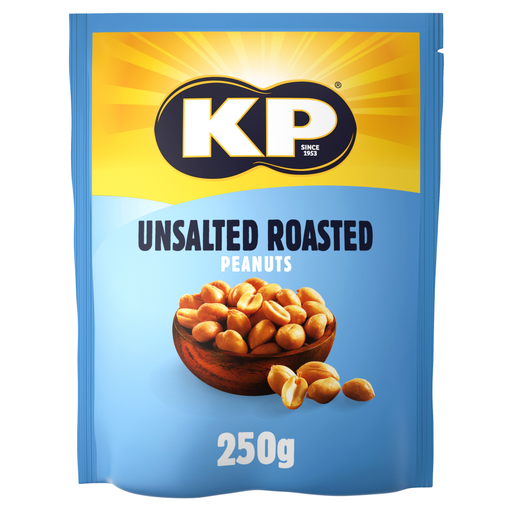
Waitrose lists KP Unsalted Roasted Peanuts at 0.03g salt but 51g fat per 100g. A low salt figure answers a different question from a total-fat figure.
Choose on the basis of the nutrient you want to compare, and check the amount you plan to serve.
Colleagues may need to identify the nuts and other declared allergens before taking a snack. Anaphylaxis UK advises individual workplace risk assessments for employees with allergies.
Check the workplace allergy arrangements first. Where nuts are appropriate, keep their original labelled packaging available rather than relying on an unlabelled shared container.
A defined serving helps with portioning, but KP Nuts still declares 14g fat, 179kcal and 0.51g salt for its 30g Dry Roasted Snack Pack.
Use the pack size to manage the amount served, and assess its nutrition values separately.
These product-line examples show why format, fat and salt need separate checks; they do not indicate that every product from a brand has the same values.
KP’s cited products include unsalted roasted peanuts and a dry-roasted snack pack with a stated 30g serving.
Marks & Spencer provides separate nutrition figures for its dry-roasted and plain roasted peanuts.
Tesco’s nut category includes plain and flavoured options, and its KP product listing offers a further label example.
These peanut packs and mixed nuts offer different office-serving formats, from individual packs to larger containers. Compare the label on each product against your fat, salt and workplace-allergy requirements rather than treating the format as a reduced-fat claim.
 No image available
The individual 30g packs define how much is taken for a desk snack. KP Nuts declares 14g fat, 179kcal and 0.51g salt per 30g Dry Roasted Snack Pack; a defined portion is not a reduced-fat claim.
 No image available
An unsalted option to consider when salt, rather than total fat, is the priority. Portion the 250g pack for individual use, and check its nutrition and allergen label before placing it in a shared office area.
 No image available
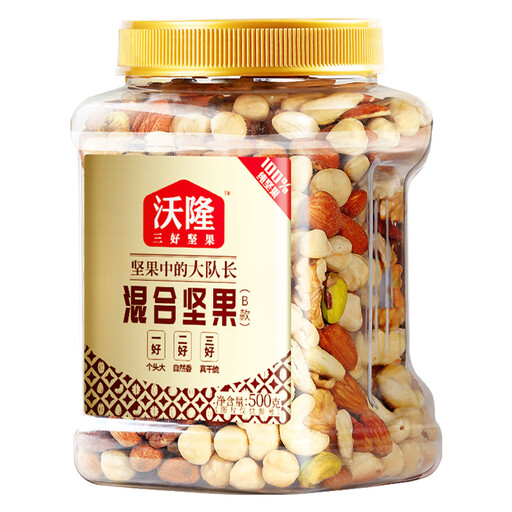
The 500g tin is a larger format for an office snack area. Check its nutrition information to decide on a serving amount, and read the ingredients and allergen label before offering the assortment to colleagues.
Do not assume so from “dry roasted”. Marks & Spencer declares 47.0g fat per 100g for its dry-roasted peanuts, and Tesco lists 48g per 100g for KP Dry Roasted Peanuts. Compare the fat figures and any claim on the particular pack rather than relying on the cooking method.
Choose unsalted nuts if salt is your priority, not as a substitute for checking fat. Waitrose lists KP Unsalted Roasted Peanuts at 0.03g salt and 51g fat per 100g.
Use a pack’s stated serving or portion a larger bag before taking it to your desk. HEART UK describes a handful of nuts as about 28g; KP Nuts’ Dry Roasted Snack Pack provides a defined 30g serving, with its nutrition values stated for that amount.
Check the workplace’s allergy arrangements before supplying them. Anaphylaxis UK advises individual workplace risk assessments for employees with allergies; where nuts are appropriate, retain the labelled packaging so colleagues can check the product information.