Organisers looking for reduced-fat crisps
If a relative fat-reduction claim is the starting point, compare it with the fat figure per 100g. Then choose a flavour and pack format that work for the number of guests you expect.


For a street party where a relative fat reduction matters, Walkers says its Oven Baked Sea Salt, Slow Roasted Beef, Sun Dried Tomato and Prawn Cocktail crisps contain 50% less fat than regular potato crisps; each listed flavour has 13g fat per 100g. That is not the same as ‘low fat’, which the NHS defines as 3g fat or less per 100g, so compare the exact flavour’s salt, ingredients and pack size before choosing what to serve.
If a relative fat-reduction claim is the starting point, compare it with the fat figure per 100g. Then choose a flavour and pack format that work for the number of guests you expect.
Keep the exact flavour’s ingredients and allergen statements available to guests. A reduced-fat or vegetarian claim does not establish whether a crisp is suitable for someone with an allergy.
The setting matters as well as the product. Food Standards Agency guidance addresses food supplied at community and charity events, while Department for Education school-food guidance concerns food and drink provided in state-funded schools in England.
Start with the claim and the per-100g panel, then check what each guest would receive and what information will remain available once the crisps are served.
| Priority | What to check | Your needs |
|---|---|---|
| Fat claim | Check what the reduction is measured against and read fat per 100g. Walkers describes four Oven Baked flavours as 50% less fat than regular potato crisps and lists each at 13g fat per 100g. The NHS low-fat threshold is 3g or less per 100g. | I want a crisp with a stated reduction compared with regular crisps, without mistaking that claim for a low-fat label. |
| Salt | Compare the same per-100g measure across flavours. Walkers lists 0.48g salt for Oven Baked Prawn Cocktail, 0.75g for Slow Roasted Beef, 0.85g for Sea Salt and 0.88g for Sun Dried Tomato, all per 100g. | If salt affects my choice, I need to compare the exact flavours rather than assume their nutrition panels match because their fat figures do. |
| Pack format | Check the number of bags, grams per bag and flavours in the pack. A multipack of individual bags and a sharing bag call for different serving arrangements. | I would rather hand out individual packets, or I need a selection of flavours for guests to choose from. |
| Ingredients | Read the ingredient list and allergen and may-contain statements for each flavour. Keep the packaging available if crisps are put into bowls. | Guests need to be able to inspect the label themselves instead of relying on a flavour name or a general statement about the brand. |
Walkers lists 13g fat per 100g for the four Oven Baked flavours named above, despite their 50% less-fat claim. The NHS defines low fat as 3g fat or less per 100g.
Use the relative claim for its stated comparison with regular crisps; use the per-100g figure when checking whether a product meets a low-fat threshold.
The four Walkers Oven Baked flavour pages list the same fat figure but salt values ranging from 0.48g to 0.88g per 100g. The flavour chosen can therefore change the salt figure on the label.
Compare per-100g panels first, then check the grams in an individual bag when planning how to serve them.
Ingredients and precautionary allergen statements are specific to the flavour. A vegetarian label does not answer a guest’s question about possible allergen cross-contact.
Leave individual packets unopened where practical, or keep their original packaging beside crisps served in bowls.
Department of Health and Social Care guidance on specified HFSS promotions and placement addresses businesses operating in and selling to England. Department for Education guidance separately addresses food and drink provided in state-funded schools in England.
If a school is supplying the food, check the applicable school-food requirements rather than using a retail promotion rule to decide what to provide.
These examples concern named products or stated ranges, not every crisp made by each brand. Check the pack you intend to serve.
Walkers describes its Oven Baked Sea Salt, Slow Roasted Beef, Sun Dried Tomato and Prawn Cocktail flavours as 50% less fat than regular potato crisps.
KETTLE Chips describes its Lightly Salted product as gluten-free, vegan and vegetarian.
Seabrook labels its Sea Salted crisps gluten-free and suitable for vegetarians and vegans.
Pipers provides a product-specific ingredient list and nutrition panel for Great Berwick Longhorn Beef crisps.
REAL states that its range is vegetarian and gluten-free.
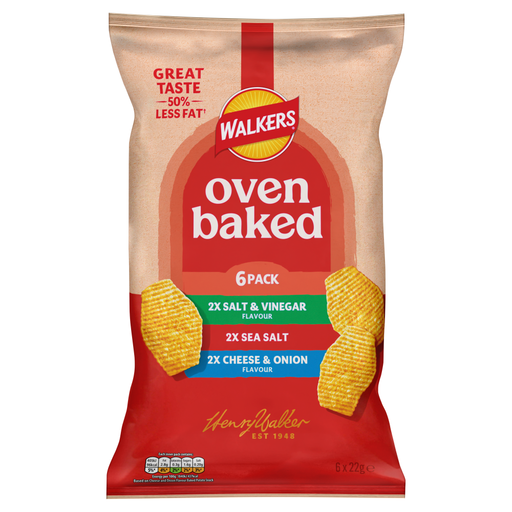
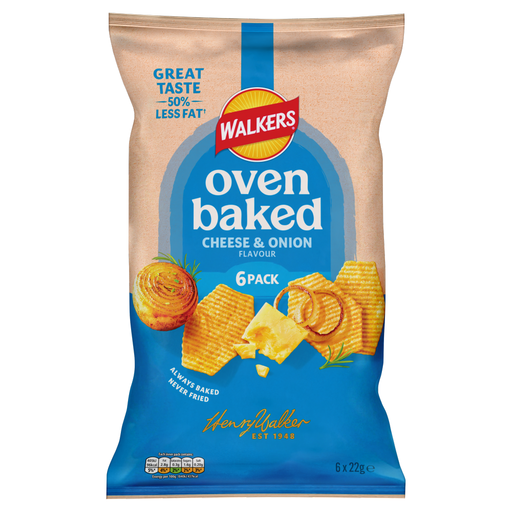
These Walkers Oven Baked multipacks offer either several flavours or a single Cheese & Onion flavour for a street-party snack table. Compare each pack’s current label before choosing for guests with food requirements.
 No image available
Six individual bags offer a choice of flavours for guests. Joybuy describes the variety pack as containing Sea Salt, Cheese & Onion and Salt & Malt Vinegar snacks, with a claim of 50% less fat than regular potato crisps; check each flavour’s ingredients and nutrition panel separately.
 No image available
This single-flavour multipack provides six individual 22g bags when guests want Cheese & Onion rather than a flavour selection. Check this exact pack’s fat figure, ingredients and allergen statements before serving it.
No. Walkers compares the named Oven Baked flavours with regular potato crisps and lists 13g fat per 100g for each. The NHS defines low fat as 3g fat or less per 100g, so the two descriptions mean different things.
Compare nutrition per 100g first so that bag size does not change the basis of comparison. Then check the number and weight of the individual bags to plan what each guest can take.
No. Suitability depends on the exact product’s ingredients and allergen statements. Walkers describes its Oven Baked Sea Salt crisps as vegetarian but also lists precautionary may-contain information; retain the packaging so guests can check it themselves.
No. Department of Health and Social Care guidance on specified HFSS promotions and placement concerns businesses operating in and selling to England. Food and drink provided in state-funded schools in England is addressed separately by Department for Education school-food guidance; check the requirements applicable to the school event.
Keep the original packs or their ingredient panels available so guests can check the food being served. Food Standards Agency guidance for community and charity events in England, Northern Ireland and Wales encourages providing allergen information where possible, including when an activity does not need to be registered as a food business.