Grocery shoppers comparing fat content
If you want a bar in a regular food order, compare the listed flavour’s total fat and saturates rather than assuming a high-protein or low-sugar description means less fat.


For a reduced-fat protein bar, compare total fat and saturates per 100g and look for a reduction against a similar bar; high-protein and low-sugar claims answer different questions. Myprotein states a quantified fat reduction for two Lean Layered flavours, but buying a bar with a regular grocery order also means checking the exact listed product, its allergens and any delivery substitution.
If you want a bar in a regular food order, compare the listed flavour’s total fat and saturates rather than assuming a high-protein or low-sugar description means less fat.
If protein and sugars matter more to you than a reduced-fat claim, compare those figures alongside fat on the same bar’s nutrition panel. A product can meet one preference without meeting the other.
If an ingredient or allergen affects your choice, check the selected product and any substitute separately. Tesco advises customers with allergies, intolerances or specific dietary requirements to check labels and allergen information before buying or eating.
Start with the fat comparison that matches your goal, then check the exact flavour and pack you can order. A direct-from-brand product and a bar available in your grocery basket may suit different shopping plans.
| Priority | What to check | Your needs |
|---|---|---|
| Reduced fat | Look for a comparison with a similar bar, then read total fat per 100g. NHS guidance says reduced-fat wording means at least 30% less fat than a similar product; it does not mean the product is low in fat. | I want a stated reduction, not just a name that sounds lighter. Myprotein says Lean Layered Cookie Dough has 8.1g fat per 100g, 42% less than its cited typical-bar comparison; its White Chocolate and Raspberry flavour is stated as 8.6g and 38% less. |
| Fat and saturates | Compare both figures per 100g across the flavours you are considering. The NHS describes 3g fat or less per 100g as low in fat and more than 5g saturates per 100g as high in saturates. | A relative fat reduction may suit me even if the bar does not meet a low-fat threshold. I would check the saturates figure separately rather than treating total fat as the whole picture. |
| Protein and sugars | Read protein, sugars and fat on the same flavour’s panel; use per-bar figures to understand the stated serving. PhD lists 21g protein, 1.2g sugars and 9.2g fat per 64g Chocolate Brownie Smart Bar. | If protein and sugars lead my choice, I still want to know the fat content. PhD’s Chocolate Brownie figures describe that flavour and serving, not every Smart Bar. |
| Delivery and substitutions | Check the exact product in your basket and any substitution options. Tesco says personal-shopper notes can express a preference, but it cannot always meet them. | I want the bar with my grocery order, but a replacement flavour or brand might have different nutrition and ingredients. I would review the product actually delivered. |
| Ingredients and allergens | Read the selected pack’s ingredients, allergen declaration and precautionary statements; repeat the check for a substitute. Tesco advises checking this information before buying or eating where dietary requirements apply. | When an allergen matters to me, a category filter or brand-range description is not enough. I need the details for the exact bar I receive. |
Those descriptions refer to different nutrients. PhD lists 14g fat and 5.2g saturates per 100g for Smart Bar Chocolate Brownie, alongside its protein and sugars figures.
Compare total fat and saturates per 100g before deciding whether the bar fits a fat-focused choice.
A reduction is relative to a comparator. Myprotein states 8.1–8.6g fat per 100g for the two cited Lean Layered flavours, above the NHS low-fat guide of 3g per 100g.
Decide whether you want a reduction against a similar bar or a particular per-100g fat figure, and check the label accordingly.
A replacement bar may differ in nutrition or allergens. Tesco says shoppers can leave substitution preferences, but those preferences cannot always be met.
Set a preference where offered and check the exact delivered pack before eating it.
PhD and Grenade product pages warn that excessive consumption may cause laxative effects. Quest says its protein bars contain sugar alcohols and that tolerance varies.
Read the warning on the individual product, particularly when choosing a multipack.
A brand’s range description does not establish the nutrition or allergens of every flavour. Use these references to narrow your search, then check the individual product.
Its Lean Layered range offers a direct-from-brand option with a stated comparison against a typical protein bar.
Smart Bar is an option to examine when protein and sugars matter more to your choice than a reduced-fat comparison.
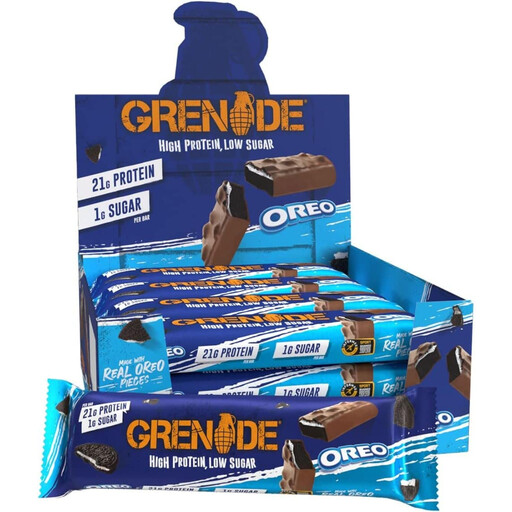
Grenade’s UK OREO Protein Bar is presented by the brand as a high-protein, low-sugar option, rather than as a documented reduced-fat comparison.
Barebells has a flavour-led protein-bar range, and Tesco has listed a Soft Protein Bar in its online grocery category.
Quest is a protein-bar range to assess by individual pack if it appears among your UK shopping options.
Tesco is an online grocery channel for adding a listed protein bar to a wider food order, not a single bar formulation.
These Grenade multipacks offer flavour and pack-size choices for an online snack order. Their product names do not establish a reduced-fat comparison, so check the exact bar’s fat, saturates and ingredients if those determine your choice.
 No image available
A Double Chocolate multipack to consider if you are ordering several bars. The stated pack contains 12 × 50g bars; compare the exact flavour’s fat and saturates per 100g before choosing it for a reduced-fat goal.
 No image available
A Golden Caramel option for shoppers comparing flavours in a multipack. The stated pack contains 12 × 50g bars; use this flavour’s own nutrition and ingredient label when comparing it with other bars.
 No image available
A Peanut Butter flavour for a multi-bar order. The stated pack contains 12 × 50g bars; check its individual allergen declaration as well as fat and saturates before adding it to your basket.
 No image available
An OREO variant for shoppers considering a low-sugar-labelled bar without assuming it is reduced fat. The stated pack contains 12 × 60g bars; check the exact pack’s nutrition, ingredients and consumption warning.
 No image available
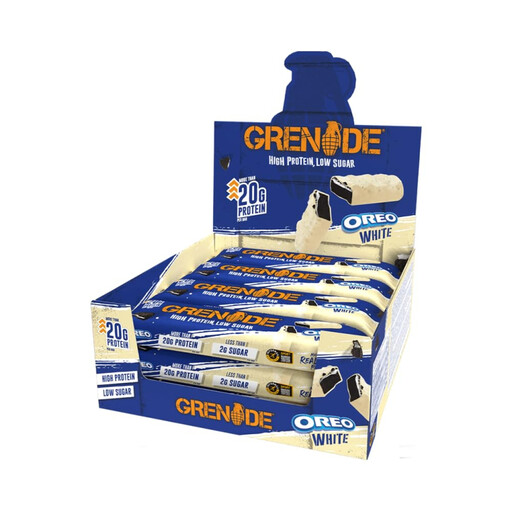
A White OREO variant for a multi-bar online order. The stated pack contains 12 × 60g bars; compare its own fat and saturates panel with other flavours rather than relying on the low-sugar wording.
No. NHS guidance says reduced-fat wording describes at least 30% less fat than a similar product, while its low-fat guide is 3g fat or less per 100g. Read the per-100g figure as well as the comparison.
Use per-100g figures to compare different bar sizes, then per-bar figures to understand the amount in the serving you are buying. Check that both sets of numbers refer to the same flavour.
Yes. PhD lists 1.2g sugars and 9.2g fat per 64g Chocolate Brownie Smart Bar. A sugars figure does not replace a check of total fat and saturates.
Add a substitution preference where Tesco offers that option, then check any replacement you receive. Tesco says its personal shopper will try to follow notes but cannot always accommodate them.
No. Tesco advises shoppers with allergies, intolerances or specific dietary requirements to check the selected product’s label, ingredients and allergen information before buying or eating. Check a substituted bar separately.