Shoppers tracking fat per bar
If fat content guides your choice, compare both the amount in one bar and the amount per 100 g. A reduced-fat comparison and a low-fat claim mean different things.


For an Easter egg hunt, choose a bar for a reduced-fat goal only after checking its comparison claim and the fat figures for the exact flavour. A chocolate-style bar promoted for protein or lower sugar may suit a different priority, but those claims do not establish reduced fat; check the current pack’s serving size, saturated fat, ingredients and allergen statements before sharing it.
If fat content guides your choice, compare both the amount in one bar and the amount per 100 g. A reduced-fat comparison and a low-fat claim mean different things.
A protein bar may fit the treat theme, but protein and sugar claims cannot tell you its fat content or whether it suits everyone taking part.
Check the ingredients and precautionary allergen statements on each flavour’s current pack, particularly when recipients have known allergies or intolerances.
Start with the claim that matters to you, then compare the nutrition panel on the same serving and per-100 g basis. Check each pack separately before adding bars to a shared hunt.
| Priority | What to check | Your needs |
|---|---|---|
| Fat claim | Check what a reduced-fat claim is compared with, then read total fat per 100 g and per bar. The nutrition-claims annex published by legislation.gov.uk specifies at least a 30% reduction against a similar product for a reduced-nutrient claim; its separate low-fat condition for solid food is no more than 3 g fat per 100 g. | I’m looking specifically for less fat, not assuming that a protein or sugar claim answers the same question. |
| Nutrition and portion | Compare bar weight, saturated fat, energy, protein and sugars using the same per-bar and per-100 g measures. A smaller serving and a lower amount per 100 g answer different questions. | A bar needs to fit the portion I intend to offer as well as the nutritional figures I care about. |
| Sharing | Read the exact flavour’s ingredient list, declared allergens, precautionary statements and sweetener information. Keep the original packaging available for recipients to check. | Other people may eat these bars, so I need to know what is in each flavour before putting it into a shared hunt. |
Those claims describe different nutrients. Tesco Groceries lists 9.1 g fat per 55 g bar for its Barebells Caramel Choco example, alongside 16 g protein.
Compare total and saturated fat on the panel; if reduced fat is your aim, check the stated comparison rather than relying on a protein or sugar claim.
Myprotein UK states a flavour-specific reduced-fat comparison for its Lean Layered Protein Bar. A claim for one variant does not establish the figures for another.
Check the comparison wording and nutrition panel for the flavour and pack you are buying.
Bars can have different ingredients and precautionary statements. The Food Standards Agency explains that precautionary allergen labelling communicates possible unintended allergen presence.
Check each current pack, keep its wrapper with the bar and arrange another option for anyone whose requirements it does not meet.
In its November 2025 audit of 458 snack bars from 10 major UK retailers, Action on Salt & Sugar classified 55% as high in saturated fat and 37% as high in sugars under UK front-of-pack thresholds. Those category findings do not describe every protein bar.
Use the traffic-light label, where present, alongside the exact product’s nutrition panel and serving size.
Its Lean Layered Protein Bar offers a flavour-specific reduced-fat comparison to examine.
Smart Bar is a protein-and-sugar comparison option, rather than an established reduced-fat option.
A chocolate-style protein-bar range to assess flavour by flavour.
Its Caramel Choco bar illustrates why protein and fat need separate checks.
An additional protein-bar range whose individual UK packs need checking.
A retailer whose individual listings can help identify which pack and flavour to check.
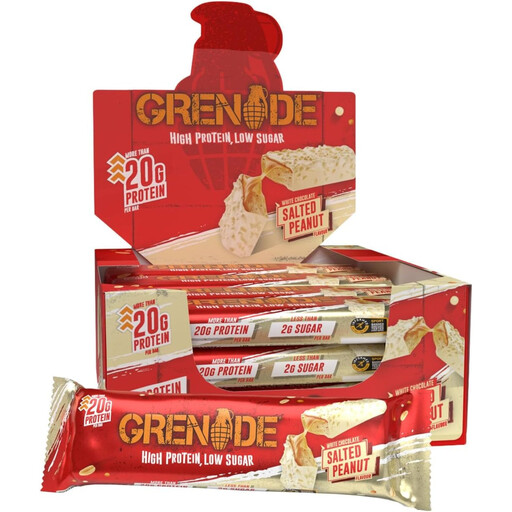
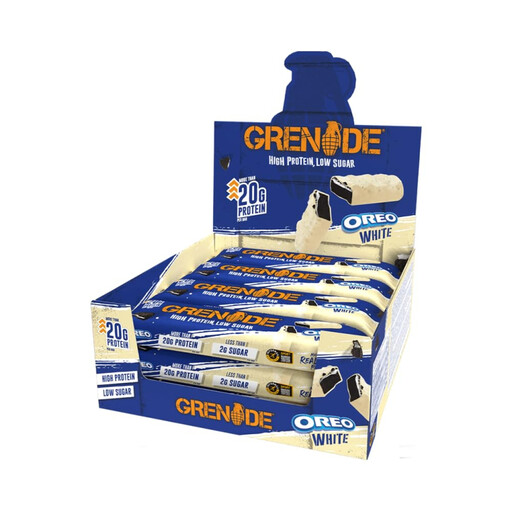
These Grenade multipacks are chocolate-style protein bars for shoppers considering Easter treats. Their protein or sugar positioning is not a reduced-fat claim: compare the exact flavour’s fat panel and sharing guidance before choosing.
 No image available
A chocolate-style option for a treat basket, not a substitute for checking fat content. Check the current pack for peanuts, milk and soya, and read its guidance on suitability for children before including it in a hunt.
 No image available
For a sweet-flavoured bar, compare this variant’s fat per bar and per 100 g rather than using its protein or sugar positioning as a shortcut. Check the pack for milk, soya and wheat, and for guidance on suitability for children.
 No image available
The 50 g bar size makes per-bar and per-100 g figures worth reading together. Product information warns against use by children and by pregnant or breastfeeding women; check the current pack’s wording, ingredients and allergens before sharing.
 No image available
If chocolate flavour is the attraction, still compare fat for this exact 50 g variant. Product information warns against use by children and by pregnant or breastfeeding women; read the current pack for that guidance and its allergen details.
 No image available
Peanut Butter flavour makes an exact-pack allergen check especially important for a shared hunt. Compare its fat figures separately; product information also warns against use by children and by pregnant or breastfeeding women.
No. The nutrition-claims annex published by legislation.gov.uk sets a comparative reduction of at least 30% against a similar product for a reduced-nutrient claim; its separate low-fat condition for solid food is no more than 3 g fat per 100 g. Check which claim appears on the exact bar.
Read total fat and saturated fat both per 100 g and per bar. The per-100 g figures help compare products on the same basis, while the per-bar figures describe the portion you plan to offer; check energy, protein and sugars on those bases too.
It can meet a different buying priority, but those claims do not establish reduced fat. For example, Tesco Groceries lists 16 g protein and 9.1 g fat per 55 g Barebells Caramel Choco bar, so check fat separately if that is your deciding measure.
Check each exact pack’s ingredients, allergen and precautionary statements, sweetener information and any guidance about who should consume it. Keep the wrapper available: the Food Standards Agency explains that precautionary allergen statements signal possible unintended allergen presence.
They are worth checking on the particular pack, especially if someone might eat more than one bar. The Tesco Groceries Barebells Caramel Choco listing identifies sweeteners and carries an excessive-consumption laxative-effect warning; do not assume every flavour has identical ingredients or wording.