Someone comparing fat content
If the recipient wants a lighter protein bar, compare total and saturated fat per 100g before looking at the amount in each bar. Protein and low-sugar wording answer different questions.


For a Father’s Day protein-bar gift when reducing fat matters, compare fat and saturated fat per 100g, then check the figures for a whole bar; a bar described as lighter does not necessarily meet the NHS low-fat benchmark. Myprotein presents Lean Layered as a lighter option with 15g protein per bar, while PhD’s Choc Brownie Smart Bar has 21g protein per 64g bar but 5.2g saturated fat per 100g. Check the recipient’s preferred flavour and the exact product’s allergen information before choosing.
The useful comparison depends on whether the recipient is focused on fat content, a convenient protein snack or particular ingredients.
If the recipient wants a lighter protein bar, compare total and saturated fat per 100g before looking at the amount in each bar. Protein and low-sugar wording answer different questions.
A single-bar portion may suit a recipient who wants a convenient snack between meals, at work or around training. Check protein per bar alongside the bar’s size rather than assuming all portions are alike.
Check the chosen flavour’s ingredients and allergen statement, including any precautionary wording. Sugar alcohols also matter if the recipient already knows they prefer to avoid them.
Start with the per-100g nutrition panel to compare different bar sizes, then use the per-bar figures to judge the portion being given.
| Priority | What to check | Your needs |
|---|---|---|
| Total fat | Compare fat per 100g and per bar. The NHS gives 3g fat or less per 100g as its low-fat benchmark; a manufacturer’s lighter-bar comparison does not establish that a product meets it. | I’m choosing for someone who wants to compare fat content, not just pick a bar labelled high in protein. |
| Saturated fat | Read saturates separately from total fat. The NHS identifies more than 5g saturated fat per 100g as high; PhD lists 5.2g per 100g for its Choc Brownie Smart Bar. | If reducing saturated fat matters to the recipient, I want the exact flavour’s figure before committing to a multipack. |
| Protein and portion | Compare protein for the whole bar and note its weight. Myprotein states 15g protein for a Lean Layered bar; PhD lists 21g for a 64g Choc Brownie Smart Bar. These are different products and portions. | A portable single bar is useful for this gift, but I want to know what its actual portion contains. |
| Flavour and ingredients | Check the exact flavour’s ingredients, allergens and precautionary statements. Quest says its protein bars contain sugar alcohols and that tolerance varies; this does not describe every brand’s recipe. | The recipient’s flavour preferences and ingredient restrictions come before choosing a box of bars. |
Those descriptions refer to different nutrients. PhD lists 1.2g sugars per 64g Choc Brownie Smart Bar, alongside 14g fat and 5.2g saturated fat per 100g.
Compare fat and saturates per 100g first if that is the recipient’s priority, then look at protein and the figures for the full bar.
A comparison with another bar does not show whether a product meets the NHS benchmark of 3g fat or less per 100g.
Use the exact flavour’s nutrition panel when deciding whether the low-fat benchmark applies.
Recipes and allergen statements can differ by flavour. Quest says its bars contain sugar alcohols and that tolerance varies; Myprotein and PhD also give warnings about excessive consumption of their bars.
Confirm the preferred flavour and read the ingredients, allergen statement and any relevant pack warning before buying several bars.
A 40g bar and a 64g bar represent different portions, so per-bar nutrition figures alone do not make a like-for-like comparison.
Use per-100g figures to compare products, then check what each whole bar contains and who fulfils the order.
These references help distinguish the ranges and labels to inspect; a brand name alone does not establish the fat content of a particular flavour.
Myprotein presents Lean Layered as a lighter alternative to its Layered Bar and states that it contains 15g protein per bar.
PhD positions Smart Bar as a convenient protein snack between meals.
Grenade’s protein-bar range includes flavour-led bars marketed around protein and sugar content.
Tesco Groceries lists several Barebells Soft Protein Bar 55g flavours, including Salted Peanut Caramel and Banana Dream.
Quest describes its standard protein bars as containing up to 21g protein per bar.
Tesco is a grocery retailer, not a protein-bar manufacturer, and lists bars from multiple brands.
These chocolate- and biscuit-flavoured multipacks are options for a Father’s Day gift. Compare each exact bar’s fat and saturated-fat label before treating it as a reduced-fat choice.
 No image available
The 12-bar pack suits a recipient who prefers a chocolate-and-peanut-butter flavour. If reducing fat is the aim, check this flavour’s own nutrition panel rather than using figures for PhD’s different Choc Brownie bar; check its ingredients and allergens too.
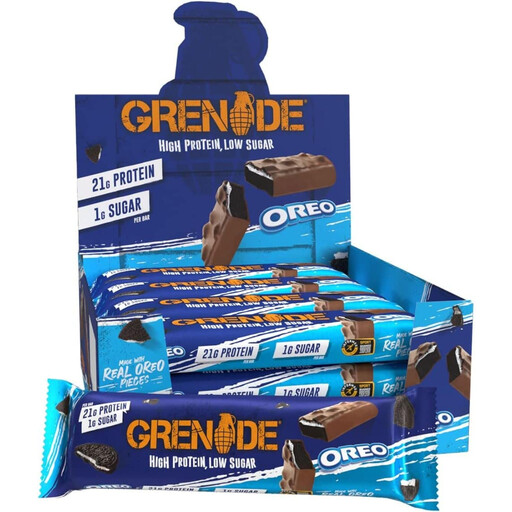 No image available
This multipack is a flavour-led gift option for someone who likes Oreo. Its low-sugar description does not establish lower fat: compare total fat and saturates on the exact bar’s label, and check the ingredients before gifting.
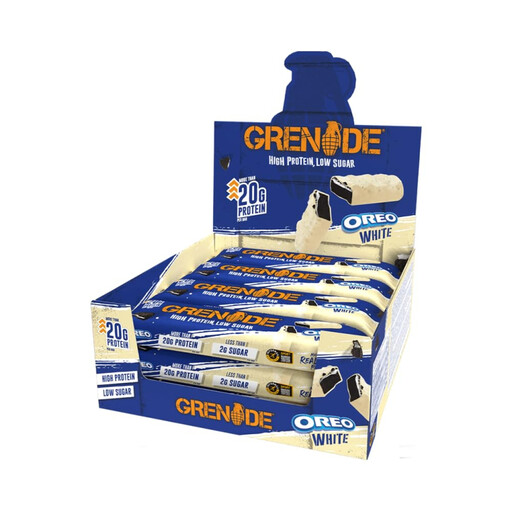 No image available
Choose this pack by flavour preference, not by assuming its nutrition matches the Oreo variant. Check White Oreo’s per-100g fat and saturated-fat figures, its whole-bar values and its allergen statement.
 No image available
The Double Chocolate flavour offers a 50g bar in a 12-pack. Compare its nutrition per 100g with larger bars before judging the fat difference, then check the full serving and ingredient label.
 No image available
This is a flavour-led multipack rather than a choice to make on protein wording alone. For a recipient focused on reducing fat, read the exact bar’s fat and saturated-fat figures; check its peanut and other allergen information before gifting.
No. A comparison with another bar does not by itself meet the NHS low-fat benchmark of 3g fat or less per 100g. Read the nutrition panel for the particular flavour before using “low fat” to describe it.
Use both: per 100g puts different bar sizes on the same basis, while per bar shows the contents of the portion the recipient would eat. Check total fat, saturates and protein in both contexts when those figures matter to the gift choice.
Yes. PhD lists 1.2g sugars per 64g Choc Brownie Smart Bar and 5.2g saturated fat per 100g for that flavour. The NHS identifies more than 5g saturated fat per 100g as high, so read the two nutrients separately.
Check the exact product’s ingredients and any precautionary allergen statement before buying; do not assume every flavour in a brand’s range has the same ingredients. The Food Standards Agency explains that precautionary allergen wording communicates the possible unintended presence of a regulated allergen.
No. The cited Myprotein and PhD descriptions present their bars as snacks. If replacing a meal is the intended use, check the exact product’s labelling rather than assuming a protein-bar description covers that purpose.