Day hikers reducing dietary fat
If fat intake is a priority for you, compare the total-fat figures for individual flavours on the same basis. A low-sugar claim does not tell you which bar has less fat.


Choose a protein bar with less fat only if reducing fat matters to your diet, and compare total fat on the labels of the exact flavours rather than treating “low sugar” as the same claim. For an all-day hike, plan carbohydrate-containing food alongside any protein bar, carry enough for the route and check allergens and sweetener warnings before you set off.
If fat intake is a priority for you, compare the total-fat figures for individual flavours on the same basis. A low-sugar claim does not tell you which bar has less fat.
A bar can be one part of the food you carry, rather than your entire snack plan. The British Mountaineering Council advises hill walkers to carry enough food for the day, snack regularly and take emergency food.
If particular allergens or sweeteners matter to you, read the ingredients and warnings on the exact flavour before packing it. A vegan label does not, by itself, answer an allergen question.
Start with the food you need for the length of the walk, then compare bars by total fat and check whether their ingredients suit you.
| Priority | What to check | Your needs |
|---|---|---|
| Food for the route | Check carbohydrate and protein per bar. Plan how much food to carry for the walk’s duration, distance and terrain. | For an all-day hike, I want more than one bar to rely on. University College London Hospitals NHS Foundation Trust describes carbohydrate and protein as a useful mix for a long hike; the British Mountaineering Council advises carrying enough food and an emergency reserve. |
| Total fat | Compare total fat per 100g across the exact flavours, then check the amount per bar and its serving size. Read sugar and protein figures separately. | I’m reducing fat in my diet, so I need a like-for-like comparison rather than choosing by a “low sugar” or “high protein” claim. |
| Pack planning | Check the size of each bar and how many you intend to carry. Leave room for other food needed on the route. | I need snacks I can carry for the day without assuming one protein bar covers every stop. |
| Ingredients | Read the exact flavour’s ingredient list and any “may contain” statement. Check dietary labels separately from allergen information. | If milk, soya, gluten-containing cereals or nuts matter to me, I need to check the individual bar, even when it is labelled vegan. |
| Sweeteners | Check for polyols in the ingredients and read any excessive-consumption warning, particularly if packing several bars. | For a remote walk, I’d rather know how I tolerate a sweetened bar before making it a regular trail snack. The NHS notes that some polyols can have a laxative effect in large amounts. |
Sugar and total fat are different entries on a nutrition declaration. A low-sugar description does not establish how a bar’s fat content compares with another flavour.
Compare total fat using the same unit across the bars you are considering, then check carbohydrate, protein and the serving size separately.
University College London Hospitals NHS Foundation Trust describes carbohydrate and protein as a useful mix for an all-day hike. The British Mountaineering Council also advises carrying enough food, snacking regularly and bringing emergency food.
Plan other food for the route and use a protein bar as one snack if you want one.
The NHS says some polyols can have a laxative effect in large amounts. Grenade’s Cookie Dough and Barebells’ Vegan Fudge Brownie product information also carry excessive-consumption warnings; check whether a warning applies to the bar you choose.
Read the ingredients and try an unfamiliar bar before relying on it during a long walk.
Barebells’ Vegan Fudge Brownie lists gluten-containing cereals, soya and wheat, and carries a “may contain” statement for other ingredients. Vegan status does not make every flavour suitable for every allergy.
Check the ingredient list and relevant “may contain” information on the exact bar each time you buy it.
Grenade offers confectionery-style protein bars. Its Cookie Dough product information states 21g protein and 1.4g sugar per 60g bar; those figures describe Cookie Dough, not every Grenade flavour.
PhD positions its Smart Bar as a convenient, high-protein, low-sugar snack for use on the go.
Barebells lists original, soft and vegan protein-bar ranges, giving shoppers different ingredient formats to examine.
Tesco’s grocery range is a retail route for comparing protein-bar listings, including conventional and plant-based options.
These Grenade and PhD multipacks are protein-bar options to consider when planning hiking snacks. Compare total fat and carbohydrate on each flavour’s current label before deciding which, if any, fits your route and dietary needs.
 No image available
If reducing fat is your priority, compare this flavour’s total fat per 100g with the other bars you are considering. Check its carbohydrate figure when planning food for a longer walk, and read its ingredient and sweetener information.
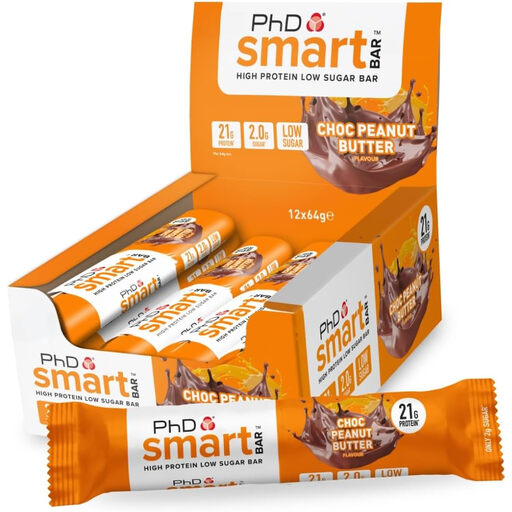 No image available
Check total fat per 100g before choosing this bar for a fat-conscious snack plan, then compare the 64g serving with smaller bars. Read the exact flavour’s allergen information and any sweetener warning before packing it.
 No image available
Use this flavour’s nutrition label to compare total fat with other 50g bars on both a per-100g and per-bar basis. If it is going on an all-day hike, plan carbohydrate-containing food as well and check the ingredients.
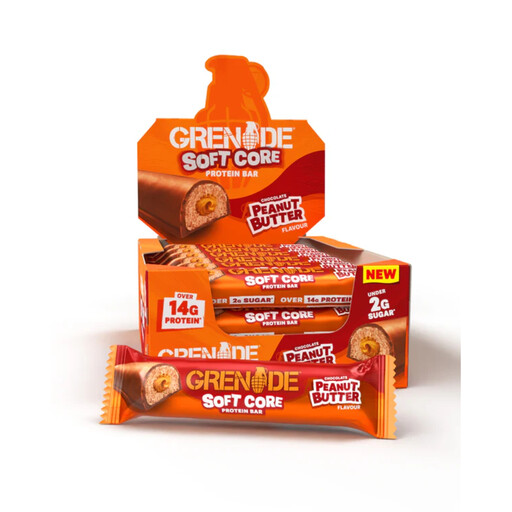 No image available
Compare the exact Peanut Butter flavour’s total-fat declaration before selecting it for a reduced-fat plan. If peanuts or other allergens matter to you, check the complete ingredient list and “may contain” statement rather than relying on the flavour name.
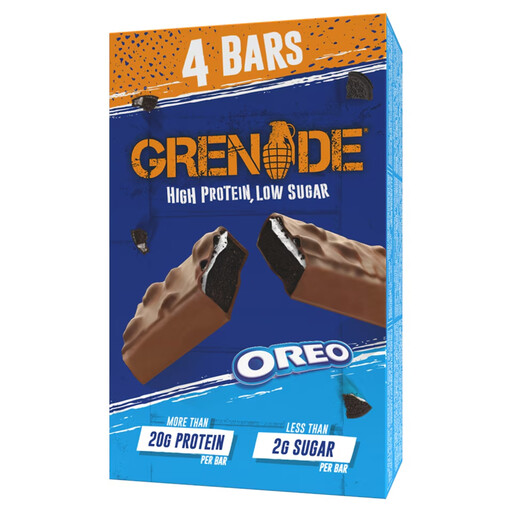 No image available
The low-sugar wording in this product name does not establish that it has less fat than another bar. Compare total fat for the 60g serving and per 100g, then check carbohydrate, allergens and sweetener information for this flavour.
Not necessarily. Choose food according to the length of the walk and what else you are carrying, rather than assuming every hike calls for a high-protein snack.
Consider carbohydrate-containing food alongside any protein bar. University College London Hospitals NHS Foundation Trust describes a carbohydrate-and-protein mix as useful for a long hike, while the British Mountaineering Council advises carrying enough food for the day, snacking regularly and bringing emergency food.
No. Sugar and total fat are separate nutrition figures. Compare total fat on the current label of each exact flavour using the same unit, such as per 100g, and check the amount per bar too.
No. Barebells’ Vegan Fudge Brownie lists gluten-containing cereals, soya and wheat and carries a “may contain” statement for other ingredients. Check the exact flavour’s ingredient list and cross-contact information when an allergen matters to you.
Yes. Read the ingredients and any excessive-consumption warning on the bars you plan to pack. The NHS notes that some polyols can have a laxative effect in large amounts, so try an unfamiliar bar before relying on several during a remote walk.