Road trippers tracking fat intake
If fat reduction is the priority, compare the nutrition panels per 100g before considering the amount in one bar. A smaller portion can have less fat per bar without being lower in fat on the same-weight basis.


For a road trip where reducing fat matters, compare fat per 100g, fat per bar and the basis of any reduced-fat claim; a high-protein or low-sugar description does not answer that question. Myprotein UK describes its Lean Layered Cookie Dough bar as having 42% less fat than its stated typical protein-bar comparator, but its 8.1g fat per 100g exceeds the UK low-fat condition of 3g per 100g for solid foods published at legislation.gov.uk. Check the exact flavour’s allergens and storage directions before packing it.
If fat reduction is the priority, compare the nutrition panels per 100g before considering the amount in one bar. A smaller portion can have less fat per bar without being lower in fat on the same-weight basis.
If protein and a dessert-style flavour matter more than reducing fat, a conventional bar may fit that preference. Check its fat figures separately rather than treating a protein or low-sugar description as a reduced-fat claim.
Check the suitability statement and allergen declaration for the exact flavour. A vegan label does not establish that a bar is free from other allergens: Barebells lists gluten-containing cereals, soya and wheat in its Vegan Fudge Brownie bar.
Consider when: Reducing fat relative to a stated comparator is your main reason for choosing a protein bar.
Keep in mind: Myprotein UK’s Lean Layered Cookie Dough comparison is relative; its 8.1g fat per 100g is above the UK low-fat condition for solid foods published at legislation.gov.uk.
Consider when: Protein per bar and a sweet snack are more important to you than a reduced-fat comparison.
Keep in mind: Tesco lists 13g fat per 100g for the checked Grenade Birthday Cake bar, while PhD lists 9.2g fat per 64g Choc Brownie Smart Bar; neither figure establishes a reduced-fat comparison.
Consider when: A vegan suitability statement is a deciding requirement for your travel snack.
Keep in mind: Vegan suitability does not answer the fat or allergen questions. Tesco’s TREK High Protein Choc Caramel label lists 7.2g fat per 44g bar and a may-contain allergen statement.
| Priority | What to check | Your needs |
|---|---|---|
| Fat comparison | Read fat per 100g and per bar. For reduced-fat wording, identify what the product is compared with; do not confuse that comparison with a low-fat claim. | I’m trying to reduce fat, so I want to compare bars on the same-weight basis and know what one bar contains. |
| Portion and protein | Compare bar weights and protein per bar. Read sugar and saturated fat on the same product’s nutrition panel rather than relying on the front-of-pack protein description. | A sweet protein snack appeals to me, but I still want to know what is in the portion I’ll take on the journey. |
| Dietary suitability | Read the exact flavour’s ingredients, allergen declaration and any may-contain statement. Check sweeteners, polyols and consumption warnings where relevant. | Before I pack several bars, I need to know whether this flavour suits my dietary requirements and preferences. |
| Travel storage | Follow the pack’s storage directions and check the individual bar size and number of bars in the pack. | I want portions that fit our planned stops and can be carried in line with the label’s instructions. |
A bar can be described as high in protein or low in sugar without being reduced in fat. Tesco’s label for Grenade Birthday Cake lists 13g fat per 100g, and PhD’s Choc Brownie Smart Bar lists 9.2g fat per 64g bar.
Compare fat per 100g, then check fat in the bar you would eat. If a product says “reduced fat”, identify its stated comparison.
A comparison with another bar is not the same as meeting an absolute low-fat condition. The UK condition published at legislation.gov.uk is no more than 3g fat per 100g for a solid food; Myprotein UK lists 8.1g per 100g for Lean Layered Cookie Dough.
Read the per-100g figure when assessing a low-fat description, and read the comparator when assessing a reduced-fat description.
Sweeteners and polyols differ between bars. PhD warns that excessive consumption of its Smart Bar may cause laxative effects, so the consumption guidance matters when planning snacks for a long drive.
Read the exact flavour’s ingredients and warnings before deciding how many bars to take.
Barebells’ Vegan Fudge Brownie label lists gluten-containing cereals, soya and wheat, with several other allergens in its may-contain statement. Vegan suitability and allergen suitability are separate checks.
Use the current packaging for the exact product and flavour when checking allergens.
These examples illustrate different label checks; a brand name alone does not establish the nutrition or suitability of every flavour it sells.
Its UK Lean Layered range provides an explicit reduced-fat comparison for shoppers considering that route.
The checked Birthday Cake bar is an example to assess by its full nutrition panel, not by its protein description alone.
Smart Bar is another protein-bar route for shoppers whose first priority is not a reduced-fat comparison.
Its UK range includes vegan options, making product-by-product suitability checks important.
Its protein-bar listings provide product-specific pack sizes and nutrition labels for comparison.
These bars offer other road-trip snack formats to consider if a reduced-fat comparison is not your deciding requirement. Check each flavour’s fat per 100g, portion and ingredients before choosing one for a fat-reduction goal.
 No image available
A multipack of 60g bars for planned road-trip stops. If reducing fat is the priority, compare the flavour’s fat per 100g with other bars and check its allergen declaration.
 No image available
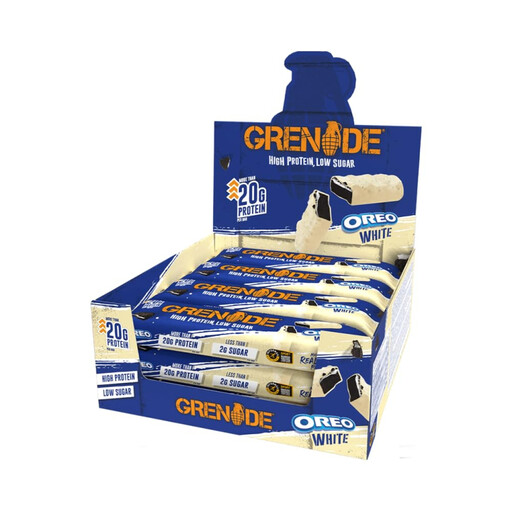
This 12-pack uses 60g portions. Its protein and low-sugar description does not establish reduced fat, so read the exact bar’s fat figures and ingredients before packing it.
 No image available
The 50g bar is a different portion size from the 60g Grenade options here. Use fat per 100g for a like-for-like comparison, then check the amount per bar and the ingredient label.
 No image available
This pack contains four 40g bars rather than twelve. Check the nutrition panel per 100g as well as per bar if you are comparing its fat content with larger portions, and read the nut allergen information.
No. A reduced-fat description compares a product with a stated reference, while the UK low-fat condition for solid foods published at legislation.gov.uk is no more than 3g fat per 100g. Myprotein UK lists 8.1g fat per 100g for Lean Layered Cookie Dough alongside its claim of 42% less fat than its stated typical protein-bar comparator.
Use both: fat per 100g puts different bar sizes on the same basis, while fat per bar shows the amount in one portion. Myprotein UK lists 8.1g fat per 100g for Lean Layered Cookie Dough; for any flavour you choose, check its own per-bar figure too.
No. Those descriptions address different parts of the nutrition panel. Tesco lists 21g protein per 60g Grenade Birthday Cake bar alongside 13g fat per 100g, so check fat directly when that is your buying priority.
Read the current declaration for the exact product and flavour, including any may-contain statement, before buying the pack. Barebells’ Vegan Fudge Brownie, for example, lists gluten-containing cereals, soya and wheat; a vegan description does not replace an allergen check.
Follow the chosen bar’s packaging rather than assuming every product has identical directions. The storage guidance described for Myprotein Lean Layered calls for a cool, dry place away from direct sunlight, so check where the bars will be kept during travel and stops.