Shoppers comparing total fat
If lower total fat matters, compare the exact flavours per 100g before looking at their protein per bar. Myprotein lists 8.1g fat per 100g for Lean Layered Cookie Dough; the NHS describes 3g or less per 100g as low fat.


If reducing total fat is the priority for a street party, compare protein bars per 100g rather than relying on a high-protein or low-sugar description. Myprotein lists 8.1g fat per 100g for its Lean Layered Cookie Dough bar, compared with 13g or more for the named standard-bar examples, but the NHS describes 3g or less per 100g as low fat; whichever bar you choose, keep its wrapper available for guests to check ingredients.
If lower total fat matters, compare the exact flavours per 100g before looking at their protein per bar. Myprotein lists 8.1g fat per 100g for Lean Layered Cookie Dough; the NHS describes 3g or less per 100g as low fat.
Protein per bar may matter more to you than choosing the lower-fat example. Tesco lists 21g protein per bar for the named Grenade and PhD products, alongside 7.8g and 9.2g fat per bar respectively. Check both figures for the flavour you intend to serve.
Keep each product’s current packaging accessible so guests can inspect ingredients and allergen statements themselves. The Food Standards Agency recommends retaining packaging for prepacked food at community events for people with food hypersensitivities.
Compare fat and saturated fat per 100g across flavours, then use the per-bar figures to plan what each serving provides.
| Priority | What to check | Your needs |
|---|---|---|
| Total fat | Compare total fat per 100g on the exact flavour. NHS food-label guidance describes 3g or less per 100g as low fat; Myprotein lists 8.1g per 100g for Lean Layered Cookie Dough. | I’m trying to choose a bar with less total fat, not assuming that a protein or sugar claim answers that question. |
| Saturated fat | Read saturates separately from total fat. The NHS describes more than 5g saturates per 100g as high; Tesco lists 6.0g for Grenade Chocolate Chip Cookie Dough and 5.2g for PhD Chocolate Brownie. | Even if the protein amount suits me, I want to know what the saturated-fat figure says for that flavour. |
| Serving size | Use per-100g values for comparison and per-bar values for servings. The named listings include 40g, 60g and 64g bars, so their per-bar figures do not describe equal portions. | How many bars will guests take, and what does one bar actually provide? |
| Ingredients | Check the current wrapper’s ingredients, declared allergens and any precautionary statements. Keep the matching packaging with the bars; the Food Standards Agency recommends this at community events. | I need guests to be able to check their own restrictions without relying on my description of a flavour. |
| Pack quantity | Count the bars in each pack against the number of intended servings. Check the current listing and packaging before buying, as Tesco notes that food formulations can change. | A multipack may simplify party planning, but I still need the right quantity and current label information. |
Tesco lists 21g protein per bar for both Grenade Chocolate Chip Cookie Dough and PhD Chocolate Brownie, but 13g and 14g total fat per 100g respectively. Protein and fat are separate nutrition figures.
Compare total fat and saturates per 100g before using protein per bar to choose between them.
An unlabelled assortment makes it harder for guests to check ingredients and precautionary allergen statements for the bar they pick.
Keep bars in their wrappers, or keep the correct packaging directly beside each flavour. The Food Standards Agency recommends retaining packaging for prepacked food at community events.
A per-bar figure changes with serving size: the named examples range from 40g to 64g. Comparing only those figures can obscure the difference per 100g.
Compare nutrition per 100g first, then check the amount in the bar you plan to offer.
Tesco warns that reformulation can change ingredients, nutrition and allergen information. An earlier listing cannot establish what is on a current wrapper.
Check the exact product and its packaging before buying, particularly when fat content or an allergen affects your choice.
These references concern the named products and flavours, not every bar made by each brand.
Lean Layered Cookie Dough is a comparatively lower-fat example for shoppers assessing total fat.
Chocolate Chip Cookie Dough is an example to consider when protein per bar matters more than reducing fat.
Smart Protein Bar Chocolate Brownie is another named 21g-protein serving for comparison.
The listed 60g Quest bar provides another serving size to compare, including for guests checking gluten labelling.
Soft Protein Bar Caramel Choco is a 55g example for shoppers comparing different protein and fat amounts.
Tesco’s named product listings provide nutrition and pack details for comparing the examples above.
These Grenade multipacks offer named flavours and pack sizes for street-party planning. If reducing fat is your priority, check each exact flavour’s current per-100g nutrition panel before choosing; a high-protein or low-sugar description does not establish its fat content.
 No image available
The four-bar pack offers a countable option for party servings. Check the Oreo flavour’s total fat, saturates and allergens on its current packaging.
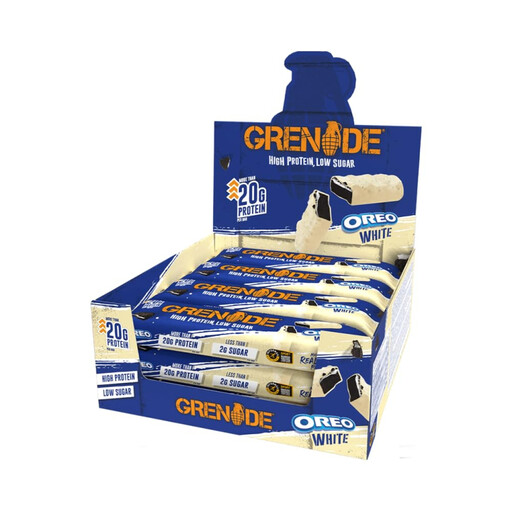 No image available
This twelve-bar pack may suit a larger serving count. Compare the White Oreo flavour’s current per-100g nutrition and allergen label with any other bars you plan to serve.
 No image available
The 50g bar size differs from the 60g Oreo variants. Use per-100g figures for a like-for-like fat comparison, then check the Double Chocolate wrapper for allergens.
 No image available
This twelve-pack provides another 50g flavour option for planning servings. Check its own nutrition panel and ingredients rather than applying figures from a different Grenade flavour.
 No image available
If offering this Peanut Butter flavour to a mixed group, leave its packaging available for guests to inspect. Check the exact wrapper for allergens and compare its fat figures per 100g.
No. The NHS describes 3g or less total fat per 100g as low fat. Myprotein lists 8.1g per 100g for Lean Layered Cookie Dough, so its comparison with a cited typical protein-bar average does not put that flavour below the low-fat figure.
Use both: compare fat and saturates per 100g across different bar sizes, then read the per-bar figures to understand one serving. NHS food-label guidance says nutrition information is provided per 100g and may also be shown per portion.
Yes, keep the correct packaging available with prepacked bars. The Food Standards Agency recommends this at community events so people with food hypersensitivities can check ingredients themselves; do not mix unlabelled flavours in a shared bowl.
No. A wrapper lets guests check the exact product, but suitability depends on its current ingredients and allergen statements. For example, the listed Quest bar contains milk and almonds, while the named Tesco protein-bar listings include precautionary allergen information.