Runners with a gap since their last meal
A familiar rice cake may serve as a small snack if you want something before a short run. It need not become a full fuelling plan: the UK Sports Institute advises against treating a parkrun like a marathon.


A rice cake is an optional small snack before a 5k, not something every runner needs: the UK Sports Institute cautions against fuelling a short run as though it were a marathon. If you want a familiar top-up after missing a meal, compare fat per 100 g and carbohydrate per cake, check the pack for allergens, and try your portion and timing during training.
A familiar rice cake may serve as a small snack if you want something before a short run. It need not become a full fuelling plan: the UK Sports Institute advises against treating a parkrun like a marathon.
Plain and flavoured rice cakes can have different fat values. Compare the per-100-g figure on the product you intend to eat rather than relying on the category name.
Check the current ingredients and allergen statements on the exact pack. A gluten-free or vegan description does not answer every cross-contact question.
Start with whether you want a snack at all, then compare the portion, fat value and pack information for the variety you would actually take on a run.
| Priority | What to check | Your needs |
|---|---|---|
| Snack size | Check carbohydrate per cake, not just per 100 g. Tesco lists 5.6 g per cake for Kallo Lightly Salted Wholegrain Low Fat Rice Cakes; Sainsbury's lists 6.1 g for its plain rice cakes. Decide whether a snack fits the time since your last meal. | I have not eaten recently and want a small, familiar snack rather than a meal. For a typical short 5k, I may not want an extra snack at all. |
| Fat content | Compare fat per 100 g on the exact variety. The low-fat claim criterion for solid foods in the Annex published on legislation.gov.uk is no more than 3 g per 100 g. Marks & Spencer lists 2.5 g per 100 g for its lightly salted rice cakes, but 15.2 g for its Sweet and Salty variety. | If keeping fat down is my priority, I want the nutrition panel to confirm it; a flavoured rice cake may differ substantially from a plain one. |
| Pack suitability | Read the current ingredients, allergen and cross-contact statements. Try the chosen variety, portion and timing during training rather than for the first time immediately before an event. | I need a snack that fits my dietary requirements and is familiar to me before a run. |
Marks & Spencer lists 15.2 g fat per 100 g for its Sweet and Salty Rice Cakes, compared with 2.5 g per 100 g for its Lightly Salted Rice Cakes. The variety matters more than the category name.
Use the per-100-g nutrition panel to compare products, and check the current pack before relying on a low-fat claim.
Your usual pre-run routine gives you a more useful basis for choosing a portion and timing than another runner's routine.
Try the rice cake during an ordinary training run first; if it does not suit you, use a familiar alternative.
The Kallo lightly salted wholegrain product listed by Tesco provides 5.6 g carbohydrate per cake, while Sainsbury's plain rice cake provides 6.1 g. One cake is a small snack, not the equivalent of a meal.
Decide whether you want no extra snack, a small top-up or a meal according to when you last ate and what you have tried in training.
Terms such as vegan or gluten-free do not replace the product's ingredient and cross-contact information.
If an allergy or coeliac disease affects your choice, read the current pack for the exact variety before taking it to an event.
Kallo has lightly salted varieties to compare when looking for a lower-fat, plain-style rice cake.
Its own-label plain and lightly salted rice cakes provide per-cake figures for comparing small portions.
The range illustrates why a plain rice cake and a flavoured version need separate nutrition checks.
Its flavoured Jumbos are worth comparing flavour by flavour if reduced fat is your deciding factor.
Tesco's rice-cake categories include plain, flavoured and sweet options, so browsing by category alone does not settle a lower-fat choice.
These options include an organic lightly salted Kallo rice cake and a Marmite-flavoured rice cake. Compare the current pack details against your preferred pre-run snack rather than assuming the two varieties have the same nutrition or allergen profile.
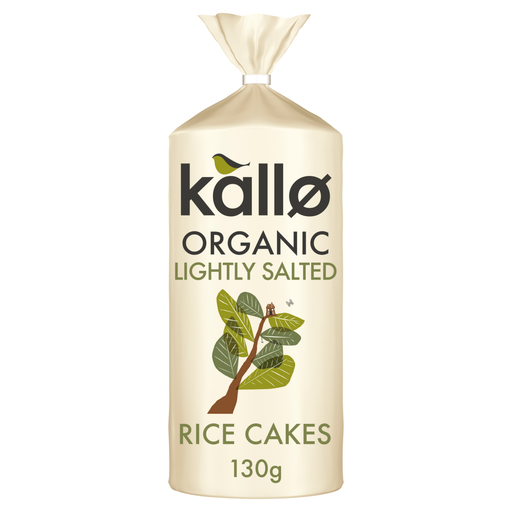 No image available
A lightly salted option to consider for a familiar small pre-run snack. Sainsbury's labels this organic variety low fat; check the current pack for its nutrition and allergen details before deciding on a portion.
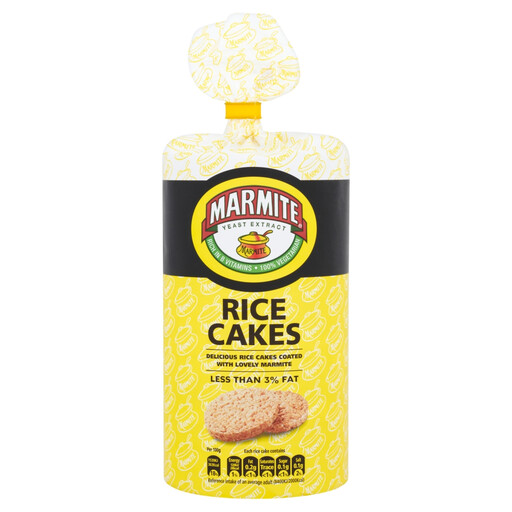 No image available
A Marmite-flavoured alternative if you prefer that taste. Check the current pack's fat per 100 g, carbohydrate per cake and allergen information against your needs, and try the flavour during training before taking it to an event.
No. The UK Sports Institute advises against fuelling a parkrun as though it were a marathon. If you have missed a meal and want a small snack, choose something familiar and test the portion and timing during training.
Use the fat figure per 100 g for the exact variety, as well as any front-of-pack wording. The low-fat claim criterion for solid foods in the Annex published on legislation.gov.uk is no more than 3 g fat per 100 g; flavoured products should not be assumed to match plain ones.
Try your chosen rice cake and portion during training, at a time that fits your usual pre-run routine. That lets you assess whether the snack and timing suit you before an event.
No. Read the current pack's ingredients and cross-contact statements for the exact variety. A dietary description does not replace those checks if you have an allergy or coeliac disease.