Families comparing savoury rice cakes
If a plain or lightly salted cake appeals to the pupil, compare fat per 100 g before choosing between it and a flavoured or coated version. Per-cake figures can then help you plan what to put in the lunchbox.


For a secondary-school packed lunch where fat content is the priority, start by comparing plain or lightly salted rice cakes per 100 g: the Kallo, Tesco and M&S examples list 2.5–2.9 g fat per 100 g. A flavoured portion pack may be easier to pack, but compare its fat and salt on the stated serving basis rather than assuming it matches a plain cake. Check the current pack’s allergen advice and the school’s arrangements before packing it.
If a plain or lightly salted cake appeals to the pupil, compare fat per 100 g before choosing between it and a flavoured or coated version. Per-cake figures can then help you plan what to put in the lunchbox.
A 23 g flavoured multipack gives a defined portion. Check that particular flavour’s fat and salt per pack alongside the convenience of packing it.
Read the exact pack’s ingredients and precautionary allergen statement, then check the school’s arrangements. A gluten-free label does not resolve questions about other allergens.
Decide whether the lunchbox calls for a plain savoury cake, a flavoured portion pack or a sweeter snack; then compare labels on the same measurement basis.
Choose when: A simple savoury cake suits the pupil and comparing fat content is the main aim.
Bear in mind: A gluten-free label does not rule out a precautionary warning for other allergens.
Choose when: A ready-portioned flavoured snack is more useful for the lunchbox than a larger plain pack.
Bear in mind: Fat and salt vary by flavour, so the pack size alone does not tell you how it compares.
Choose when: The aim is a sweeter rice-cake snack rather than a plain savoury one.
Bear in mind: Check fat per 100 g before treating it as equivalent to a lightly salted cake.
| Priority | What to check | Your needs |
|---|---|---|
| Fat content | Compare fat per 100 g first, then per cake if stated. M&S Lightly Salted lists 2.5 g per 100 g; Kallo Organic Lightly Salted lists 2.7 g; Tesco Lightly Salted lists 2.9 g. M&S Sweet and Salty lists 15.2 g per 100 g. | I’m looking for a plain savoury cake and want to check that a sweeter variety meets the same fat-content aim before buying it. |
| Portion and flavour | Check whether nutrition is given per cake or per pack. Snack a Jacks lists 1.7 g fat and 0.63 g salt per 23 g Salt & Vinegar multipack; its Sweet Chilli multipack lists 1.9 g fat and 0.21 g salt per 23 g pack. | A ready-portioned flavour would be convenient, but I want to compare the specific pack rather than choose it by its calorie figure alone. |
| Allergens | Read the current ingredients, gluten statement and precautionary allergen advice. Kallo labels its lightly salted cakes gluten free but says they may contain milk, sesame and soya; check the school’s arrangements too. | I need a snack that fits the pupil’s allergen requirements and the school’s arrangements, not just a category description. |
Marks & Spencer lists 15.2 g fat per 100 g for Sweet and Salty Rice Cakes, against 2.5 g per 100 g for its Lightly Salted cakes. The product type changes the comparison.
Start with the per-100-g figures, then check serving size and ingredients for the variety you intend to pack.
Snack a Jacks’ 23 g Salt & Vinegar multipack lists 0.63 g salt per pack. Fat and salt need separate checks even when the portion is already set.
Compare the stated per-pack figures for the flavours you are considering.
Kallo labels its lightly salted product gluten free, yet advises that it may contain milk, sesame and soya. Neither the product category nor one allergen statement settles every pupil’s requirements.
Read the current pack and follow the individual school’s allergy arrangements before packing it.
Ingredients and allergen information can change, so details used to shortlist a product may differ from those on the pack in hand.
Check the physical pack each time you buy a different variety or notice a packaging change.
These product examples show why the exact variety matters more than a brand name when comparing packed-lunch rice cakes.
Kallo includes plain wholegrain rice cakes in its range.
Tesco lists a 130 g pack of Lightly Salted Rice Cakes made with brown rice and sea salt.
Its lightly salted and sweet-and-salty varieties offer a useful comparison between product types.
Snack a Jacks offers flavoured 23 g multipacks as well as jumbo cakes; the formats should not be confused.
These options include a plain lightly salted rice cake, savoury flavoured cakes and a lightly salted rice cracker. The jumbo cakes and crackers are not the 23 g multipacks discussed above; compare each product’s own pack and serving information.
 No image available
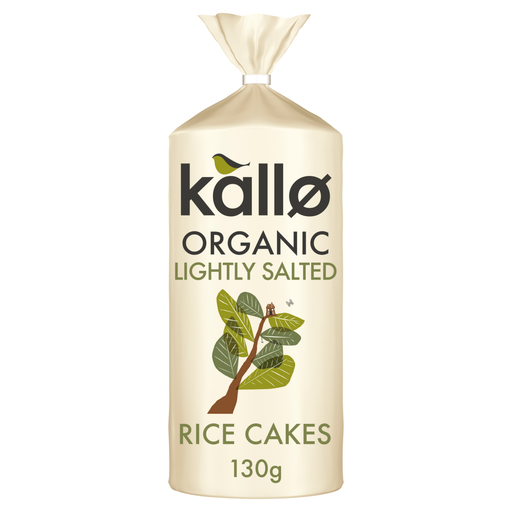
A plain savoury option for comparing fat per 100 g: Kallo lists 2.7 g per 100 g and 0.2 g per cake for its Organic Lightly Salted product. It is labelled gluten free but may contain milk, sesame and soya; check the current pack before putting it in a lunchbox.
 No image available
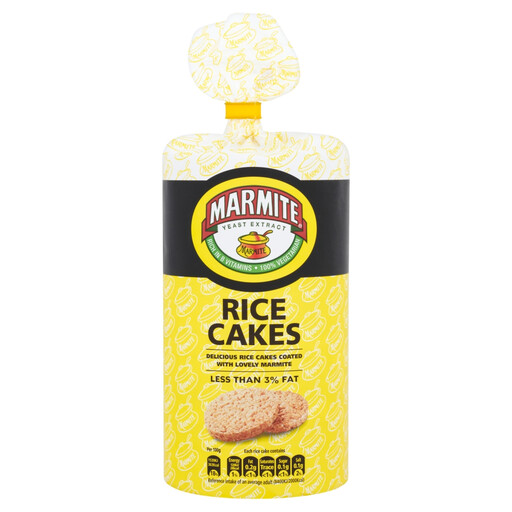
A savoury flavoured alternative to a lightly salted cake. Compare its current per-100-g and per-cake nutrition with the plain options, and read the ingredients and allergen statement for the pupil’s requirements.
 No image available
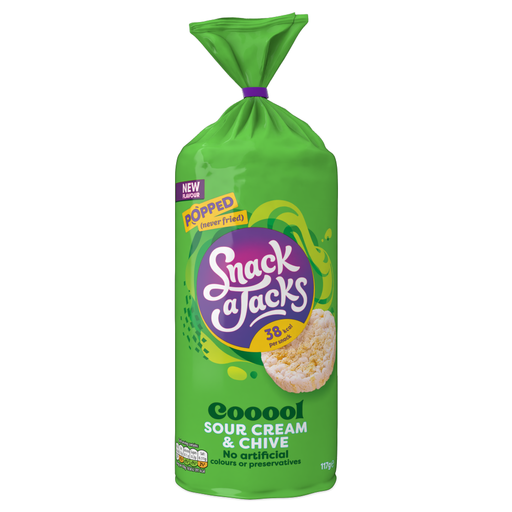
A flavoured jumbo cake rather than an individual 23 g multipack. Snack a Jacks lists 0.3 g fat and 0.11 g salt per Sour Cream & Chive jumbo cake; check the current pack for ingredients, allergens and the number of cakes you plan to pack.
 No image available
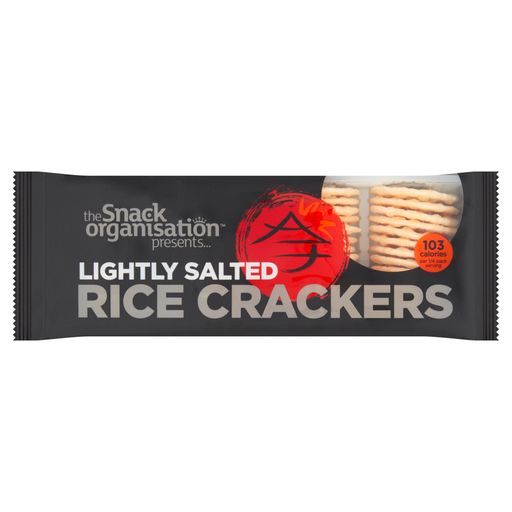
This is a lightly salted rice cracker, not a plain wholegrain rice cake. If considering it for the same lunchbox, compare the current fat and salt figures per 100 g and check its ingredients and allergen advice.
No category-wide assumption is safe. Kallo and M&S label the lightly salted products discussed here gluten free, but check the exact current pack. Kallo’s lightly salted product also says it may contain milk, sesame and soya.
Not on the product name alone. Snack a Jacks’ researched 23 g multipacks list 1.7–1.9 g fat per pack, while the plain lightly salted examples list 2.5–2.9 g per 100 g. Compare figures on the same basis and check the current label for the particular flavour.
Check the individual school’s allergy arrangements before packing a product that raises an allergen question. Department for Education guidance for England describes school policies covering arrangements to reduce contact with known allergens; families elsewhere should follow their own school’s guidance. Read the current product pack as well.