What should you check before ordering?
Set the fat requirement before shortlisting bars, then check the exact packs against the rest of the catering plan.
| Priority |
What to check |
Your needs |
| Fat claim |
Read total fat per 100 g on the current pack. For a low-fat claim on a solid bar in Great Britain, Business Companion’s February 2025 guidance specifies no more than 3 g per 100 g. For a reduced-fat description, request the supplier’s comparison with a similar product. |
I need to know whether the bar meets the event’s precise fat brief, not just whether its front-of-pack wording sounds relevant. |
| Whole nutrition panel |
Compare per-100-g values across bars of different sizes, then check per-bar values for the portion being served. Look at fat, saturates, sugars and energy alongside any protein or fibre information. |
A smaller bar might change the amount served, but I still want a like-for-like comparison before choosing between products. |
| Ingredients and allergens |
Confirm the ingredient list and allergen statement for each exact product and pack version. Record detailed delegate requirements and agree how catering staff will communicate product information. |
Delegates need to be able to identify which bar, if any, fits their own requirements before taking one from a shared table. |
| Dietary preferences |
Check vegan or gluten-free labelling against the stated requirement. Assess protein, fibre or no-added-sugar information separately from the fat criterion. |
I may offer a choice for different delegates, without describing every option as reduced fat. |
| Serving format |
Confirm the pack count, portion size and whether each serving retains the information delegates need. Recheck the supplied product against the specification used to plan the order. |
Bars need to be practical to distribute at the conference without losing track of which ingredients and allergens belong to each option. |
What do the named brands illustrate?
These product examples show why a brand or range name cannot stand in for the nutrition and allergen details of the bar you intend to serve.
Graze
Graze’s Oat Boost range includes oat-based flapjacks; its own lower-sugar and saturated-fat statements are not low-fat claims.
- The range gives organisers oat-bar formats to assess against the conference brief.
- Tesco lists 22 g fat per 100 g for the specific Cocoa Vanilla Oat Boost product, above the low-fat limit for solid foods in Business Companion’s February 2025 guidance. Check the current pack of any other Graze variant separately.
Nature Valley
Nature Valley UK lists Crunchy, nut-based and Protein ranges, whose labels need to be considered product by product.
- Its Protein Peanut & Chocolate product information gives per-bar protein and fibre figures as well as a per-100-g nutrition panel.
- Nature Valley UK lists 28.3 g fat per 100 g for that product and identifies peanut, soy and milk ingredients, with possible tree nuts.
nākd.
The brand describes Cocoa Delight as vegan, gluten free and no added sugar.
- Those descriptions may be relevant when checking a delegate’s stated dietary requirement.
- nākd. lists 14 g fat per 100 g for Cocoa Delight and includes cashews in its ingredients. Its dietary descriptions do not establish that it is low fat.
Eat Natural
Eat Natural offers fruit-and-nut and protein bars with differing ingredient combinations.
- The named Dark Chocolate & Peanut Protein Bar has product-specific nutrition and ingredient information available from Eat Natural UK.
- Eat Natural UK lists 36.3 g fat per 100 g for that bar. It contains peanuts and soya and may contain milk and several tree nuts.
Trek
Trek protein flapjacks are a separate format to consider only against the exact conference brief.
- A Nutracheck listing for Trek Protein Flapjack reports nutrition per 50 g bar, which can be compared with the product supplied.
- That listing reports 10.5 g fat per 50 g bar; it is not a manufacturer specification. Confirm the exact current pack before making a fat claim.
Alpen
Alpen is included as a brand organisers may recognise from earlier bar lists, rather than as a confirmed current snack-bar option.
- Its own FAQ helps distinguish certain historic bar names from products to specify for a new order.
- Alpen lists Alpen Light Bars Chocolate & Orange among products no longer made. Check for an active supplier listing and a current pack before planning an Alpen bar order.
Snack-bar options on Joybuy
These are packaged oat, cereal and snack-bar options to assess for conference breaks. Choose against the fat brief and each exact pack’s allergen information rather than assuming that inclusion here establishes a reduced-fat claim.
 No image available
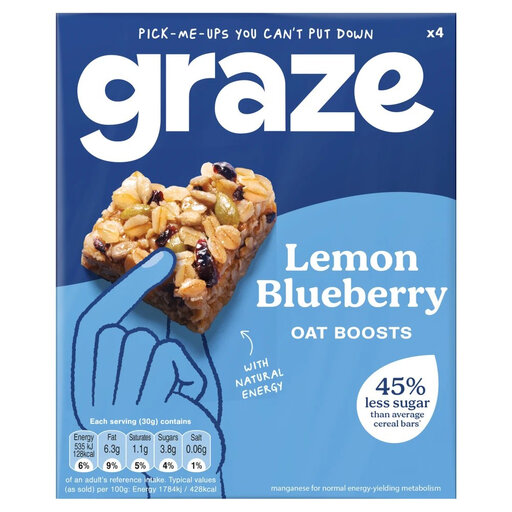
Graze Oat Boosts Lemon Blueberry, 4 × 30 g
The four-bar format gives you a defined quantity to plan for a conference break. Check the Lemon Blueberry pack’s fat per 100 g, ingredients and allergen statement before assigning it to the catering brief.
View on Joybuy
 No image available
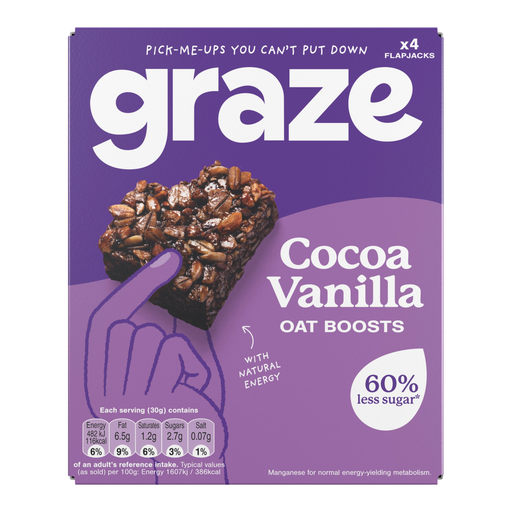
Graze Protein Bites Cocoa, Vanilla Oat Squares, 4 × 30 g
These oat squares offer a four-portion format for the conference snack table. Check the exact product’s fat per 100 g and allergen statement; the Protein Bites name does not establish a reduced-fat claim.
View on Joybuy
 No image available
Special K Dark Chocolate Snack, 6 × 21.5 g
Six 21.5 g servings make the pack quantity relevant to delegate numbers. Compare the current per-100-g fat figure with the brief rather than using serving size to judge whether the bar is low fat.
View on Joybuy
 No image available
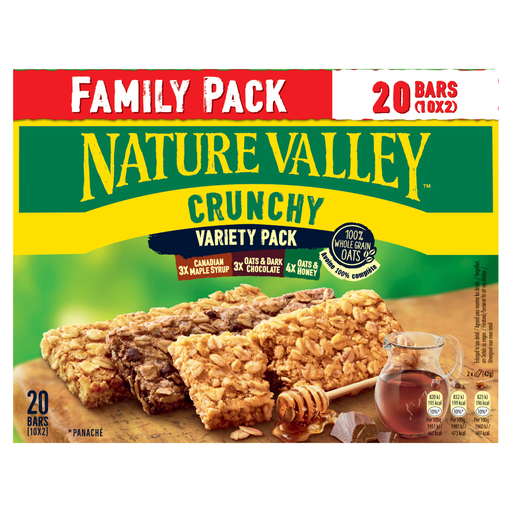
Nature Valley Crunchy Family Variety Pack, 10 × 42 g
The variety pack offers ten 42 g servings for a conference break. Check the nutrition and allergen information for each included flavour rather than assuming one flavour’s details apply to the whole pack.
View on Joybuy
 No image available
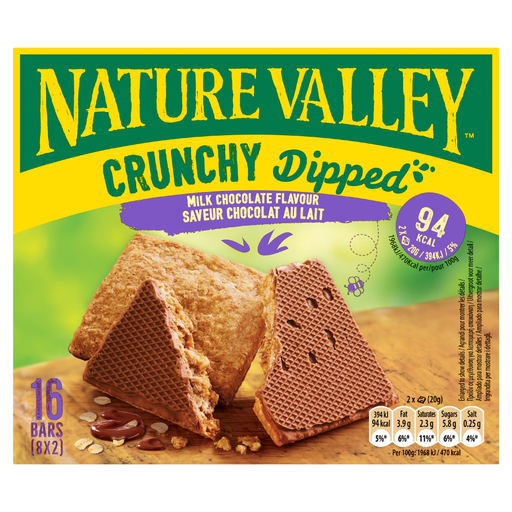
Nature Valley Crunchy Dipped Milk Chocolate, 160 g
This 160 g chocolate-dipped oat option can be assessed alongside the other break-time bars. Confirm its portion count, fat per 100 g and current allergen statement before ordering for delegates.
View on Joybuy
Conference snack-bar questions
What is the difference between low fat and reduced fat on a snack bar?
Low fat describes the bar’s fat content against a limit: Business Companion’s February 2025 guidance sets no more than 3 g fat per 100 g for a solid food in Great Britain. Reduced fat describes a comparison, so ask the supplier which similar product forms the basis of the claim and check the selected bar’s own nutrition panel.
Does a protein, vegan or no-added-sugar bar meet a reduced-fat brief?
Not on the strength of those descriptions alone. For example, nākd. lists Cocoa Delight as vegan and no added sugar but gives 14 g fat per 100 g; Nature Valley UK lists 28.3 g fat per 100 g for its Protein Peanut & Chocolate bar. Check the exact bar against the event’s fat requirement separately.
What allergen information should be available when bars are served?
Keep the ingredient and allergen information for each exact bar accessible to delegates and catering staff. GOV.UK’s allergen guidance for food businesses in England, Northern Ireland and Wales covers both prepacked and non-prepacked food and drink and calls for effective allergen management; confirm the arrangements with the caterer for the venue.
Should dietary requirements be collected before the bar order?
Yes. The Association of British Professional Conference Organisers recommends collecting accurate, detailed requirements at registration and communicating them to the caterer. A short note such as “no nuts” may not convey the precise requirement or its severity.
Can an older Alpen Light Bar listing go straight onto the order?
No: Alpen’s own FAQ lists Alpen Light Bars Chocolate & Orange among products it no longer makes. Confirm an active supplier listing and the current product label before specifying any Alpen bar for the conference.


