Workers comparing fat across everyday snacks
If reducing fat is the priority, compare the serving size as well as fat and saturates. Sugars, salt and calories provide further context when choosing bars to keep at your desk.


For an office snack drawer, compare fat and saturates alongside sugars, salt and calories, using per-100g figures to compare bars of different sizes and per-bar figures to judge the portion you would eat. A protein bar may suit someone seeking protein and fibre, while a fruit-and-nut bar may meet particular ingredient preferences; neither type is automatically reduced fat, so check the specific pack and any workplace allergen rules.
If reducing fat is the priority, compare the serving size as well as fat and saturates. Sugars, salt and calories provide further context when choosing bars to keep at your desk.
A protein-and-fibre bar is a different choice from one selected mainly for its fat content. Check both the nutrition panel and the allergens for the particular flavour.
Fruit-and-nut bars may offer relevant choices, but suitability depends on the individual recipe. Check the current pack for dietary claims, ingredients and allergen statements, particularly in a shared office.
Start with the nutrition panel for the exact flavour and pack size, then check whether its ingredients fit the people and workplace where it will be kept.
| Priority | What to check | Your needs |
|---|---|---|
| Fat and portion size | Compare total fat and saturates per 100g when bar sizes differ. Read the per-bar figures for the portion you plan to eat. | I want to compare bars fairly without mistaking a smaller bar for a lower-fat recipe. |
| The rest of the label | Read sugars, salt and calories alongside fat. Where a UK traffic-light label appears, use its colours as a quick comparison aid, then check the full panel. | A reduced-fat claim matters to me, but I also want to know what the bar contains beyond fat. |
| Protein and fibre | Check protein and fibre per bar, then compare fat, saturates and sugars on the same serving basis. Protein content alone does not establish a reduced-fat choice. | For a snack between meals, I may prefer a bar with stated protein and fibre, provided its other values fit what I am looking for. |
| Ingredients and allergens | Check dietary claims and the flavour-specific ingredient and allergen statements. Follow workplace rules for storing or sharing food. | I need a bar that suits the person eating it and can be kept appropriately in a shared office. |
A reduced-fat or protein description does not describe every nutrient. In its November 2025 audit of 458 snack bars from 10 major UK retailers, Action on Salt & Sugar reported that 55% were high in saturated fat and 37% were high in sugars under UK front-of-pack thresholds; those figures describe the audited products, not every bar on sale.
Before buying a multipack, compare the current pack’s fat, saturates, sugars, salt and calories per 100g and per bar.
Protein and fat answer different questions. Nature Valley UK lists 11.8g fat per 40g Protein Salted Caramel Nut bar, while the ASDA listing for a 40g Trek Biscoff Protein Flapjack lists 8.5g fat; neither protein figure tells you the fat content.
Use per-100g values to compare different bar sizes, and check per-bar values for the serving you would eat.
A bar that suits one colleague may contain ingredients another must avoid, especially when recipes include nuts, milk, soya or wheat.
Read the current pack for each flavour, and follow workplace rules before storing or sharing bars.
Ingredients and nutrition information can change when a product is reformulated.
Confirm the details on the current pack before ordering bars repeatedly for the office.
A brand name can help narrow the search, but fat content, ingredients and dietary claims need checking on the particular bar rather than across a whole range.
Graze makes oat flapjacks and other snacks, including its Oat Boost range.
Nature Valley’s UK range includes crunchy oat bars and protein bars, which serve different snack preferences.
nākd. offers fruit-and-nut bars that may be relevant to plant-based snack shopping.
Eat Natural offers fruit-and-nut and protein bars for shoppers considering those ingredients in a portable snack.
Trek makes protein flapjacks, including a Biscoff variety listed in a 40g format by ASDA.
These Joybuy options cover individually portioned cereal and fruit-and-nut bars, plus a protein-bar alternative for the office. Compare each pack’s nutrition and allergens against your own priorities; inclusion here does not mean every bar is reduced fat.
 No image available
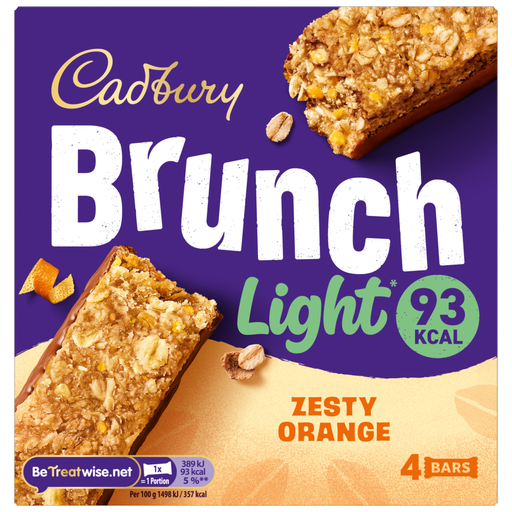
A four-pack to consider for an office snack drawer. “Light” in the name is not a substitute for comparing fat, saturates, sugars and serving size on the pack; check its allergen statement before sharing.
 No image available
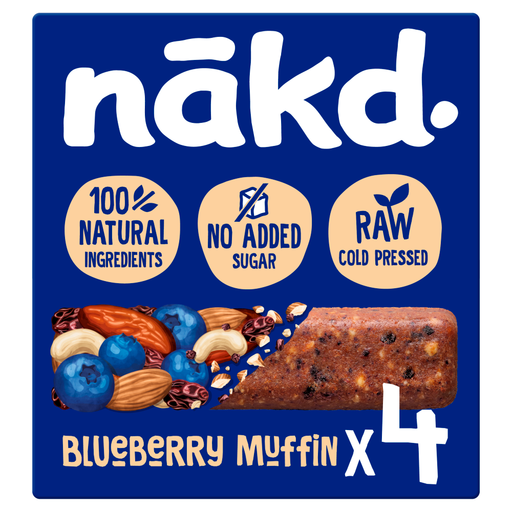
A fruit-and-nut option for someone comparing ingredients as well as portion size. Check total sugars and fat on the flavour-specific pack: no added sugar does not mean low in either. Review nut allergens before keeping it in a shared space.
 No image available
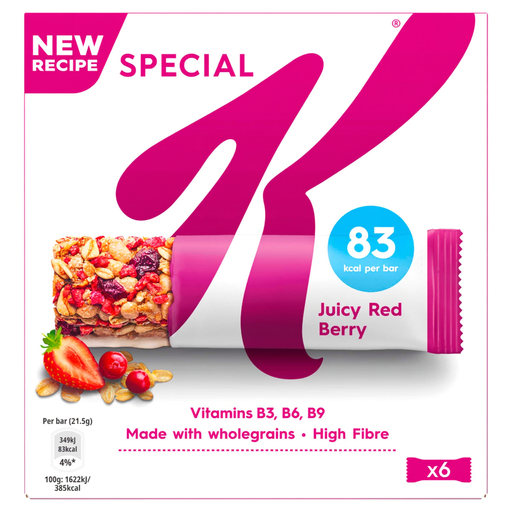
The 21.5g bar size is useful to note when planning desk snacks. Compare both per-bar and per-100g fat and sugar figures before choosing it over a different-sized bar, and check the pack’s allergen statement.
 No image available
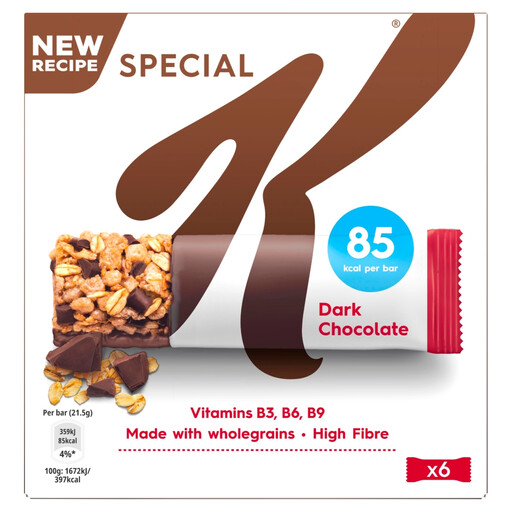
A dark-chocolate variety in six 21.5g portions. If comparing it with the Red Berry variety or another office bar, use the current pack’s fat, saturates and sugars figures rather than assuming the flavours have the same recipe.
 No image available
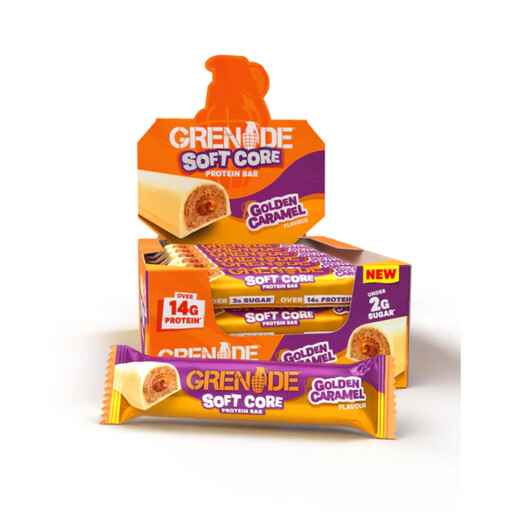
A protein-bar alternative in a twelve-pack of 50g bars. Protein branding does not establish a reduced-fat choice: compare the pack’s total fat and saturates with the cereal-bar options, and check its milk and soya allergen information.
No. Read fat, saturates, sugars, salt and calories on the full nutrition panel. A UK traffic-light label, where present, helps compare fat, saturates, sugars and salt at a glance, but it does not replace the serving information.
Use both: per 100g puts different-sized bars on the same comparison basis, while per-bar values describe the serving you would eat. The Food Standards Agency’s nutrition-labelling guidance explains the per-100g basis for nutrition declarations.
Only if its own fat figures fit what you are comparing. Nature Valley UK lists 11.8g fat per 40g Protein Salted Caramel Nut bar, despite also listing about 10g protein; check the specific protein bar’s fat and saturates rather than using protein content as a proxy.
Check the current pack’s ingredients and allergen statement for every flavour, then follow workplace rules on food storage and sharing. Nut, milk, soya and wheat ingredients can matter when different people use the same snack drawer.
No. The phrases concern different parts of a bar’s nutrition. nākd. says its fruit-and-nut bars contain no added sugar or syrups; compare the particular flavour’s total sugars and fat on its pack before choosing it.