What matters before, during and after a run?
Decide when you will eat the bar, then compare the serving with what that part of your training calls for. A per-100g figure helps compare products; the per-bar figure tells you what one portion contains.
| Priority |
What to check |
Your needs |
| Long-run carbohydrate |
Read carbohydrate per bar; consider how many servings you could carry and eat; include fluids in the plan. World Athletics indicates 30–60g carbohydrate per hour for events lasting 1–2.5 hours and up to 90g per hour beyond 2.5 hours, depending on the strategy. |
For a run lasting more than an hour, I need a practised way to take in carbohydrate and fluid. A reduced-fat claim alone does not tell me whether one bar fits that plan. |
| Pre-run tolerance |
Compare fat and fibre per serving, portion size and timing. World Athletics advises considering a reduction in fat, fibre or last-meal volume when hard exercise or competition nerves increase stomach-upset risk. |
If food feels uncomfortable close to a hard run, I want to try the exact bar and portion during training before relying on it for an event. |
| After-run balance |
Check carbohydrate and protein per bar, then consider what else you will eat and drink. Do not use the word ‘protein’ on the front of the pack as a substitute for the nutrition panel. |
A bar could be a convenient part of my after-run snack, but I may also need carbohydrate-containing food or drink. |
| Fat comparison |
Compare total fat on the same per-100g basis, then check the amount in your actual serving. Weetabix Cereals lists Alpen Fruit & Nut at 7.4g fat per 100g; TREK lists Original Oat at 19g and Nature Valley UK lists Protein Peanut & Chocolate at 28.3g. |
When I want the lower-fat option among these three bars, I can compare those declared figures without assuming that fat alone determines which will work before, during or after a run. |
| Ingredients and allergens |
Read the current pack for allergens and check the exact flavour and multipack variant. Do not transfer an allergen statement from another bar in the same range. |
If I need to avoid an ingredient, the statement on the bar I will actually eat matters more than a general description of its brand. |
Brand and product-line references
These examples describe particular bars or ranges, not every product a brand makes. Compare the exact variant and serving before applying a figure to your own choice.
Alpen
Alpen Fruit & Nut is a cereal-bar reference for comparing carbohydrate and fat before a run.
- Weetabix Cereals lists 19g carbohydrate and 2.1g fat per 28g Fruit & Nut bar.
- The same product lists 2.8g fibre per bar and is stated to be unsuitable for milk and other nut allergy sufferers. Test whether its ingredients and portion fit your pre-run routine.
Nature Valley
The Protein Peanut & Chocolate bar provides a protein-focused comparison for an after-run snack.
- Nature Valley UK lists approximately 10.2g protein per 40g bar.
- It also lists 11g carbohydrate and 11.3g fat per bar. Check the exact pack for peanut, soy, milk and possible tree-nut allergens.
TREK
TREK makes protein bars and flapjacks; figures for one flavour should not be applied across the range.
- TREK lists 23g carbohydrate and 10g protein per 50g Original Oat bar.
- Original Oat also lists 9.4g fat per bar and may contain peanuts, nuts and milk. Check the label of the flavour you choose.
Graze
Graze’s Oat Boost flapjacks illustrate why a claim about sugar does not answer a question about fat or running fuel.
- Graze says its Oat Boost flapjacks have 45% less sugar than its cereal-bar comparison set.
- That brand comparison does not establish the fat or carbohydrate in the particular bar and serving you plan to eat. Read its current nutrition panel.
nākd.
nākd. describes its fruit-and-nut bars as vegan and made without added sugar or syrups.
- The brand describes its fruit-and-nut line as gluten-, wheat- and dairy-free.
- Fruit-and-nut ingredients do not tell you the total fat, fibre or carbohydrate in a particular serving. Check the variant and allergen information before using it in a training plan.
Joybuy post-run bar options
These protein bars and flapjacks are options to consider for a snack after training. Their inclusion does not make them reduced-fat choices or establish that they will cover a long run’s fuelling needs; use the exact pack to compare portions and nutrition.
 No image available
Grenade High Protein Low Sugar Bar, Oreo Flavour, 4 × 60g
A protein-bar format to consider after a run; check carbohydrate and fat per 60g bar alongside protein before fitting it into a snack or meal. The pack contains four bars.
Joybuy
 No image available
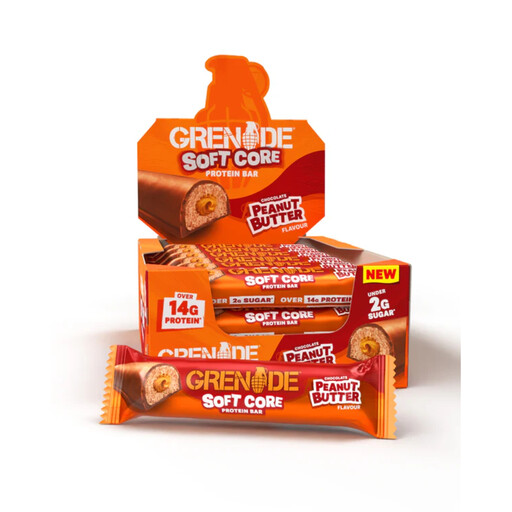
Grenade Soft Core Peanut Butter Protein Bar, 12 × 50g
Another protein-bar option for after training, supplied as twelve 50g bars. Check the exact bar’s carbohydrate, fat and peanut allergen statement before choosing it for your routine.
Joybuy
 No image available
TREK Salted Caramel Protein Flapjacks, 3 × 50g
A flapjack format to compare with protein bars for an after-run snack. Read the Salted Caramel pack’s carbohydrate, protein, fat and allergen details; figures for TREK Original Oat do not describe this flavour.
Joybuy
 No image available
Nature Valley Protein Peanut & Chocolate Cereal Bars, 8 × 40g
Eight 40g peanut-and-chocolate protein bars to consider for an after-run snack. Compare the nutrition and allergen statement on this multipack with your intended carbohydrate intake rather than assuming that a protein label also means lower fat.
Joybuy
 No image available
Nature Valley Protein Peanut & Chocolate Bar, 4 × 40g
A four-bar pack for an after-run snack. Joybuy lists 27.5g carbohydrate, 25.6g protein and 28.3g fat per 100g for this product; compare its 40g serving and check the pack’s peanut, soya and milk allergen statement before use.
Joybuy
Questions about snack bars and training
Does lower fat than another bar mean a bar is labelled low fat?
No: a comparison between two fat figures does not establish what claim appears on the pack. Weetabix Cereals lists Alpen Fruit & Nut at 7.4g fat per 100g, below the figures TREK and Nature Valley UK list for the particular bars compared here. Read the wording and nutrition panel on the exact product rather than treating that comparison as a complete description of it.
Is one reduced-fat bar enough for a marathon long run?
Do not assume so. World Athletics advises replacing carbohydrate and fluid during exercise lasting more than an hour; its endurance guidance indicates 30–60g carbohydrate per hour for 1–2.5 hours and up to 90g per hour beyond 2.5 hours, depending on the strategy. Check carbohydrate per bar and practise how you will carry and eat your planned servings.
Should I avoid fat and fibre before every run?
Not as a blanket rule. World Athletics advises considering less fat, fibre or last-meal volume when hard exercise or competition nerves raise the risk of stomach upset. Test the bar, portion and timing during training rather than changing them for the first time on event day.
Is a protein bar enough as an after-run snack?
Check what else it provides before relying on it alone. The UK Sports Institute describes carbohydrate, protein and fluids as parts of recovery after intense or prolonged exercise. Nature Valley UK lists approximately 10.2g protein but 11g carbohydrate per 40g Protein Peanut & Chocolate bar, so consider that serving alongside the rest of your food and drink.
Which allergens should I check in these examples?
Read the current pack for the exact product. The researched Nature Valley Protein Peanut & Chocolate bar contains peanuts, soy and milk and may contain tree nuts; TREK Original Oat may contain peanuts, nuts and milk. Weetabix Cereals states that Alpen Fruit & Nut is unsuitable for milk and other nut allergy sufferers. Do not apply one flavour’s statement to another.


