A reduced-fat or lightly salted description does not tell you how much carbohydrate is in the tortilla chips you will eat. If you are counting carbs, compare total carbohydrate per 100g and for your intended portion before checking fat, salt and allergens; if keeping carbohydrate intake down is the main aim, consider a different type of snack rather than relying on a fat claim.
Who needs to check what?
The useful label details depend on whether you are counting carbohydrate, choosing an occasional snack or checking ingredients for someone else.
People counting carbohydrates with insulin
Check the total carbohydrate in the amount you intend to eat, not just a reduced-fat description or the sugar figure. Leeds Teaching Hospitals NHS Trust advises using total carbohydrate on food labels; any insulin calculation should follow your individual healthcare plan.
Type 2 diabetes shoppers limiting carbs
If you want tortilla chips as an occasional snack, compare the carbohydrate in your portion with the amount you have planned. If the aim is to keep the snack’s carbohydrate lower, a different snack type may be more useful than changing tortilla-chip flavours, as Diabetes UK’s snack guidance suggests.
Households sharing a snack with dietary restrictions
Check the exact flavour and current pack for ingredients and allergens. ASDA lists milk in its Cool Tortilla Chips, for example; do not transfer an ingredient statement from one flavour to another.
What should you compare?
Start with the per-100g panel to compare products on the same basis. Then work out what the portion you actually serve means for your own plan.
| Priority |
What to check |
Your needs |
| Total carbohydrate |
Compare total carbohydrate per 100g, not only ‘of which sugars’. Leeds Teaching Hospitals NHS Trust identifies total carbohydrate as the label value to use for carb counting. Check the figure for your chosen portion too. |
I want to know the carbohydrate in the chips I will eat, whether the pack calls them reduced fat or not. |
| Portion size |
Check the grams in a stated serving and compare them with the amount you intend to serve. Diabetes UK notes that manufacturers’ suggested portion sizes vary; per-serving figures alone are not a like-for-like product comparison. |
With a sharing bag, I would rather portion some out than assume the amount I pick up matches the serving on the label. |
| Fat and salt |
Read both values per 100g instead of inferring them from ‘lightly salted’ or ‘multiseed’. ASDA lists 22g fat and 0.66g salt per 100g for its Lightly Salted chips; the NHS classifies more than 17.5g fat per 100g as high. |
If fat or salt matters to my choice, I want the panel values alongside the carbohydrate figure, not a judgement based on the flavour name. |
| Ingredients and allergens |
Read the ingredients and emphasised allergens on the exact pack. Check dietary statements separately: gluten-free or vegan wording does not give a carbohydrate or fat value. |
A flavour that suits one person in the household may not suit everyone sharing the bag. |
Common label-reading mistakes
-
Treating a product description as a nutrition result
‘Lightly salted’ and ‘multiseed’ describe aspects of a product, but neither establishes that it is reduced fat or lower in carbohydrate. ASDA lists 62g carbohydrate and 22g fat per 100g for its Lightly Salted chips, while its Eat Real multiseed sea-salt listing gives 63g carbohydrate and 23g fat per 100g.
Compare the exact pack’s per-100g carbohydrate, fat and salt values before deciding whether it meets the difference you are looking for.
-
Counting sugars but overlooking total carbohydrate
The sugars line is only part of the carbohydrate information. Leeds Teaching Hospitals NHS Trust advises using total carbohydrate, rather than ‘of which sugars’, when reading a label for carb counting.
Use the total carbohydrate line and the weight of the portion you intend to eat.
-
Comparing different suggested servings
A per-serving figure can look smaller simply because the suggested serving weighs less. Diabetes UK notes that manufacturers’ portion recommendations vary.
Compare products per 100g first, then use the gram weight you serve to assess your portion.
-
Taking ‘diabetic’ wording as reassurance
A diabetes-oriented description does not replace the nutrition panel or tell you how a portion fits an individual eating plan. Diabetes UK advises against choosing snacks on a ‘diabetic’ label.
Base the shopping decision on the current pack and any individual advice you follow.
Brand and product references
These details refer to the named retailer listings and variants, not to every tortilla chip made by each brand.
ASDA
ASDA’s Lightly Salted Tortilla Chips provide a labelled example for comparing carbohydrate, fat and salt.
- ASDA lists 62g carbohydrate, 22g fat and 0.66g salt per 100g for the 180g Lightly Salted pack.
- ‘Lightly Salted’ is not a reduced-fat description. Its listed fat value exceeds the NHS high-fat threshold of 17.5g per 100g.
Old El Paso
The Paprika 185g chips provide another directly comparable per-100g retailer panel.
- ASDA lists 57.9g carbohydrate per 100g and 17.4g for its stated 30g portion of this Paprika variant.
- The same listing gives 24g fat and 1.13g salt per 100g; its carbohydrate figure does not make it a reduced-fat option.
Eat Real
The multiseed tortilla-chip range includes a sea-salt variant with carbohydrate and fibre values on ASDA’s listing.
- ASDA lists 7.9g fibre per 100g for Eat Real Multiseed Tortillas with a Touch of Sea Salt 160g.
- That variant also lists 63g carbohydrate and 23g fat per 100g. Its multiseed description does not establish a lower-carbohydrate or reduced-fat choice.
Gran Luchito
Waitrose lists a Lightly Salted whole-corn tortilla-chip variant.
- Waitrose describes the listed variant as gluten-free and suitable for vegans.
- Use the current pack’s nutrition panel to compare its carbohydrate, fat and salt with another variant; the flavour name does not establish those values.
M&S
M&S lists 200g Lightly Salted Tortillas made from corn masa.
- The product description identifies the pack size and lightly salted variant.
- Check the current nutrition panel before making a reduced-fat or carbohydrate comparison; ‘lightly salted’ does not answer either question.
Tortilla-chip options on Joybuy
These are tortilla-chip pack formats and flavours to consider if you still want chips as an occasional snack while checking your portion and the current pack’s nutrition label. Their inclusion does not mean they are reduced-fat products.
 No image available
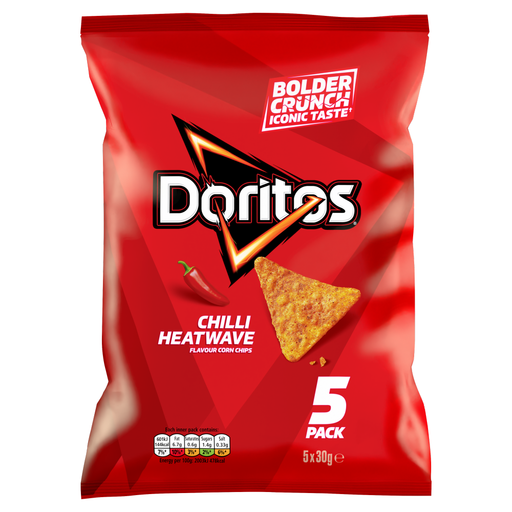
Doritos Chilli Heatwave 5 × 30g
The five individual 30g bags give you a defined pack weight when planning a portion. Check the carbohydrate and allergen information on the current packaging before choosing one.
View on Joybuy
 No image available
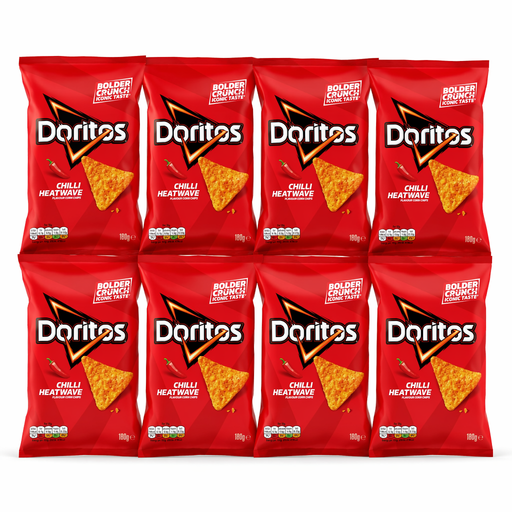
Doritos Chilli Heatwave 180g
This is a 180g sharing-bag format of the Chilli Heatwave flavour. If you are counting carbohydrate, portion out the amount you intend to eat and use the nutrition information for this exact pack.
View on Joybuy
 No image available
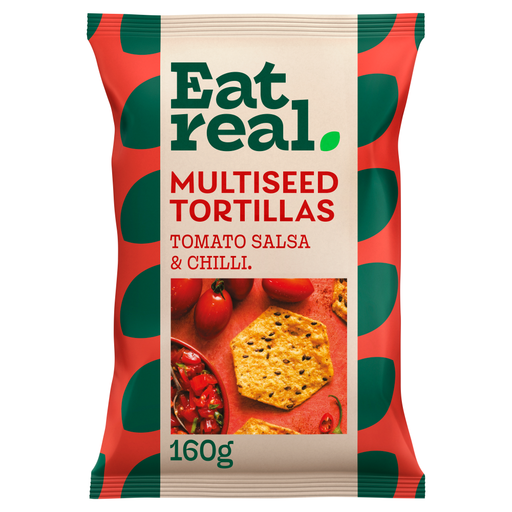
Eat Real Multiseed Tortillas Smoky Tomato Salsa with a Hint of Chilli 160g
The 160g pack is a smoky tomato and chilli multiseed variant. Check this flavour’s own carbohydrate, fat and allergen information rather than applying figures from the sea-salt variant, and portion the bag to suit the amount you intend to serve.
View on Joybuy
 No image available
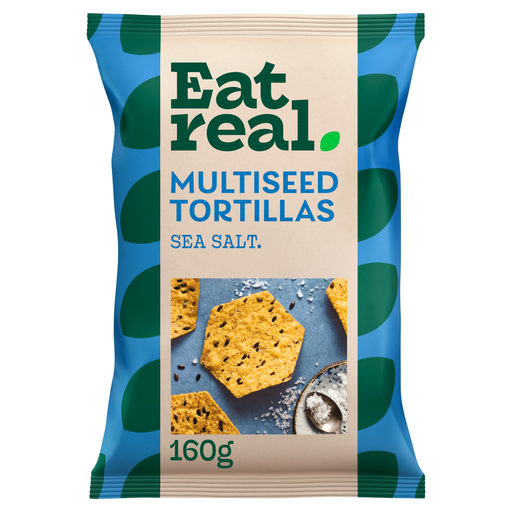
Eat Real Sea Salt Multiseed Tortillas 160g
This 160g sea-salt multiseed pack is another option if that flavour appeals to you. Read its current carbohydrate and fat values rather than treating ‘multiseed’ or ‘sea salt’ as a nutrition claim, and measure the portion you serve from the bag.
View on Joybuy
Questions about choosing tortilla chips
Are reduced-fat tortilla chips automatically suitable if I have diabetes?
No. A reduced-fat description does not tell you the total carbohydrate in the amount you eat. Diabetes UK identifies the total amount of carbohydrate eaten as an important factor in blood-glucose response, so check the carbohydrate panel and your intended portion rather than relying on the fat description.
Should I look at sugars or total carbohydrate?
Use total carbohydrate when counting carbs. Leeds Teaching Hospitals NHS Trust advises reading the ‘carbohydrate’ line rather than only ‘of which sugars’; compare products per 100g, then check the amount in the portion you intend to eat.
How can I portion tortilla chips from a sharing bag?
Measure or weigh the amount you intend to serve before eating. Diabetes UK notes that manufacturers’ suggested portions vary, so check the grams in the stated serving rather than assuming it matches your portion.
What should I check on a tortilla-chip pack besides carbohydrate?
Check fat and salt on the nutrition panel, then read the ingredients and emphasised allergens for the exact flavour. A dietary description such as vegan or gluten-free does not establish a lower carbohydrate or fat value, and another flavour in the same range may have different ingredients.


