TV-night snackers comparing fat
If reducing fat is your deciding requirement, compare the fat per 100g and the amount you plan to eat. A ‘lightly salted’ name does not answer the fat question.


If reducing fat matters more than having a large sharing bag, compare the fat per 100g on the exact pack: the Doritos Protein Sizzling Steak listing at Waitrose carries a 30%-less-fat claim, while its 48g pack is a different proposition from a sharing bag. ‘Lightly salted’ does not mean reduced fat; conventional tortilla chips listed by Sainsbury’s, M&S, ASDA and Tesco range from 21g to 23.4g fat per 100g, so check the portion you expect to eat, salt and ingredients as well.
If reducing fat is your deciding requirement, compare the fat per 100g and the amount you plan to eat. A ‘lightly salted’ name does not answer the fat question.
A sharing bag may fit the occasion better than an individual pack. Consider how much will go into the bowl, including whether you will add dip, before comparing per-serving figures.
Read the exact variant’s ingredients and allergen information rather than assuming that all tortilla-style snacks use the same ingredients.
Decide whether you need an individual pack or chips for sharing, then compare nutrition figures on the same per-100g basis and for the amount you expect to eat.
Consider it when: reducing fat is the main requirement and a 48g pack suits one person’s TV snack.
Trade-off: the Doritos Protein Sizzling Steak pack listed by Waitrose is smaller than the conventional sharing bags discussed here; its reduced-fat wording is a product claim, not a reason to assume that every popped snack has the same nutrition.
Consider it when: you want a larger bag to put out with dip for several people.
Trade-off: the conventional examples listed by Sainsbury’s, M&S, ASDA and Tesco contain 21g to 23.4g fat per 100g; a lightly salted flavour name does not establish a fat reduction.
| Priority | What to check | Your needs |
|---|---|---|
| Fat | Compare fat per 100g across the exact products. For a reduced-fat claim, read what the pack uses as its comparison. | I want to reduce fat, so I cannot use ‘lightly salted’ as a shortcut for choosing a lower-fat chip. |
| Portion | Check pack weight and stated serving size. Compare calories, fat and salt for the amount you expect to eat, not for unequal portions. | A single pack might suit me, or I might put out a bowl for everyone; those are different amounts to compare. |
| Salt | Read salt per 100g and per serving. GOV.UK explains that front-of-pack traffic lights, where shown, indicate whether salt and other listed nutrients are high, medium or low. | If I am serving chips with dip or other toppings, I want to check the salt figures for what I will serve. |
| Ingredients | Read the current pack’s ingredient and allergen declarations for the exact flavour and variant. Check any vegan or gluten-free statement on that product. | A different base or a protein claim does not tell me whether a snack meets my ingredient or allergen requirements. |
The words describe the product’s salt or flavour positioning, not its fat content. Conventional products listed by Sainsbury’s, M&S, ASDA and Tesco range from 21g to 23.4g fat per 100g.
Use the fat line in each product’s per-100g nutrition table to compare them.
A 48g individual pack and a serving taken from a sharing bag are not equal quantities, so their per-portion figures do not answer the same question.
Choose the amount you are likely to eat, then compare the calories, fat and salt for that amount.
Salt differs between conventional tortilla chips: the ASDA, M&S and Sainsbury’s listings give 0.66g, 0.75g and 0.90g per 100g respectively.
Compare salt on the same per-100g basis, then consider the portion and any dip you will serve.
A corn tortilla chip, a lentil chip and a protein-positioned snack can have different ingredient lists.
Check the current pack for allergens and dietary statements before choosing a particular variant.
These examples show why the exact product matters more than the brand name when comparing fat, salt or pack size.
The range includes conventional tortilla chips and a Protein Sizzling Steak snack listed by Waitrose.
Its Lightly Salted Tortilla Chips are a conventional 180g sharing-bag example.
Its Tortilla Chips come in a 200g pack.
Its Lightly Salted Tortillas provide another conventional product to compare by label.
Its Doritos Protein Sizzling Steak listing provides an individual-pack example with a reduced-fat claim.
These Joybuy options include a lentil chip and two multiseed tortilla products for a TV-night snack. Compare their own labels before choosing any of them specifically to reduce fat; a lentil or multiseed base does not establish a reduced-fat claim.
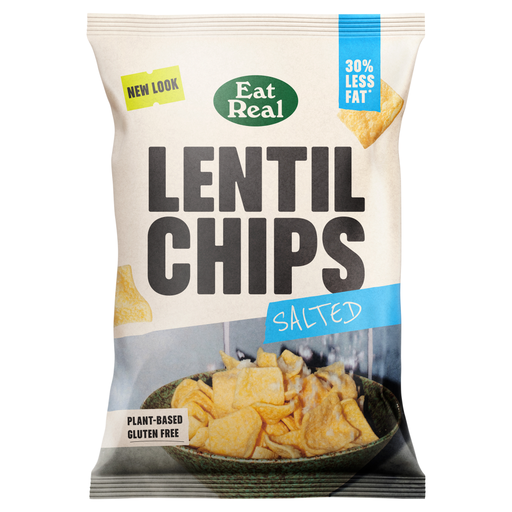 No image available
A 95g lentil-chip option if you want a different base from conventional tortilla chips for TV night.
Check the pack’s fat, salt and allergen information rather than assuming that lentil chips are reduced fat.
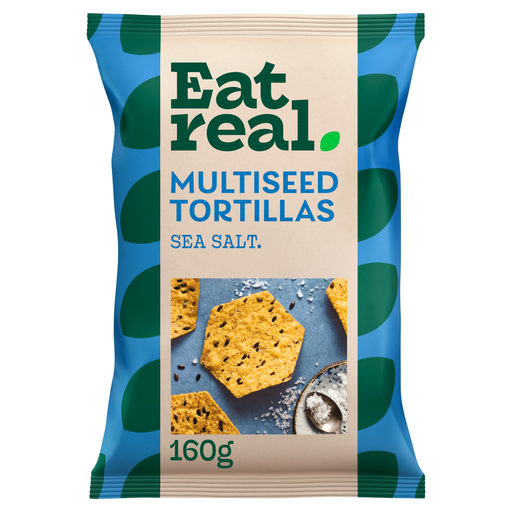 No image available
A 160g multiseed tortilla option to consider when putting out a bag to share.
‘Sea salt’ describes the flavour, not the fat content; use the nutrition table to assess whether it meets your priorities.
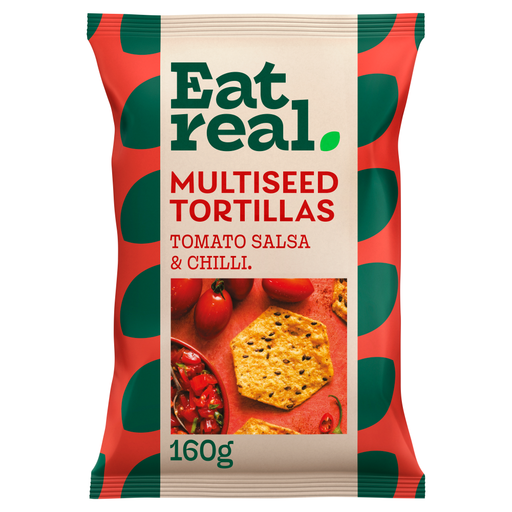 No image available
A 160g flavoured multiseed tortilla option for a shared TV-night bowl.
Compare its per-100g fat and salt figures with other packs; the flavour name does not indicate a fat reduction.
No. Check the fat figure for the exact pack: lightly salted conventional examples listed by Sainsbury’s, M&S, ASDA and Tesco contain 21g, 21.9g, 22g and 23.4g fat per 100g respectively.
Not necessarily. A claim about fat does not compare the total calories in different amounts of food. If you are weighing up an individual pack against a serving from a sharing bag, compare calories for the quantity you expect to eat.
Start with the per-100g nutrition figures to compare products on the same basis, then check the amount you intend to eat. GOV.UK explains that front-of-pack traffic lights, where provided, indicate high, medium or low amounts of fat, saturated fat, sugars and salt.
No. Check the exact pack’s ingredients, allergens and dietary statements. A different base or a reduced-fat claim does not establish vegan suitability or the absence of a particular allergen.