Salt-conscious Christmas hosts
You are planning pasta as part of Christmas dinner and want to account for cooking water, sauce and accompaniments, not just the salt declared on the dry pasta.


For a Christmas pasta dish, choose the pasta and sauce separately, and compare the sauce’s declared salt per 100g rather than judging the dry pasta alone. Decide how much salt to add to cooking water and check toppings such as cheese or cured meat; a convenient ready-made sauce still needs its own label check.
You are planning pasta as part of Christmas dinner and want to account for cooking water, sauce and accompaniments, not just the salt declared on the dry pasta.
You want the convenience of a prepared tomato sauce and are willing to compare salt per 100g between the exact recipes you might serve.
You are serving guests with different preferences or ingredient restrictions and need to check the pasta, sauce and toppings individually for relevant allergens.
Choose a pasta base and sauce that work together, then consider the cooking water and anything else going onto the Christmas plate.
| Concern | What to check | Who this matters to |
|---|---|---|
| Salt in the finished dish | Check sauce and topping labels for salt per 100g and consider the amounts you will serve. Decide whether to add salt to the cooking water. | For a festive pasta dish served with cheese, cured meat or gravy, I want to consider the whole plate rather than just the dry pasta; about 46% of consumers would make finished-dish salt control their primary concern. |
| Convenient sauce choice | Compare the exact sauces on a per-100g basis, then consider how much sauce you will use. NHS inform defines low salt as 0.3g or less per 100g. | When I need a quick jarred sauce, I want a salt figure I can compare before choosing a flavour; about 36% of consumers would put convenient sauce selection first. |
| Ingredient suitability | Read the current ingredient and allergen statements for the exact pasta, sauce and toppings selected. | If guests have ingredient restrictions, I need every part of the dish to suit them; around 18% of consumers would make dietary and allergen suitability their primary concern. |
Barilla UK lists 0.013g salt per 100g for dry Spaghetti N°5, but its cooking guidance suggests adding 7g salt to the water for every 100g of pasta. Neither figure describes a finished dish with sauce and toppings.
Plan the full plate, check the sauce and accompaniments, and choose deliberately how much salt, if any, to add to the water.
Low-fat and no-added-sugar descriptions concern something other than the sauce’s salt content. They do not establish that a particular Dolmio sauce is reduced in salt.
Find the salt declaration on the exact product and compare it per 100g with sauces you would use in a similar amount.
Marks & Spencer lists 0.45g salt per 100g for Daylesford Organic Tomato and Basil Sauce, 0.60g for M&S Eat Well Tomato and Basil Pasta Sauce, and 0.73g for M&S Tomato and Hidden Veg Pasta Sauce. A vegetable-focused name or larger jar does not determine the salt value.
Compare the per-100g declarations first, then consider the portion you expect to serve.
Recipes and pack instructions can change, which matters when you are checking salt, allergens or storage directions for a particular guest.
Read the current pack or product page for the exact pasta and sauce before buying.
A plain dried pasta can give you control over the sauce and salt added during cooking.
Its individually labelled tomato sauces offer figures to compare when a prepared sauce suits the meal.
Prepared pasta sauces may suit a meal where convenience is a priority.
Its grocery listings can help you inspect the labels of individual pasta sauces.
Compare any own-label or branded sauce you are considering by its current pack information.
Use individual product labels when comparing a sauce for the Christmas meal.
These selections include plain dried spaghetti for choosing a sauce separately and prepared tomato-based sauces for a quicker dish. Compare the current labels and the amounts you plan to serve; the sauce options should not be assumed to be low in salt.
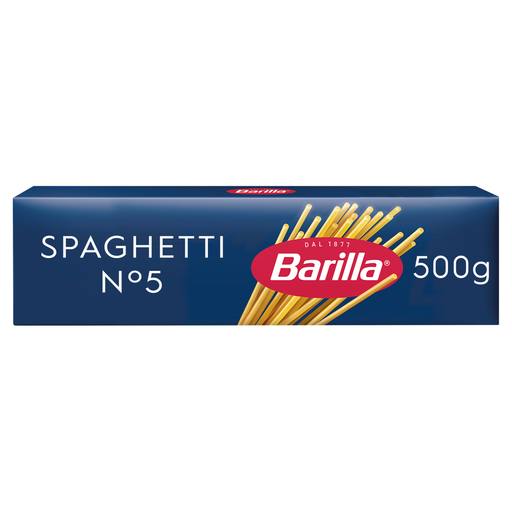 No image available
Choose this plain spaghetti if you want to select the sauce separately and decide how much salt to add during cooking. The pack is 500g; check its current salt and allergen information alongside the sauce and toppings.
 No image available
Another plain spaghetti option when you want to choose the sauce and cooking-water salt separately. The pack is 500g; read its current nutrition and allergen label before preparing it for guests.
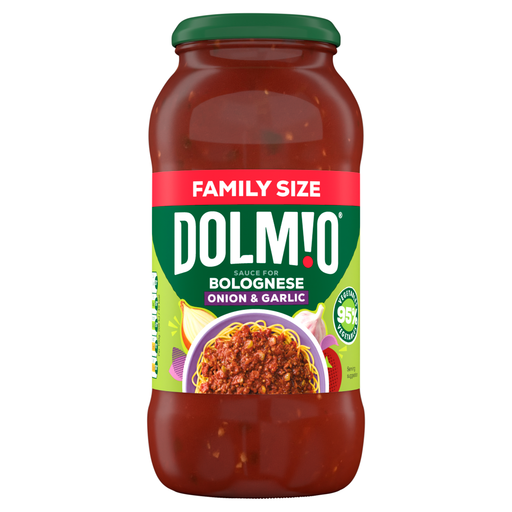 No image available
Consider this prepared onion-and-garlic Bolognese sauce when convenience matters. The jar is 675g; check its current salt per 100g and the amount you would use before fitting it into a reduced-salt meal.
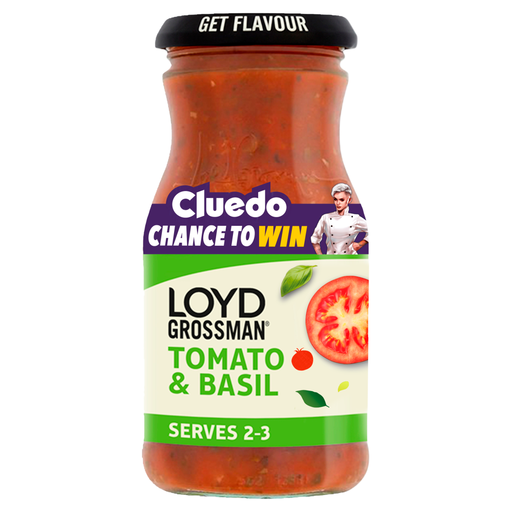 No image available
This prepared tomato-and-basil sauce offers a 350g jar for a pasta dish. Compare its current salt declaration per 100g with other sauces, and check the ingredients and after-opening instructions on the pack.
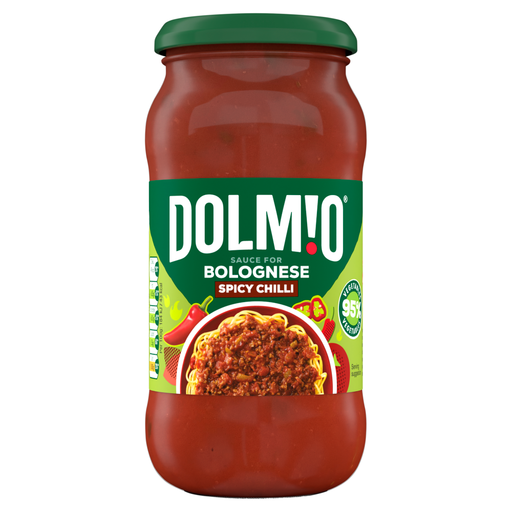 No image available
Choose this prepared sauce only if its spicy chilli flavour suits the guests and its current salt declaration fits the planned serving. The jar is 450g; check the ingredients as well as the nutrition panel.
NHS inform describes 0.3g salt or less per 100g as low and more than 1.5g per 100g as high. Compare sauces on the same per-100g basis, then consider how much you will serve.
Those descriptions do not establish a lower salt value. For a Dolmio sauce or any other prepared sauce, check the salt declaration for the exact recipe and pack you are considering.
You can decide how much salt, if any, to add rather than treating a recipe suggestion as compulsory. Barilla UK suggests 7g salt in the cooking water for every 100g of pasta, which is separate from its Spaghetti N°5 dry-pasta declaration of 0.013g salt per 100g.
Check the exact pasta, sauce and toppings against your guests’ needs. Barilla UK says Spaghetti N°5 contains wheat and may contain mustard and soya; Marks & Spencer lists celery and a milk-related suitability warning for its Tomato and Hidden Veg Pasta Sauce.
Follow the instructions for the particular jar. Marks & Spencer says to refrigerate its checked Tomato and Basil Pasta Sauce after opening and use it within 3 days, while its Daylesford Organic Tomato and Basil Sauce states use within 5 days.