
24/7 Customer Support

Free returns

Same-day & Next-day Delivery

Quality Guaranteed

Unlock Your Welcome Offers: FREE Delivery | Up to 80% OFF | Free 30-day JoyPlus trial
Download the APP
Choosing reduced salt food and drinks can make everyday shopping more complicated than expected. Labels such as “less salt”, “low sodium” and “reduced sugar” may sound similar, but they describe different nutritional features. A product can contain less salt than its standard version and still contribute a significant amount to your daily intake.
For UK families, home cooks and health-conscious shoppers, the practical approach is to compare the nutrition panel, serving size and intended use rather than relying on front-of-pack claims alone.
“Reduced salt” generally means the product contains less salt than a comparable standard product. It does not necessarily mean the food is low in salt overall. Soy sauce and gravy granules, for example, are concentrated seasonings, so even a reduced-salt version should be used in measured quantities.
The same applies to low-sugar drinks. A drink may contain less sugar than a regular alternative while still containing naturally occurring or added sugars. Always check the amount per 100ml and per serving.
One sauce may show nutrition per 10ml, while another uses 100ml. This can make a lower-sodium soy sauce appear confusingly different from other lower-sodium condiments.
For a fair comparison:
Some low-salt products use sugar, sweeteners or flavour enhancers to maintain taste. This is not automatically a problem, but it matters if you are also seeking reduced-sugar baked beans, lower-sugar drinks or simpler ingredient lists.
Allergens are equally important. Soy sauce commonly contains soybeans and wheat, while some gluten-free alternatives use rice instead. Check the packaging every time, particularly when buying imported healthier Asian groceries, as recipes and labelling can change.
In the UK, labels generally list salt, rather than sodium. Sodium is one component of salt; salt values cannot be compared directly with sodium values unless the measurement basis is clear.
Look for:
For example, the provided Less Salt Soy Sauce 300ml lists 8.56g of salt per 100ml, while Yutaka Reduced Salt Gluten Free Soy Sauce 150ml lists 11.4g per 100ml. Both are reduced-salt options according to their product descriptions, but the figures show why checking the numerical panel remains essential.
When comparing low-sugar drinks, check both sugars per 100ml and the total volume of the bottle or multipack. A drink containing 4.7g of sugar per 100ml has a different total contribution in a 500ml bottle compared with a 200ml serving.
For pantry staples, look at the serving information. Branston Reduced Sugar & Salt Baked Beans lists 2.8g of sugars and 0.39g of salt per 100g, with separate figures for half a can. This makes it easier to judge how the product fits into a family meal.
Reduced-salt products may use ingredients such as potassium chloride, yeast extract, acids or flavour enhancers to support savoury flavour. These are not necessarily unsuitable, but they should be visible in the ingredient list.
Before purchasing, check:
Reduced-salt snacks, for example, are convenient for lunchboxes and picnics, but portion size is still important. The Walkers multipack contains six individually packed 25g servings, making the amount easier to control than a large sharing bag.
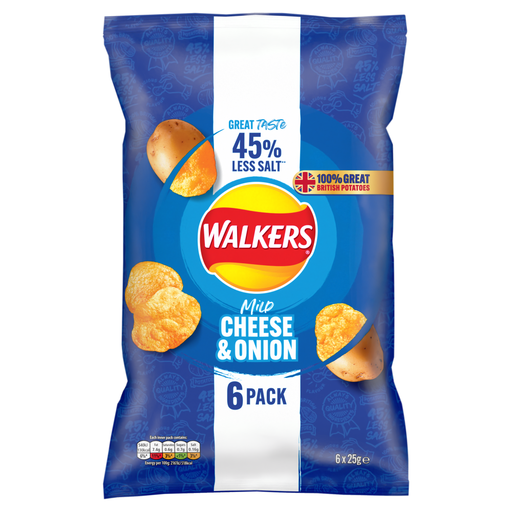
Why This Fits Their Persona: Individual 25g bags offer a practical starting point for families replacing regular crisps in lunchboxes, picnics and everyday snacks.
The stated 45% salt reduction is paired with a clear 0.62g salt value per 100g and defined pack portions.
Six ready-to-eat bags; suitable for vegetarians; made with Great British potatoes.
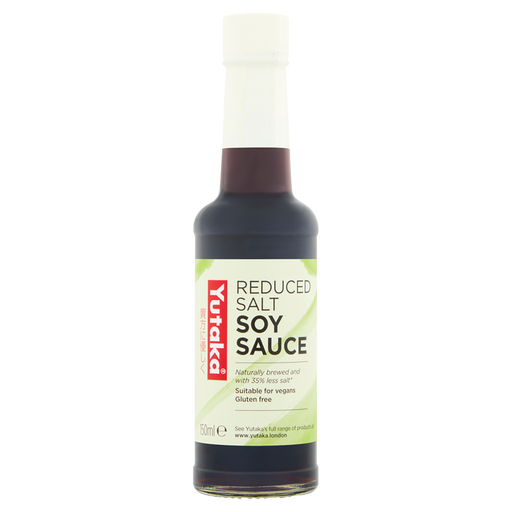
Why This Fits Their Persona: A compact Japanese-style seasoning for shoppers who want a gluten-free option for sushi, noodles, marinades and table use.
The product description states 38% less salt than standard soy sauce, while the ingredient list identifies water, soybeans, salt, rice and alcohol.
Certified gluten-free product description; flip-top cap; 150ml size suits occasional use.
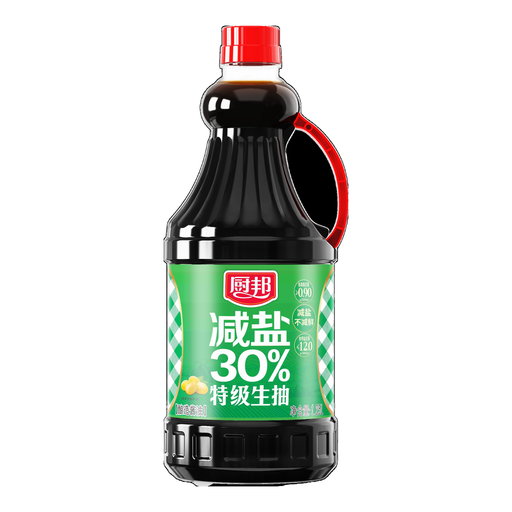
Why This Fits Their Persona: The 1.25-litre bottle is suited to frequent stir-fries, dipping sauces, marinades and family cooking.
The stated 30% salt reduction is clear, but the listed 14g salt per 100ml confirms that portion control remains necessary.
Large household format; suitable for cooking, dipping and salad dressings; ready to use.

Why This Fits Their Persona: A four-can pack provides a convenient cupboard staple for breakfasts, jacket potatoes, toast and quick family meals.
The pack states 30% less sugar and 30% less salt than standard beans, with per-100g and half-can values supplied.
51% beans; 5.1g fibre per 100g; no allergens listed in the supplied product information.
We have compiled a complete, real-time list of products that fully satisfy these strict selection criteria and UK safety regulations.
For Sunday roasts and midweek meals, reduced-salt gravy granules can replace standard gravy without changing preparation. Bisto Reduced Salt Chicken Gravy and Beef Gravy both state a 25% salt reduction compared with their standard versions. Follow the preparation instructions and avoid adding extra stock cubes or table salt.
For drinks, options include Suntory Oolong Tea Low Sugar, Kato Lychee Iced Tea and Fruitshoot Orange Low Sugar. Their sugar levels vary, so compare the nutrition panel rather than treating every “low sugar” label as equivalent.
They may help reduce salt compared with standard alternatives, but suitability depends on the product, serving size and your individual dietary requirements. Check the nutrition label and seek advice from a qualified healthcare professional if you have specific restrictions.
It can. Some products use fermentation, yeast extract, spices or flavour enhancers to maintain savoury character. Using reduced-salt soy sauce in marinades, stir-fries or dipping sauces can also make portion control easier than pouring it directly over food.
Follow the product label. Many sauces should be kept in a cool, dry place, while opened baked beans and corned beef should be transferred to a suitable container, refrigerated and consumed within the stated period. Always check the packaging for the latest storage and best-before information.