Care-home catering teams serving a standard breakfast menu
For cooks and menu planners who need a low-salt oat base with a clear dry-product label, then add milk, fruit or fortification in line with the menu and residents’ plans.


For a standard care-home breakfast menu, choose plain oats with a clearly stated dry-product salt value per 100g, then assess the served recipe separately. Quick oats and sachets can suit faster or portioned service, but an individual resident’s nutrition plan, allergen information and any prescribed IDDSI texture take priority over a reduced-salt comparison.
For cooks and menu planners who need a low-salt oat base with a clear dry-product label, then add milk, fruit or fortification in line with the menu and residents’ plans.
For teams that cannot select on salt alone. Norfolk and Waveney Integrated Care System guidance notes that people living in care homes can be at increased risk of malnutrition and dehydration, so breakfast choices should fit regular assessment and care plans.
For teams that need to check a prescribed IDDSI texture, the current allergen statement and any cross-contact warning before serving. Quick or smooth oats do not replace IDDSI preparation and testing.
Choose this when: A communal menu needs a plain oat base and measured portions with suitable liquids or additions.
Consider: The nutrition of the finished bowl changes with milk, fortification and toppings.
Choose this when: Faster preparation or a smoother ordinary porridge is useful at service time.
Consider: A smooth result is not automatically suitable for a resident on a texture-modified diet.
Choose this when: Individual portions and rapid preparation matter more than bulk preparation.
Consider: Sachets offer less flexibility for adjusting portions and create individual packaging.
| Priority | What to check | Your needs |
|---|---|---|
| Dry-product salt | Compare salt per 100g on the same dry-product basis. nidirect identifies 0.3g salt or less per 100g as low. Keep prepared-serving figures separate from dry-oat figures. | I need a plain oat base for reduced-salt menu planning, while keeping control of the milk, toppings and fortification used in the final bowl. |
| Individual nutrition plans | Check the resident’s current nutrition assessment, portion requirement and any clinically directed additions before changing a breakfast recipe. Review the finished meal rather than the oats alone. | Reduced salt cannot be my only criterion where energy, protein, hydration or supplement needs have been assessed for an individual resident. |
| Texture requirements | Where a texture-modified diet is prescribed, prepare and test the finished porridge to the relevant IDDSI level. Check for the required flow and texture at service. | I need an oat format that can be prepared to the resident’s assessed texture, not one that merely looks smooth. |
| Allergen information | Read the exact delivered pack’s ingredients and allergen statement. Check manufacturer cross-contact warnings alongside resident allergy or coeliac documentation. | I need to confirm the specific product and batch before ordering, because plain oats can still carry allergen or cross-contact warnings. |
Milk, fortified ingredients and toppings can change the salt, energy, protein and allergen profile of the served porridge. Quaker UK illustrates this distinction: its dry oats show 0g salt, while an example serving made with semi-skimmed milk shows 0.30g salt.
Compare products using salt per 100g of dry oats, then calculate the nutrition of the recipe actually served in the home.
A resident with swallowing difficulties may need a prescribed modified texture or thickened fluids. The International Dysphagia Diet Standardisation Initiative states that testing confirms the flow and textural characteristics of the finished food.
Follow speech-and-language-therapy and dietetic advice, then prepare and test the porridge to the applicable IDDSI level where required.
A standard reduced-salt oat may need clinically appropriate fortification, a different portion or another menu choice for a resident at risk of malnutrition or dehydration.
Use the resident’s current nutritional assessment and care plan before substituting products or changing breakfast recipes.
Some low-salt oat products carry warnings relating to wheat, barley, milk, nuts or possible cross-contact, even where oats are the only listed ingredient.
Check the current pack, supplier specification and resident allergy documentation for each delivery instead of relying on a brand-level assumption.
A relevant own-label UK retail option for a plain bulk oat base; Essential Porridge Oats is sold as a 1kg microwaveable product.
Relevant for traditional bulk rolled oats and original sachets in UK retail.
Relevant for quick oats and plain portion sachets where faster cooking or a smoother porridge is operationally useful.
Relevant for plain quick oats and organic porridge products stocked by UK retailers.
Relevant for organic plain porridge oats and protein-oat variants, subject to the exact product and resident requirements.
Joybuy product options for standard communal breakfast preparation, plus one portioned sachet option for limited preparation time.
 No image available
A plain 1kg oat base for measured communal breakfast portions and recipe-controlled additions.
100% organic wholegrain oat flakes; dry salt listed as below 0.01g per 100g. Contains oats; check the delivered pack and each resident’s allergy or coeliac plan. Prepare and test the finished dish where an IDDSI level is prescribed.
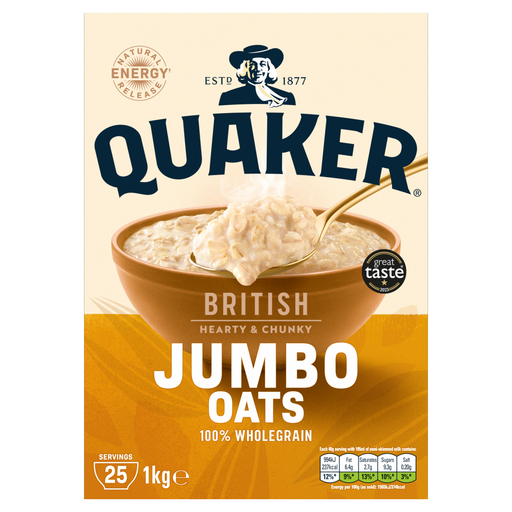 No image available
A 1kg plain rolled-oat option for recipe-controlled porridge and flexible communal preparation.
100% wholegrain oat flakes; 0.01g salt per 100g. May contain traces of wheat; check the delivered pack and resident allergy or coeliac documentation. Confirm the finished texture where an IDDSI level applies.
 No image available
Two 1kg packs for communal stock management and measured portions in a standard breakfast menu.
100% organic wholegrain oat flakes; dry salt listed as below 0.01g per 100g. Contains oats; check the delivered pack and each resident’s allergy or coeliac plan. The prepared dish still needs IDDSI testing where required.
 No image available
A plain rolled-oat base with stated hob and microwave preparation for controlled breakfast service.
100% rolled oats; 0g dry salt per 100g; stated 40g portion. May contain gluten from wheat and barley, so check the delivered pack and resident documentation. Ordinary rolled oats do not establish dysphagia suitability.
 No image available
Individual 38.5g sachets with a stated 2½-minute microwave method for portioned service when preparation time is limited.
The ingredient list names wholegrain rolled oats only. Check the current pack before using it for a reduced-salt menu because the listed dry-product salt figures conflict. Confirm allergy documentation and any required IDDSI preparation.
For a label comparison, use the salt value per 100g of the dry product. nidirect identifies 0.3g salt or less per 100g as low. Check the current delivered pack because recipes and labels can change.
The finished bowl can include milk or other ingredients that add salt. Quaker Traditional Rolled Oats lists 0g salt for dry oats but 0.30g for its illustrated serving made with 300ml semi-skimmed milk, so menu nutrition should be calculated from the recipe actually served.
Not automatically. Where a resident has swallowing difficulties, speech-and-language-therapy advice may specify modified food texture or thickened fluids. Prepare and test the finished porridge to the resident’s prescribed IDDSI level; a quick-cooking oat format alone does not establish suitability.
No single oat product is automatically appropriate for every resident. Norfolk and Waveney Integrated Care System guidance says nutritional needs should be assessed and reviewed regularly; in England, Regulation 14 of the Health and Social Care Act 2008 Regulations requires nutritional and hydration needs to be met in the circumstances covered by that regulation.
Check the exact pack’s ingredients and allergen statement before service, and follow the resident’s documented allergy or coeliac plan. Mornflake products cited here carry manufacturing-method warnings relating to wheat and barley, while Jordans Organic Porridge states that it may contain other gluten sources and nuts and is unsuitable for people with nut allergy.