Tea-time shoppers comparing sugar
If you want a chocolate biscuit with tea and prefer a stated sugar-reduction claim, compare the claim's reference product as well as sugars per 100g and per serving.


For a chocolate biscuit with tea, choose the format that suits you, then compare total sugars per 100g and per serving on the current pack. Nairn's Dark Chocolate Chip Oat Biscuits have a stated reduction against the average sweet biscuit, while its Chocolate Biscuit Breaks offer a gluten-free, portion-packed option with a different comparison basis. Neither percentage establishes which has less sugar per biscuit; no-added-sugar options also call for a check of carbohydrates, ingredients and sweetener warnings.
If you want a chocolate biscuit with tea and prefer a stated sugar-reduction claim, compare the claim's reference product as well as sugars per 100g and per serving.
An explicitly gluten-free chocolate biscuit and a portion-packed format may both matter to you. Check the current pack's ingredients and allergen information alongside its nutrition panel.
If you are comparing sugar-free or no-added-sugar biscuits, read the carbohydrate and ingredient information, including any sweeteners, polyols and on-pack warnings.
Start with comparable nutrition figures, then check what the claim and pack format mean for the biscuits you would actually eat with tea.
| Priority | What to check | Your needs |
|---|---|---|
| Sugar comparison | Compare total sugars per 100g, then per biscuit or portion. Read the reference group behind any percentage reduction: Sainsbury's lists Nairn's oat biscuits against average sweet biscuits and its Chocolate Biscuit Breaks against average gluten-free sweet biscuits. | I want to know how much sugar is in the biscuit I would eat, rather than choosing between two percentages based on different products. |
| Serving size | Check energy and saturated fat as well as sugars per 100g and per serving. Count how many biscuits are in a pouch and whether that matches your usual tea-time portion. | A portion pack would be useful if its contents match the amount I intend to have; otherwise, I would compare the biscuits I actually eat. |
| Sweeteners | For sugar-free or no-added-sugar options, read the carbohydrate figure and ingredient list for sweeteners or polyols. Check for an excessive-consumption warning; Diabetes UK notes that polyols contain carbohydrate and calories. | If I am choosing a biscuit for its sugar wording, I also want to understand what provides its sweetness and what the pack says about consumption. |
| Dietary requirements | Check an explicit gluten-free statement where needed, then read the exact pack's ingredients, allergen declaration and any may-contain statement. | For a gluten-free choice or an ingredient restriction, the label on the biscuit I buy matters more than a general description of the range. |
Sainsbury's lists Nairn's Dark Chocolate Chip Oat Biscuits as 35% less sugar than the average sweet biscuit, but Chocolate Biscuit Breaks as 30% less than the average gluten-free sweet biscuit. The reference groups differ, so those percentages cannot rank their absolute sugar content.
Compare total sugars per 100g and per serving on the current packs before choosing between them.
Diabetes UK notes that polyols contain carbohydrate and calories. A sugar-free biscuit can therefore require more than a glance at its sugars figure.
Read the exact biscuit's energy, carbohydrate, ingredients and any excessive-consumption warning.
A claim about sugar does not describe the biscuit's energy, saturated fat or the amount eaten. NHS food-label guidance presents nutrition per 100g and, on some labels, per portion.
Compare those figures and check whether the stated portion resembles your tea-time serving.
Retailer product information can change when a food is reformulated. That matters particularly when an ingredient or allergen affects whether you can eat a biscuit.
Read the current pack's ingredients and allergen statements before purchase and consumption.
These examples illustrate different label claims and biscuit formats; a brand name alone does not establish the nutrition of another product in its range.
Sainsbury's lists two chocolate-biscuit options with distinct sugar-reduction comparisons: Dark Chocolate Chip Oat Biscuits and gluten-free Chocolate Biscuit Breaks.
Sainsbury's lists McVitie's Light Rich Tea as a reduced-sugar tea biscuit, but it is not a chocolate biscuit.
Tesco lists Diablo No Added Sugar Chocolate Cream Cookies in its chocolate-biscuit category.
These options cover chocolate-style biscuits for shoppers comparing no-added-sugar or zero-sugar wording, plus a gluten-free oat biscuit with dark chocolate. Compare their individual pack labels rather than treating them as interchangeable reduced-sugar products.
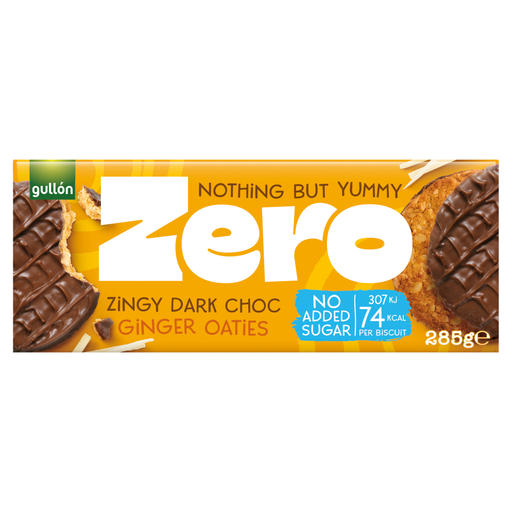 No image available
A dark chocolate and ginger oat biscuit to consider if you are comparing no-added-sugar options for tea. Check the pack's maltitol information and excessive-consumption warning; the listed ingredient considerations include milk, oats, soya and wheat, with possible nuts.
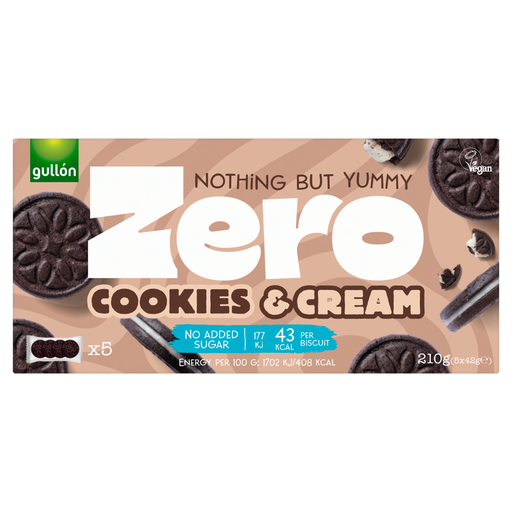 No image available
A cookies-and-cream option with no-added-sugar wording. Check its maltitol and excessive-consumption warning, and read the current allergen statement: the listed considerations include soya and wheat, with possible milk and mustard.
 No image available
A chocolate sandwich-cookie format for shoppers considering zero-sugar wording. Check the current pack for maltitol, carbohydrate information and any consumption warning; the listed allergen considerations include wheat and soya.
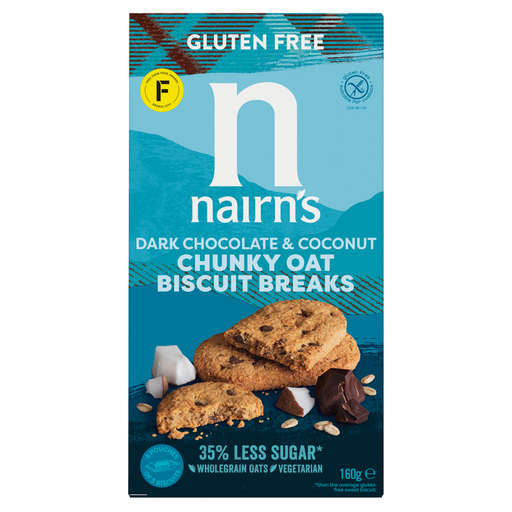 No image available
A gluten-free oat biscuit with dark chocolate and coconut for a tea break. Check this exact variant's sugar figures and claim on its pack rather than applying figures from another Nairn's Biscuit Breaks product. The listed limitations flag an avenin allergy and possible milk traces.
No. A reduction compares a product with a stated reference, while sugar-free wording describes a different claim. Read the comparison wording, then check total sugars per 100g and per portion on the pack.
Compare total sugars per 100g first, then the amount in the portion you would eat. Sainsbury's listings compare Nairn's Dark Chocolate Chip Oat Biscuits with average sweet biscuits and Chocolate Biscuit Breaks with average gluten-free sweet biscuits, so their reduction percentages are not an absolute-sugar ranking.
No such suitability follows from the sugar-free wording alone. Diabetes UK notes that polyols contain carbohydrate and calories; check the exact pack's carbohydrate, polyol and ingredient information, and seek advice from your healthcare team if you adjust insulin.
Ingredients, nutrition and allergen information can change when a product is reformulated. Read the current pack again, particularly if an allergy, intolerance or other necessary dietary restriction affects your choice.