Who might consider these biscuits
The useful choice depends on when you last ate, what the label means and whether the portion is familiar to you.
Runners who missed a pre-run meal
If you want a small snack before setting off, a familiar carbohydrate-containing biscuit is one option to assess. The UK Sports Institute says most athletes eat one to three hours before running; a biscuit is not automatically needed during a short 5K.
Chocolate-biscuit shoppers comparing sugar claims
Reduced sugar and no added sugar describe different things. Compare their claim wording with sugars and carbohydrate per portion, as well as fat, fibre and any sweeteners, before deciding which biscuit fits your routine.
Runners looking for a gluten-free oat biscuit
Gluten-free oat biscuits offer a chocolate-containing option if oats suit your dietary needs. Check the exact product’s ingredients and try its usual portion in training, particularly if you plan to eat close to a run.
What to check before choosing
Decide whether you want a snack at all, then compare claims using the portion and timing that apply to your run.
| Priority |
What to check |
Your needs |
| Sugar claim |
Read the named comparison group for a reduced-sugar claim. Check sugars per 100g and per portion; do not treat “no added sugar” or “light” as the same claim. |
I still want a chocolate biscuit, but I need to know what its sugar claim actually compares. |
| Carbohydrate and portion |
Compare carbohydrate in the stated serving with the amount you would eat. Check fat and fibre in that portion too, rather than judging it by sugars alone. |
If I missed a meal, I want to assess a familiar pre-run snack—not assume I need biscuits during a short 5K. |
| Timing and tolerance |
Check when you last ate and allow time before running. The UK Sports Institute says most athletes eat one to three hours beforehand; trial the exact biscuit and portion in training. |
A new oat-based or maltitol-sweetened biscuit is something I would try away from an important run first. |
| Ingredients and warnings |
Read the current ingredients and allergen information for the exact variant. Look for sweeteners and any excessive-consumption warning. |
For a dietary restriction, the pack for the biscuit I am buying matters more than its brand or front-of-pack wording. |
Brand and product-line references
These references describe particular biscuit lines and their label claims, not every product made by each brand.
BelVita
Joybuy’s listing for BelVita Choc Chip Reduced Sugar Biscuits states 30% less sugars than adult sweet biscuits in the UK and Portugal, excluding chocolate-filled and coated biscuits. It lists 30g carbohydrate per 45g serving.
- The stated serving makes it possible to compare carbohydrate and sugars in a defined portion.
- The reduction is relative to a specific comparison group; it does not say that every portion suits every pre-run routine.
Nairn's
Nairn's describes its Chocolate Chip Oat Biscuit Breaks and Dark Chocolate & Coconut Chunky Oat Biscuit Breaks as gluten-free oat products. Its stated sugar comparisons are with sweet gluten-free biscuits, not all chocolate biscuits.
- Nairn's gives per-biscuit nutrition for these two variants, allowing a portion-by-portion comparison.
- Both contain fat and fibre, so check the exact portion and try its timing before a run.
Diablo
Diablo’s No Added Sugar chocolate cream cookies use maltitol. Diablo lists 4g sugars, 51g carbohydrate and 31g polyols per 100g for the product.
- The per-100g panel lets shoppers distinguish “no added sugar” from zero sugars or zero carbohydrate.
- The distributor’s product information warns that excessive consumption may produce a laxative effect.
McVitie's
Sainsbury's lists products including McVitie's Digestives The Light One, Penguin Original and Club Orange. Those names alone do not establish a reduced-sugar chocolate-biscuit claim.
- The named lines give shoppers specific packs to compare with other chocolate biscuits.
- Check the current pack’s claim wording and nutrition before selecting one for its sugar content.
Fox's
Sainsbury's lists Fox's Rocky Original biscuit bars among its biscuit products. That listing does not itself identify the line as reduced sugar.
- A named product line can be compared using its own current ingredients and nutrition panel.
- Do not assume a reduced-sugar claim without checking the particular pack.
Joybuy chocolate-biscuit options
These options include a gluten-free dark chocolate and coconut oat biscuit and two Gullon Zero variants. Compare their individual labels and pre-run considerations rather than treating them as interchangeable fuel.
 No image available
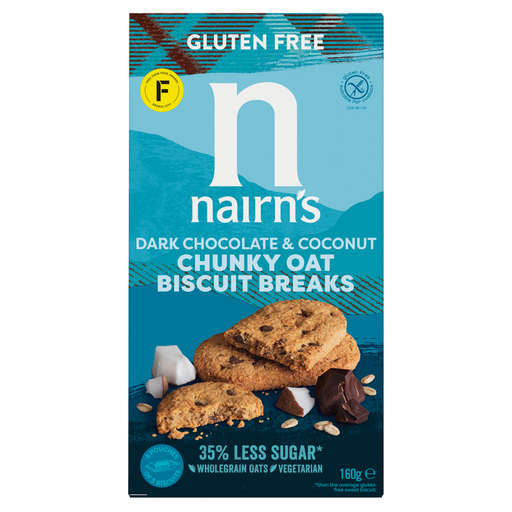
Nairn's Gluten Free Chunky Dark Chocolate & Coconut Biscuit Breaks 160g
An oat-based option to try in training if you want a gluten-free chocolate biscuit before a run. Nairn's lists 8.0g carbohydrate, 2.2g sugars, 3.0g fat and 0.9g fibre per biscuit for this variant. Its stated 35% sugar reduction is against the average sweet gluten-free biscuit, not all chocolate biscuits.
View on Joybuy
 No image available
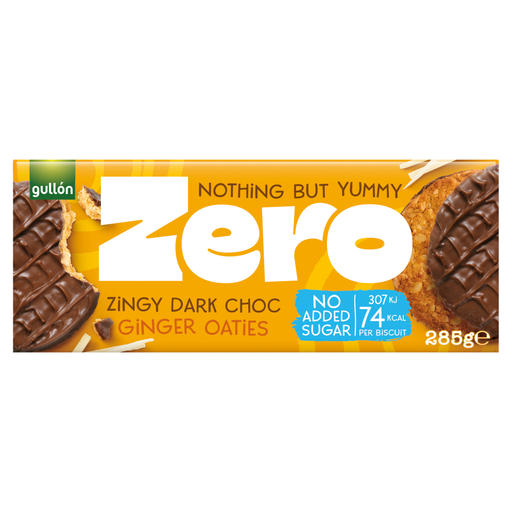
Gullon Zero Dark Chocolate Ginger Oaties 285g
Consider this oat-biscuit variant by checking its sugars and carbohydrate for the portion you would eat, rather than reading “Zero” as zero carbohydrate. Its product information identifies maltitol and warns of a laxative effect from excessive consumption; try an unfamiliar portion away from a run.
View on Joybuy
 No image available
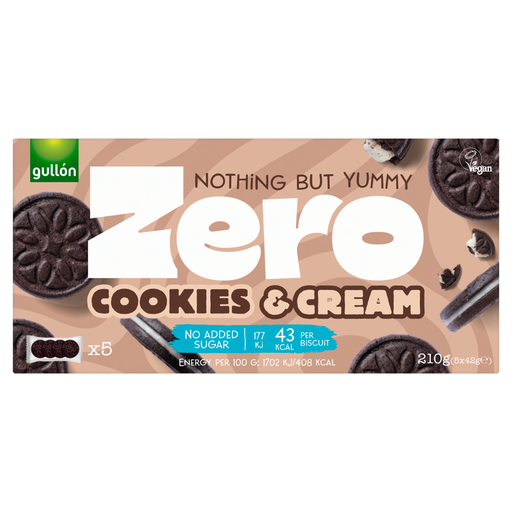
Gullon Zero No Added Sugar Cookies and Cream 210g
This cookies-and-cream-style variant is for shoppers comparing no-added-sugar claims, which do not by themselves describe its total carbohydrate. Its product information identifies maltitol and warns of a laxative effect from excessive consumption. Check the portion nutrition and try it in training before considering it near a 5K.
View on Joybuy
Questions about biscuits and 5K runs
Do I need a chocolate biscuit during a 5K?
Do not assume you need one during a typical short 5K. University College London Hospitals NHS Foundation Trust says in its exercise guidance that snacks for shorter activities may only be needed for hypoglycaemia prevention or treatment; whether to have a pre-run snack is a separate decision based on when you last ate.
When should I try a biscuit before running?
Try the exact biscuit and portion in training, not for the first time on an important run. The UK Sports Institute says most athletes eat one to three hours before running; your usual meal timing and tolerance matter when deciding whether to add a snack.
Does “no added sugar” mean no sugars or carbohydrate?
No. Diablo lists 4g sugars and 51g carbohydrate per 100g for its No Added Sugar chocolate cream cookies. Check both figures for the product you are buying and relate them to the portion you would eat.
Why check for maltitol before a run?
Maltitol-sweetened products may carry an excessive-consumption laxative-effect warning. Diablo’s listed cookies contain 31g polyols per 100g and their distributor carries that warning; read the warning on your chosen biscuit and try it away from a run first.
What should I read on the pack besides the sugar claim?
Check carbohydrate, sugars, fat and fibre for a realistic portion, followed by the ingredients, allergens and any sweetener warning. Use the current pack for the exact variant, particularly if you need to check oats, wheat, milk or soya.


