Cyclists choosing a lower-sugar everyday snack
If chocolate flavour matters more than using the biscuit as your main ride fuel, compare the stated sugar reduction with the sugars and carbohydrate in the portion you would eat.


A reduced-sugar chocolate biscuit can be a snack for a ride, but its sugar claim does not tell you whether it supplies enough carbohydrate for a longer journey. Nairn’s lists 5.9–6.4 g carbohydrate per biscuit for the two chocolate oat varieties discussed below; for a sustained ride, consider portions and fluids alongside British Cycling’s event-day fuelling guidance rather than relying on the claim alone.
If chocolate flavour matters more than using the biscuit as your main ride fuel, compare the stated sugar reduction with the sugars and carbohydrate in the portion you would eat.
A biscuit can be one item in your pocket, but a long ride calls for a separate look at carbohydrate portions, drinks and whether your chosen food is comfortable to eat while riding.
Check the current pack’s ingredients and precautionary wording. Nairn’s says its wheat-free oat recipes cannot be guaranteed free from wheat traces.
Start with the role the biscuit will play: an occasional snack and a planned source of carbohydrate for hours of riding are different decisions.
| Priority | What to check | Your needs |
|---|---|---|
| Ride fuelling | Read carbohydrate per biscuit, then consider how many you would actually carry and eat. Nairn’s lists 6.4 g for Dark Chocolate Chip and 5.9 g for Chocolate Orange; British Cycling’s event-day guidance considers carbohydrate and fluids together. | For a longer ride, I want to know what my food portions contribute rather than treating a reduced-sugar label as a fuelling plan. |
| Sugar wording | Identify the comparison named in the claim and read sugars per biscuit and per 100 g. Nairn’s states that each of its two chocolate oat varieties has 35% less sugar than the average sweet biscuit; that is not a sugar-free claim. | I may want a chocolate snack with a stated reduction, while still knowing how much sugar is in the portion. |
| Recipe and allergens | Check ingredients, declared allergens and any “may contain” wording on the current pack. Nairn’s cautions that wheat contamination of oats means it cannot guarantee its wheat-free recipes are free from wheat traces. | If wheat, milk or another ingredient matters to me, a broad description on the front of the pack is not enough. |
| Eating on the ride | Consider the portion you can carry, access and eat, as well as your drinks. Try the food and drink routine you intend to use before a longer event. | Something convenient to pack still needs to fit the way I plan to eat and drink during the ride. |
A sugar comparison does not measure how much carbohydrate a biscuit contributes to a sustained ride. Nairn’s lists around 6 g carbohydrate per biscuit for its Dark Chocolate Chip and Chocolate Orange varieties, while British Cycling’s event-day guidance discusses carbohydrate intake alongside fluids over hours of riding.
Check carbohydrate per portion against the food and drink routine you plan to use, rather than choosing on the sugar claim alone.
Nairn’s 35% less-sugar statements compare its chocolate oat biscuits with the average sweet biscuit. The percentage does not tell you the sugars or carbohydrate in the serving you will eat.
Read the named comparator and compare like-for-like figures. Nairn’s lists 1.9 g sugars per biscuit for both Dark Chocolate Chip and Chocolate Orange, but their carbohydrate figures differ: 6.4 g and 5.9 g respectively.
Nairn’s says its oat-biscuit recipes cannot be guaranteed free from wheat traces because oats may be contaminated with wheat. Chocolate ingredients can also introduce other allergens, including milk.
Read the ingredients, allergen declarations and precautionary wording on the current physical pack before buying.
These examples explain two different biscuit choices; they do not imply that every product from either brand has the same recipe or claim.
Nairn’s describes its Dark Chocolate Chip and Chocolate Orange oat biscuits as containing 35% less sugar than the average sweet biscuit.
McVitie’s describes Digestives The Light One as having 30% less sugar than the average digestive biscuit.
These options include oat biscuits and a Cookies and Cream variety for shoppers considering a biscuit snack. Check each product’s current label for its sugar wording, carbohydrate per portion and allergens before using it in a ride-food plan.
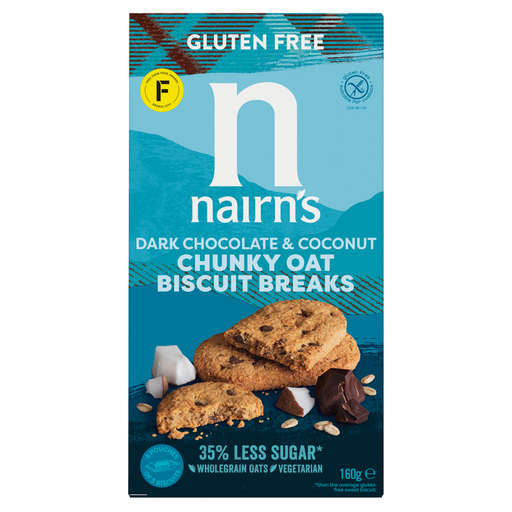 Image unavailable
If you are considering an oat-biscuit snack for a ride, check carbohydrate per biscuit on the current pack when planning portions. The product name identifies a 160g Gluten Free Biscuit Breaks pack; also read its oat and precautionary allergen wording if those details affect your choice.
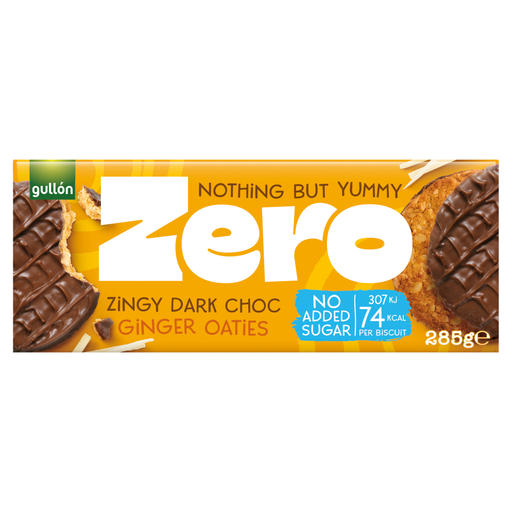 Image unavailable
For a dark-chocolate-and-ginger oat biscuit snack, compare the pack’s sugars and carbohydrate per biscuit before counting a portion towards ride food. Check the current ingredients and allergen information too.
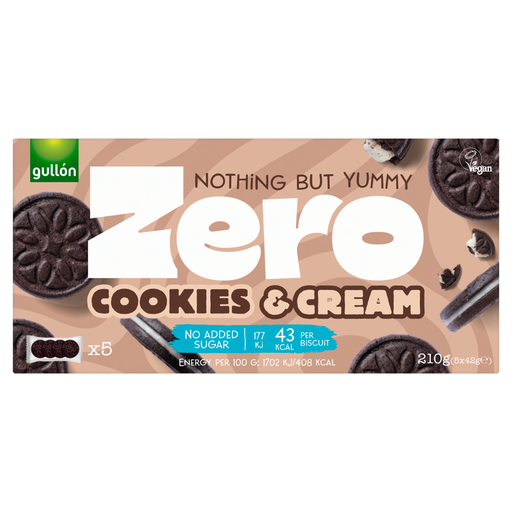 Image unavailable
If the named no-added-sugar variety appeals as a snack, read the current sugars and carbohydrate figures per portion: “no added sugar” does not mean carbohydrate-free. Check the ingredients and allergens before choosing it.
No. A reduced-sugar statement compares a product with another type of biscuit; it does not say there are no sugars in it. Nairn’s lists 1.9 g sugars per Dark Chocolate Chip Oat Biscuit alongside its stated 35% reduction against the average sweet biscuit.
They can contribute carbohydrate, but the sugar claim alone does not establish a long-ride fuelling plan. Nairn’s lists 5.9–6.4 g carbohydrate per biscuit for its Chocolate Orange and Dark Chocolate Chip varieties; British Cycling’s event-day guidance considers carbohydrate intake together with fluids over the course of a ride.
No. Nairn’s says oats may be contaminated with wheat and that it cannot guarantee its wheat-free oat-biscuit recipes are free from wheat traces. Check the current pack’s ingredients and precautionary allergen wording rather than relying on the recipe description.
Keep them dry and protected from crushing, and follow the pack’s storage instructions and best-before information. Consider whether you can access and eat the portion you have packed without disrupting your planned food and drink routine.