Easter shoppers comparing sugar labels
If you want chocolate biscuits but are cutting back on sugar, check both the basis of a reduced-sugar claim and the total sugars in the biscuit you would buy.


If lowering sugar is the priority for an Easter biscuit shop, compare the exact products’ total sugars per 100 g, then check the amount you plan to serve. A chocolate-chip biscuit’s reduced-sugar claim may use a different comparison group from your usual chocolate digestives; a no-added-sugar chocolate biscuit may still contain sweeteners and carbohydrate. Conventional biscuits remain an option for guests who prefer them, with portions and allergens checked separately.
If you want chocolate biscuits but are cutting back on sugar, check both the basis of a reduced-sugar claim and the total sugars in the biscuit you would buy.
If guests prefer different biscuit formats, consider what you will put out and how much each person is likely to take. Check the exact ingredients and allergen information before sharing.
If those details matter to your choice, read total carbohydrate, energy, serving size and the sweetener ingredients as well as total sugars. A no-added-sugar claim does not answer those questions by itself.
Start with the biscuit format your guests would eat, then compare nutrition on the same per-100 g basis and calculate what your intended serving contains.
Consider when: A portioned chocolate-chip biscuit suits the gathering and the stated comparison behind its sugar claim meets your aim.
Bear in mind: Chocolate chips are not a chocolate coating. belVita’s stated comparison excludes chocolate-filled and chocolate-coated biscuits, so its claim does not measure a reduction against your usual chocolate digestives.
Consider when: You want a coated biscuit and prefer to compare its labelled total sugars with other coated options.
Bear in mind: The cited Gullón biscuits are different products. Check each one’s maltitol, carbohydrate, energy and allergens rather than applying one product’s figures to the other.
Consider when: Guests prefer a familiar digestive or sharing assortment and you would rather plan the serving than choose by a reduced-sugar claim.
Bear in mind: A smaller serving changes the amount eaten, not the biscuit’s sugars per 100 g. Check both figures on the product you choose.
| Priority | What to check | Your needs |
|---|---|---|
| Sugar claims | Read the named comparison group behind a relative claim. Compare the exact biscuits’ total sugars per 100 g, then check sugars in the serving you intend to offer. | I want to know what the sugar reduction is measured against, not assume a chocolate-chip claim also applies to chocolate-coated biscuits. |
| Serving size | Check sugars per biscuit or packet where given, the number you plan to serve, and per-100 g values for comparing different products. Check energy separately if it matters to your choice. | For a shared Easter spread, I want portions that make sense for the people eating them, rather than relying on how small a biscuit looks. |
| Sweeteners and carbohydrate | Read the ingredients for sweeteners such as maltitol. Check total carbohydrate and energy per 100 g and for your planned serving; a no-added-sugar claim does not give those figures. | If I am choosing a biscuit made with sweetener, I also want to know its carbohydrate content and whether guests want that ingredient. |
| Allergens | Check the current ingredients, declared allergens and relevant ‘may contain’ wording for each exact product. Do not apply one flavour’s or brand’s declaration to another biscuit. | Before offering biscuits to someone with an allergy, I need the information for the particular pack I will serve. |
The belVita chocolate-chip listing compares its product with adult sweet biscuits in the UK and Portugal, explicitly excluding chocolate-filled and chocolate-coated biscuits.
Read the claim’s reference category, then compare your two chosen packs using total sugars per 100 g.
Gullón’s Slimms Milk Choc Digestives list 58 g carbohydrate per 100 g; Joybuy’s listing for the distinct Gullón Zero dark-chocolate ginger oat biscuit lists 57 g carbohydrate and 433 kcal per 100 g.
Check sweetener ingredients, carbohydrate, energy and the serving you plan to eat as separate details.
Different biscuits can have different ingredients and allergen declarations, including within a mixed shop.
Keep the current packaging available and check each exact biscuit before offering it to a guest with an allergy.
These product-specific labels illustrate different formats and comparison points; they do not describe every biscuit made by each brand.
The cited range includes sweetener-based milk-chocolate digestives and a separate dark-chocolate ginger oat biscuit.
Its chocolate-chip breakfast biscuits offer a portioned format rather than a chocolate-coated digestive.
The cited products include milk chocolate digestives and individually wrapped Penguin biscuit bars.
Its Chocolatey Biscuit Selection is an assortment with milk, white and dark chocolate coatings.
Its own-label milk chocolate digestives provide another conventional digestive for a product-by-product comparison.
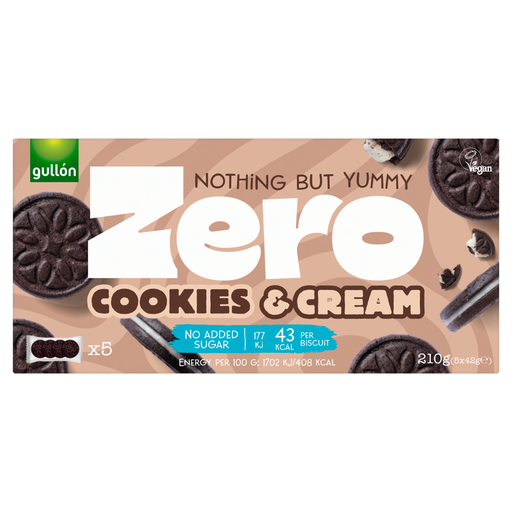
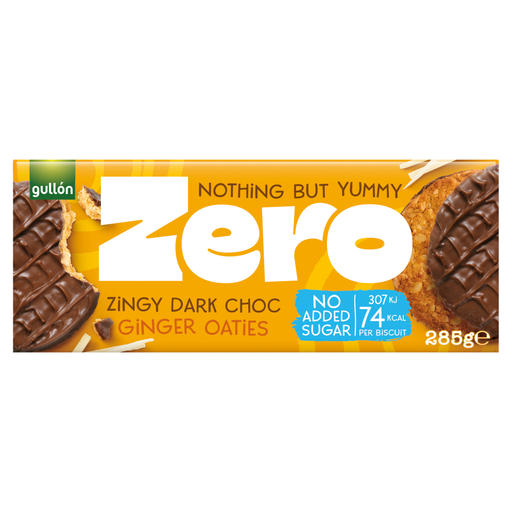
These two Gullón no-added-sugar options have different formats: Cookies and Cream biscuits and dark-chocolate-coated ginger oat biscuits. Compare the precise packs if you are choosing between them for an Easter shop.
 No image available
A cookies-and-cream option for a mixed biscuit selection. The name states no added sugar; check the current pack’s total sugars, carbohydrate, ingredients and allergens before deciding what to serve.
 No image available
For guests who want a dark-chocolate-coated oat biscuit with ginger flavour. Joybuy’s product listing gives 1.0 g sugars, 57 g carbohydrate and 433 kcal per 100 g, and lists maltitol. Its allergen information names milk, oats, soya and wheat, with a ‘may contain nuts’ warning; check the current pack before serving.
Not for the cited belVita claim: its Joybuy listing compares the chocolate-chip biscuits with adult sweet biscuits in the UK and Portugal, excluding chocolate-filled and chocolate-coated biscuits. Compare the total sugars per 100 g on both exact packs if your usual choice is a chocolate digestive.
No. Gullón lists maltitol and 58 g carbohydrate per 100 g for its Slimms Milk Choc Digestives. Check the carbohydrate and ingredients of the exact biscuit, as well as the portion you intend to serve.
Check the current pack’s ingredients, declared allergens and relevant ‘may contain’ wording for that exact biscuit. UK government allergen guidance covers information for both prepacked and loose food; a reduced-sugar claim does not establish allergen suitability.
No. A reduced-sugar claim describes a comparison, while NHS food-label guidance identifies 5 g or less of total sugars per 100 g as low for foods. Check both the stated comparison group and the biscuit’s own per-100 g figure.
For the cited McVitie's and Sainsbury's milk chocolate digestives, Tesco and Sainsbury's advise cool, dry storage and an airtight container after opening. Follow the instructions on the pack you buy.