Hosts comparing sugar figures
A reduced-sugar claim gives you a starting point, but the stated comparison and the sugars per biscuit help you decide what to put on the table.


For a board game night, choose a chocolate biscuit by comparing its sugars per 100g, sugars per biscuit and serving format—not by treating a reduced-sugar or no-added-sugar claim as the whole answer. Sainsbury's lists 1.9g sugars per Nairn's Dark Chocolate Chip Oat Biscuit and 2.1g per Nairn's Chocolate Biscuit Break; their percentage claims use different comparison groups. A conventional biscuit served in counted portions remains an option if a reduced-sugar claim is not essential, while gluten-free needs, allergens and sweeteners call for separate checks.
The useful checks depend on whether the priority is a sugar comparison, a clearly counted serving or a guest's dietary requirement.
A reduced-sugar claim gives you a starting point, but the stated comparison and the sugars per biscuit help you decide what to put on the table.
Look for gluten-free labelling on the exact pack and check its other allergens. Gluten-free status does not tell you how much sugar the biscuit contains.
Compare the nutrition panel, ingredients and serving size rather than assuming a no-added-sugar label settles the question. Diabetes UK notes that polyols contain carbohydrate and calories; anyone adjusting insulin needs individual advice from their healthcare team.
Start with the claim and nutrition panel, then decide how many biscuits to serve and whether the exact pack meets guests' dietary requirements.
| Priority | What to check | Your needs |
|---|---|---|
| Sugar comparison | Read what a percentage claim compares the biscuit with. Compare sugars per 100g for differently sized products, then sugars per biscuit or stated serving. | I want a figure that relates to what I will serve, not just a percentage on the front. Sainsbury's lists 19g sugars per 100g and 1.9g per biscuit for Nairn's Dark Chocolate Chip Oat Biscuits; its Chocolate Biscuit Breaks list 20.5g per 100g and 2.1g per biscuit. Their percentage claims use different comparison groups. |
| Portions | Check the biscuit count, any separate pouches and the nutrition figure for the amount you plan to put out. Sainsbury's lists Nairn's Chocolate Biscuit Breaks as four pouches of four biscuits. | For a long game, I would rather set out a countable quantity and keep the rest sealed. I can use the per-biscuit figure to understand the serving I have offered. |
| Guest requirements | Check gluten-free labelling and the current ingredients and allergen statement separately from the sugar figure. Do not treat a free-from label as a reduced-sugar claim. | If a guest needs a gluten-free biscuit, that requirement comes first—but I still need to check other allergens and sugar. Sainsbury's lists 31.3g sugars per 100g for its Free From Chocolate Digestive. |
| Added sugar and sweeteners | For a no-added-sugar product, read total sugars, carbohydrate, ingredients and serving size. Check which sweeteners the exact biscuit contains. | I may want to avoid added sugar, but I do not want to mistake that wording for zero carbohydrate or suitability for someone else's dietary plan. Diabetes UK notes that polyols can contribute carbohydrate and calories. |
The Nairn's products described in Sainsbury's listings make reduced-sugar claims against different groups of biscuits. The larger percentage alone does not tell you which exact biscuit contains less sugar.
Read each claim's comparator, then use sugars per 100g and per biscuit or serving for the comparison you actually need.
A no-added-sugar claim does not replace the nutrition panel. Diabetes UK notes that polyols contain carbohydrate and calories, which matters particularly when someone calculates an insulin dose.
Check the exact pack's carbohydrate, sugars, sweeteners and serving size. Anyone adjusting insulin should follow individual advice from their healthcare team.
Gluten-free status addresses a different requirement. Sainsbury's lists 31.3g sugars per 100g and 5.2g per biscuit for its Free From Chocolate Digestive.
If both requirements matter, check the exact pack for gluten-free labelling and compare its sugars figures separately.
An open pack makes the number of biscuits served less clear, even when the label gives a per-biscuit figure.
Set out a defined number or use separate pouches where the format suits your guests, and keep the pack available for ingredient and allergen checks.
These references illustrate different packs and labelling checks; a brand or retailer name alone does not establish a biscuit's sugar content.
Sainsbury's lists Dark Chocolate Chip Oat Biscuits and gluten-free Chocolate Biscuit Breaks with reduced-sugar claims and per-biscuit nutrition figures.
Sainsbury's category listing includes Penguin Original and Club Orange multipacks as familiar chocolate-biscuit formats for sharing.
UK retailer listings include Fox's snack-bag and chocolate-biscuit formats relevant to a shared snack table.
Its Free From Chocolate Digestive is a gluten-free example that shows why dietary suitability and sugar comparison need separate checks.
Tesco's chocolate-biscuit category includes a Diablo No Added Sugar Chocolate Cream Cookies marketplace listing.
These options cover a gluten-free oat biscuit and packs labelled around no-added-sugar or zero-sugar choices for the snack table. Compare their exact labels and portions against your guests' needs rather than treating the products as interchangeable.
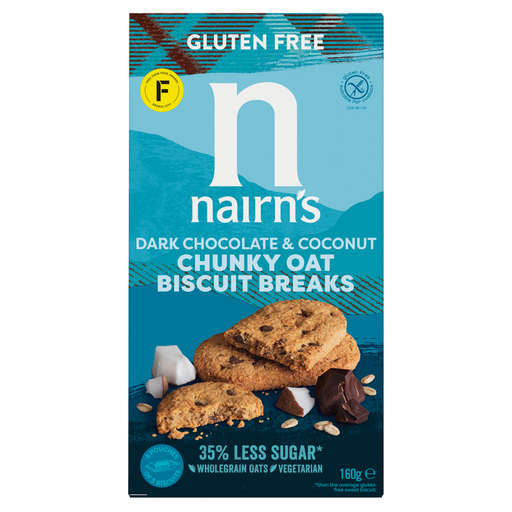 Image unavailable
A gluten-free oat-biscuit option to consider when serving a guest who needs gluten-free food. Check the exact pack for oat suitability and its milk precaution; do not substitute the nutrition figures of a differently named Nairn's Biscuit Breaks product.
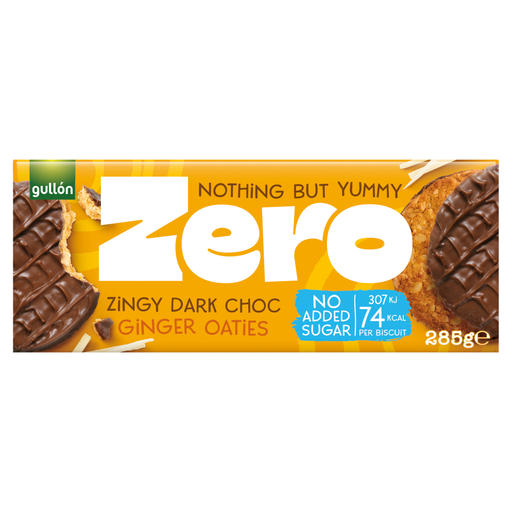 Image unavailable
A dark-chocolate-and-ginger oat-biscuit pack for hosts considering a no-added-sugar-labelled option. Check its sugars, carbohydrate and serving size on the exact pack. Its stated limitations identify wheat, oats, milk and soya, plus a nut precaution, so check the allergen statement before sharing.
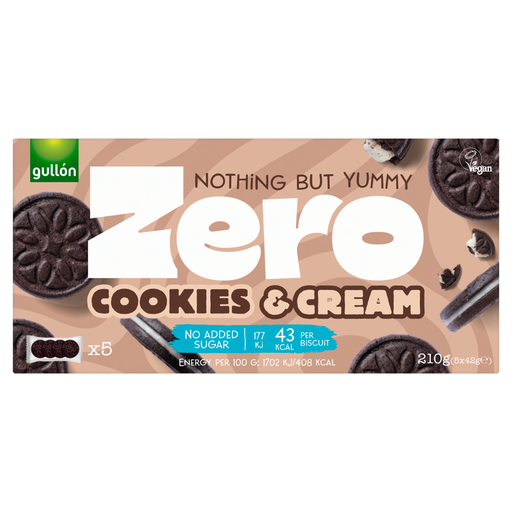 Image unavailable
A cookies-and-cream option whose name carries a no-added-sugar claim. Compare the exact pack's total sugars and carbohydrate rather than relying on the name; its stated limitations identify wheat and soya, with milk and mustard precautions to check before serving.
 Image unavailable
A 97g sandwich-cookie pack to consider if you want this format on the table. Check the current nutrition panel and how many biscuits the pack contains before planning portions; its stated limitations identify wheat and soya as allergens.
No. The wording concerns added sugar; it does not, by itself, state the biscuit's total sugars, carbohydrate or calories. Compare those figures and the ingredients on the exact pack before choosing.
Not when the stated comparison groups differ. The Nairn's Chocolate Biscuit Breaks and Dark Chocolate Chip Oat Biscuits described in Sainsbury's listings use different claim comparators. Read those alongside the listed sugars per 100g and per biscuit.
No. The claim does not replace checking carbohydrate and serving size. Diabetes UK notes that polyols contain carbohydrate and calories and advises people adjusting insulin to seek individual guidance from their healthcare team.
Check the exact pack's gluten-free labelling, ingredients, allergen statement and precautionary wording before serving. A gluten-free biscuit can still contain other allergens: the Nairn's Chocolate Biscuit Breaks listed by Sainsbury's contain milk and soya.
No. Gluten-free status and sugar content answer different questions. Sainsbury's Free From Chocolate Digestive, for example, lists 31.3g sugars per 100g and 5.2g per biscuit, so check the nutrition panel separately.