Parents comparing sugar per snack
A sugar claim is only one part of the choice. Compare the labelled sugars and energy for the amount you plan to serve, whether that is one biscuit or a stated serving.


If you want chocolate chips and an explicit reduced-sugar claim, belVita is one option to examine, but its 30%-less-sugars comparison excludes chocolate-coated biscuits; check the sugars in the portion you would serve. If a chocolate coating matters more, compare a no-added-sugar option’s sugars, energy, sweeteners and allergens rather than assuming its claim makes it suitable for every child or setting.
A sugar claim is only one part of the choice. Compare the labelled sugars and energy for the amount you plan to serve, whether that is one biscuit or a stated serving.
Read the exact pack’s ingredients and precautionary allergen information before offering a biscuit when wheat, milk, soya, oats or nuts are relevant.
A snack served at home and food provided on school premises are different decisions. Check the rules that apply to the setting and its allergen policy; a reduced-sugar claim does not establish permission to provide a biscuit there.
Start with what the sugar claim actually compares, then read the nutrition information for the portion and setting you have in mind.
| Priority | What to check | Your needs |
|---|---|---|
| Sugar claim | Read the stated comparison group and sugars per 100 g. Ocado lists belVita at 16 g sugars per 100 g; its 30%-less-sugars comparison is against adult sweet biscuits in the UK and Portugal, excluding chocolate-filled and coated biscuits. | I want to know what a reduction is measured against, rather than assume it applies to the chocolate-coated biscuit I might otherwise choose. |
| Portion and energy | Compare sugars and energy for the amount offered. Ocado lists 7.2 g sugars and 199 kcal per 45 g belVita serving; Joybuy lists 1.0 g sugars and 433 kcal per 100 g for Gullón Zero Dark Chocolate Ginger Oaties. These are different serving bases. | A lower sugars figure matters to me, but I also want to see what the planned portion contains. |
| Ingredients and allergens | Check the purchased pack for sweeteners, ingredients and precautionary allergen wording. Joybuy lists maltitol, milk, oats, soya and wheat for its Gullón chocolate ginger oaties. | Before offering a biscuit, I need its ingredients and possible cross-contact information to fit the child’s requirements. |
| Serving setting | Establish whether the biscuit will be eaten at home or provided through a school or club. The Department for Education says England’s school-food standards apply to food and drink provided to pupils on school premises; check the setting’s own rules as well. | For a club snack, I need to check the applicable standards and allergen policy instead of relying on a pack claim. |
Ocado states that belVita’s 30%-less-sugars comparison excludes chocolate-filled and coated biscuits. It does not establish a reduction against those products.
Read the comparison wording, then compare sugars per 100 g and per intended portion for the biscuits you are considering.
Joybuy lists 433 kcal per 100 g alongside 1.0 g sugars per 100 g for Gullón Zero Dark Chocolate Ginger Oaties.
Check energy, portion size, sweeteners and allergens alongside the sugars figure.
Sainsbury’s lists 96 kcal and 9 g sugars per bar for the cited Fox’s Rocky Caramel multipack. An individually wrapped bar is not, by itself, a reduced-sugar formulation.
Compare its sugars per bar with the portion you would otherwise serve.
These examples show why the exact biscuit and pack matter more than the brand name alone.
Its chocolate-chip breakfast biscuit has an explicit reduced-sugar comparison.
Its Dark Chocolate Ginger Oaties provide a chocolate-coated, no-added-sugar example containing a sweetener.
The Light One is a reduced-sugar, uncoated Digestive; the milk chocolate Digestive is a separate product.
Its own-label milk chocolate Digestives offer a per-biscuit reference for a coated biscuit, not a reduced-sugar claim.
Individually wrapped Rocky bars illustrate why a portion and a sugar claim are separate considerations.
These products offer different chocolate-flavoured formats for comparing pack claims and portions before an after-school snack. Check the current label for sugars, ingredients and allergens; a product title alone does not establish what an individual serving contains.
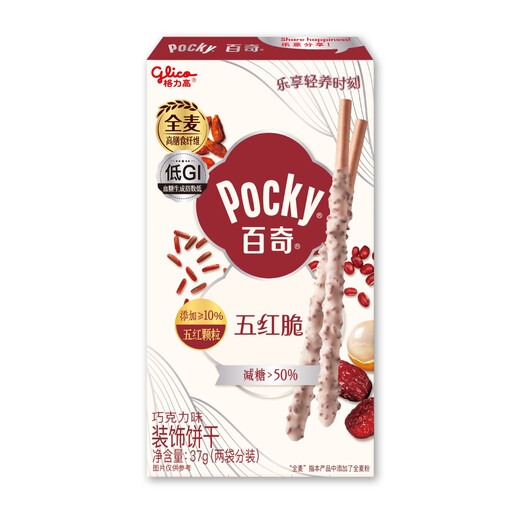 No image available
For an after-school portion, check the sugars and ingredients on this 37 g chocolate-flavoured biscuit pack before serving.
 No image available
If the Zero Sugar wording interests you, read the current nutrition panel and ingredients, then work out the amount you intend to serve from this 97 g pack.
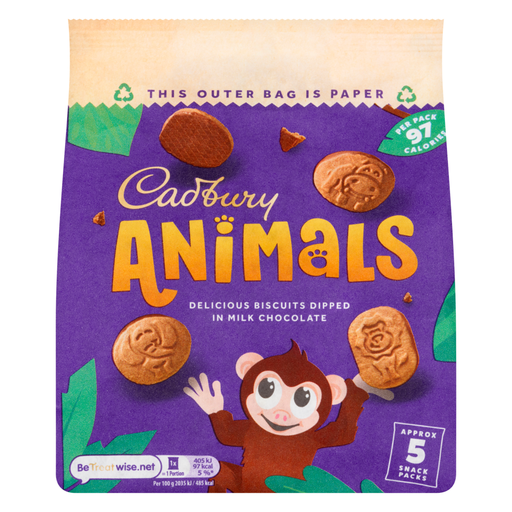 No image available
For a measured biscuit portion rather than a reduced-sugar recipe claim, check the serving information and sugars on this 99.5 g pack.
 No image available
For a chocolate-coated no-added-sugar option, Joybuy lists 1.0 g sugars and 433 kcal per 100 g for this 285 g product. Its listing names maltitol, milk, oats, soya and wheat; check the purchased pack and intended portion.
 No image available
If you prefer a cookies-and-cream biscuit with a no-added-sugar claim, check the sugars, other ingredients and intended serving on this 210 g pack.
No. Ocado lists 7.2 g sugars and 199 kcal per stated 45 g serving for belVita’s reduced-sugar chocolate-chip biscuits. Its reduction is a comparison with a defined biscuit group, so also check the figures for the amount you plan to serve.
No. Iceland describes its Gullón Zero Zingy Dark Choc Ginger Oaties as having no added sugar while also stating that they contain naturally occurring sugars. Read the current nutrition panel and ingredients for the particular pack.
Do not judge allergy suitability from a sugar claim: check the exact pack’s ingredients and precautionary information, and ask the setting about its allergen policy. For food provided on school premises, check the applicable national standards and the school’s rules; the Department for Education says England’s standards cover food and drink provided to pupils on school premises.
No home-serving restriction follows from the cited Department of Health and Social Care guidance, which addresses promotions and placement of certain products in retail stores and their online equivalents. School-food provision is a separate question, and a chocolate biscuit should not be classified under those retail rules without a product-specific assessment.
No. The Department for Education’s September 2026 guidance describes the updated standards as subject to Parliamentary approval, with an expected September 2027 start. For a present-day school snack decision, check the standards currently applicable to the setting.