What should you compare?
Start with the sugar claim and its comparison basis, then check the serving format and the information guests will have when they choose a biscuit.
| Priority |
What to check |
Your needs |
| Sugar claim |
Read the comparator as well as the percentage. Tesco Groceries lists Nairn’s Dark Chocolate Oat Biscuits as 35% less sugar than the average sweet biscuit; Sainsbury’s lists Chocolate Biscuit Breaks as 30% less than the average gluten-free sweet biscuit. Check sugars per 100g and per biscuit or serving. |
I want to tell guests exactly what the lower-sugar claim means. In the Food Standards Agency and Ipsos Northern Ireland’s 2024 grocery-shopping survey of 611 Northern Ireland adults, 49% actively used traffic-light labelling and 35% used nutritional claims as their primary source of nutrition information. Interviews took place from 16 September to 23 November 2024; these figures do not measure conference attendees’ choices. |
| Sweeteners |
Distinguish no added sugar from a comparative reduced-sugar claim. Tesco Groceries lists 0.1 g sugars per 22 g serving for OREO No Added Sugar and states that it contains sweeteners and carries an excessive-consumption warning. |
If I put a no-added-sugar biscuit on a self-service table, guests should be able to see its ingredients and any pack warning before taking it. |
| Allergens |
Check the delivered pack’s ingredient and allergen statements for each product, including cereals containing gluten, milk and soya where relevant. Keep accurate product information available if biscuits are served loose. |
I need guests to identify which information belongs to which biscuit, rather than relying on a broad label such as gluten-free. |
| Portions |
Compare the unit being served: Sainsbury’s lists Chocolate Biscuit Breaks in four pouches of four, while McVitie’s lists 10.2 g sugars for each Penguin Original bar. Do not compare per-bar and per-biscuit figures as though the portions were identical. |
At a busy coffee station, I want a pack format that staff can replenish and a nutrition figure that clearly relates to what each guest takes. |
Relevant brand references
These products illustrate different claims and serving formats; a brand name alone does not establish a biscuit’s sugar content or suitability.
Nairn’s
Tesco Groceries lists Dark Chocolate Oat Biscuits with a comparative sugar claim, while Sainsbury’s lists Chocolate Biscuit Breaks with a different comparator and a four-pouch format.
- The listings give 1.9 g sugars per Dark Chocolate Oat Biscuit and 2.1 g per Chocolate Biscuit Break.
- The 35% and 30% claims refer to different average-biscuit categories; check the ingredients and allergen statements for the particular pack.
OREO
Tesco Groceries describes OREO No Added Sugar Vanilla Cookie Sandwich Biscuits as chocolate-flavour sandwich biscuits with vanilla filling and sweeteners.
- The listing declares 0.1 g sugars per 22 g serving.
- No added sugar is not the same as a comparative reduced-sugar claim. The listing also carries a warning about excessive consumption.
McVitie’s
Penguin Original provides an individual bar format for comparison with the lower-sugar biscuit options.
- The bar format gives organisers a defined serving unit.
- McVitie’s lists 10.2 g sugars per Penguin Original bar and ingredients including wheat, milk and soya; it is not presented here as a reduced-sugar product.
Joybuy biscuit options
These Joybuy listings cover chocolate-flavour sandwich biscuits and oat-based biscuits that may be considered for a conference break. Check each delivered pack’s sugar claim, serving size, ingredients, warnings and packaging before adding it to a catering specification.
 Image unavailable
Oreo Zero Sugar Sandwich Cookies 97g
A sandwich-cookie option for a break where a zero-sugar-labelled product is being considered. Check the delivered pack’s nutrition declaration, ingredients, allergen information and any sweetener warning before serving.
View on Joybuy
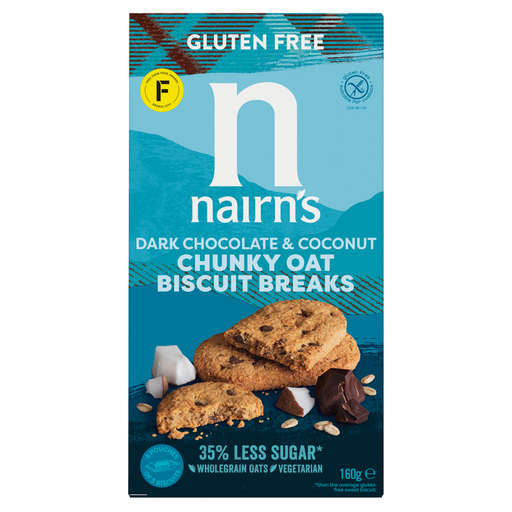 Image unavailable
Nairns Gluten Free Biscuit Breaks Chunky Oats, Dark & Coconut 160g
Consider this oat, dark-chocolate-and-coconut variant when the gluten-free label is relevant to the catering brief. It is a different product from the Nairn’s biscuits discussed above: check this variant’s own sugar claim, portion format and full ingredient information, including its oat-related suitability statement.
View on Joybuy
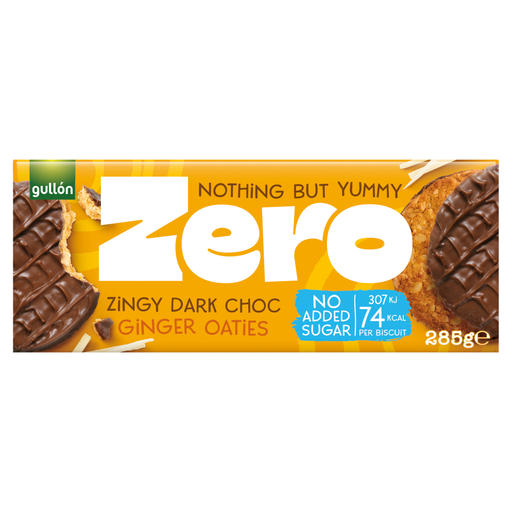 Image unavailable
Gullon Zero Dark Chocolate Ginger Oaties 285g
The dark-chocolate-and-ginger oat-biscuit format offers a different flavour from a sandwich biscuit. Check the pack’s sugars per serving and its sweetener and excessive-consumption warning when planning self-service portions.
View on Joybuy
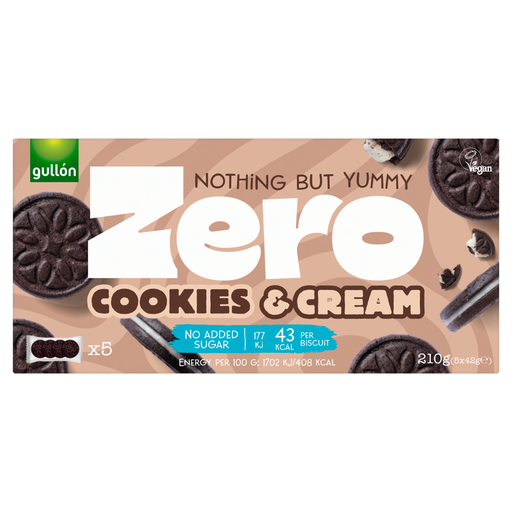 Image unavailable
Gullon Zero No Added Sugar Cookies and Cream 210g
A cookies-and-cream option for organisers considering a no-added-sugar-labelled biscuit. Compare its declared sugars using the actual serving size, and keep its ingredients and excessive-consumption warning available to guests.
View on Joybuy
Frequently asked questions
Does ‘no added sugar’ mean the same thing as ‘reduced sugar’?
No. The Nairn’s listings make comparisons with stated average-biscuit categories, while Tesco Groceries describes OREO No Added Sugar as containing sweeteners. Read the precise claim and comparator, then check sugars for the serving you intend to offer.
What allergen information should be available at a conference biscuit table?
Guests need accurate information linked to the biscuits being served, whether packs remain intact or items are put out loose. GOV.UK’s allergen guidance, dated 17 July 2026, says retail and catering food businesses must provide allergen information for prepacked and non-prepacked food and drink; Food Standards Scotland states the corresponding requirement for Scottish food businesses.
Which ingredients need checking on these chocolate biscuits?
Check each delivered pack rather than treating the options as interchangeable. The product information discussed here identifies oats or wheat and, depending on the biscuit, milk and soya ingredients or a possible milk presence. Keep each ingredient and allergen statement associated with its own product.
Why keep the warning with a sweetener-based biscuit?
Tesco Groceries states that excessive consumption of OREO No Added Sugar may produce laxative effects. GOV.UK food-labelling guidance specifies a warning for foods with more than 10% added polyols. At a self-service break, make the warning on the particular product’s pack available alongside its ingredients.
Is a gluten-free biscuit suitable for every guest?
No. The information for Nairn’s Chocolate Biscuit Breaks also identifies oats, milk and soya and notes that the product is not suitable for people who react to avenin in oats. Check the exact delivered variant and each relevant dietary requirement before describing it to guests as suitable.


