For a weekly shop, choose a sugar-free digestive if the lowest listed sugars matter most and the household is comfortable with sweeteners: the Gullón Zero and Siro listings show less than 0.5g and 0.5g sugars per 100g respectively, and both warn about excessive consumption. McVitie's The Light One offers a reduced-sugar wheatmeal digestive, but its 8.9g sugars per 100g exceeds the NHS guide of 5g or less per 100g for describing a solid food as low in sugar. If you prefer a standard digestive, compare its label and the number of biscuits you plan to serve rather than assuming it meets a lower-sugar aim.
Who is this choice for?
The useful comparison depends on whether your household is prioritising listed sugars, avoiding particular sweeteners or checking allergens.
Households buying digestives regularly
If digestives are a regular part of the shared cupboard, compare total sugars per 100g across packs. A reduced-sugar claim and a low-sugar figure do not mean the same thing: the NHS guide for describing solid food as low in sugar is 5g or less per 100g.
Shoppers considering sugar-free biscuits
A sugar-free digestive may suit a preference for lower listed sugars if sweeteners are acceptable to the household. Read the ingredients and excessive-consumption warning before choosing one as a regular purchase.
Allergy-aware biscuit buyers
Check the current pack for declared allergens and may-contain statements before adding a biscuit to the shop. A sugar-free or reduced-sugar description does not establish whether a product meets an allergy requirement.
What should you compare?
Start with total sugars per 100g to compare different pack sizes, then check the per-biscuit figure, ingredients and warnings for the option you would actually serve.
| Priority |
What to check |
Your needs |
| Listed sugars |
Compare total sugars per 100g, then sugars per biscuit where stated. Tesco Groceries lists McVitie's The Light One at 8.9g per 100g; Sainsbury's lists 1.3g per biscuit. The NHS low-sugar guide for solid food is 5g or less per 100g. |
I want a lower-sugar choice for the biscuit tin, but need to know whether a reduced-sugar claim also meets the low-sugar guide. |
| Sugar-free options |
Compare the sugars line as well as the sugar-free wording: Asda lists Gullón Zero at less than 0.5g per 100g, while Sainsbury's lists Siro at 0.5g per 100g. Read each pack's sweetener ingredients and excessive-consumption warning. |
Lower listed sugars matter most in our weekly shop, provided the household is comfortable with the ingredients and warnings. |
| Allergens |
Read the current ingredients, declared allergens and may-contain statements on the physical pack. Check the exact variety rather than relying on the brand or a front-of-pack sugar claim. |
Before putting biscuits in a shared cupboard, I need to know whether the particular pack meets our allergy requirements. |
| Format and portions |
Check whether the product is a digestive or another type of biscuit, and note the pack size and any per-biscuit nutrition figure. For a standard digestive comparison, Marks & Spencer lists 18.2g sugars per 100g for its 400g Digestive Biscuits. |
I may prefer a familiar standard digestive, or I may want a different biscuit altogether. The label and the number served both matter to that choice. |
Buying pitfalls
-
Treating ‘reduced sugar’ as ‘low sugar’
A reduced-sugar statement compares a product with another reference. Tesco Groceries lists McVitie's The Light One at 8.9g sugars per 100g, above the NHS guide of 5g or less per 100g for describing solid food as low in sugar.
Compare total sugars per 100g across the biscuits you are considering, then use a stated per-biscuit figure when deciding how many to serve.
-
Assuming sugar-free means unlimited servings
The Asda Gullón Zero and Sainsbury's Siro listings both carry warnings that excessive consumption may produce a laxative effect. A low figure on the sugars line does not remove the need to read that warning.
Check the ingredients and pack information before choosing a sugar-free digestive for regular household use.
-
Relying on an online listing for the final allergen check
An allergy decision concerns the exact biscuit and its current labelling, including any may-contain statement. The Joybuy listing for McVitie's The Light One, for example, declares wheat and says it may contain milk.
Check the physical pack received, particularly if you are switching between standard, reduced-sugar and sugar-free varieties.
Biscuit brands and retailer references
These references describe particular listed biscuits and places to compare them; they are not a claim that every product from a brand has the same ingredients or nutrition.
Gullón Zero
Its Digestive Original 400g is a sugar-free route for shoppers comparing total sugars per 100g.
- Asda lists less than 0.5g sugars per 100g for this product.
- The listing warns that excessive consumption may produce a laxative effect.
Siro
Siro Sugar Free Digestive Biscuits are a 300g sugar-free digestive option listed by Sainsbury's.
- Sainsbury's lists 0.5g sugars per 100g.
- Its listing also warns that excessive consumption may produce a laxative effect.
McVitie's
Digestives The Light One is a reduced-sugar wheatmeal digestive rather than a sugar-free option.
- Tesco Groceries lists a 30%-less-sugar statement and 8.9g sugars per 100g; Sainsbury's lists 1.3g sugars per biscuit.
- At 8.9g per 100g, it exceeds the NHS 5g-per-100g guide for describing solid food as low in sugar.
Asda
Asda provides a listing for Gullón Zero Digestive Original Biscuits 400g.
- The listing gives a sugars-per-100g figure and an excessive-consumption warning to check alongside the pack.
- Use the current physical label for an ingredients or allergen decision.
Sainsbury's
Sainsbury's lists both Siro Sugar Free Digestive Biscuits and McVitie's Digestives The Light One.
- The two listings let shoppers compare a sugar-free digestive with a reduced-sugar one.
- Check the current pack when ingredients or allergens affect your choice.
Joybuy biscuit options
These options include one sugar-free digestive and two other Gullon Zero biscuits. The cookies and oaties offer different biscuit formats, so check the name before treating them as substitutes for a digestive.
 No image available
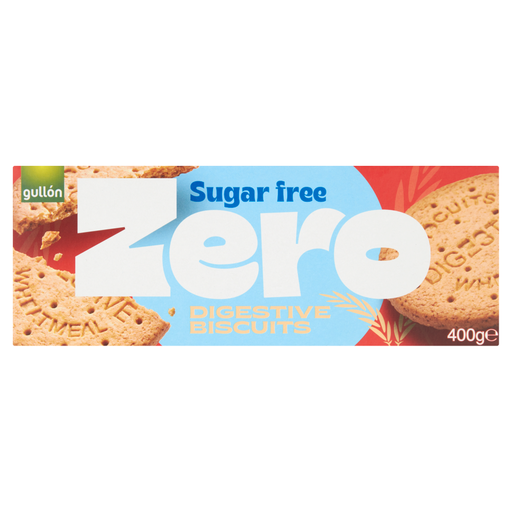
Gullon Zero Sugar Free Original Digestives 400g
This is the digestive-format option for a household considering sugar-free biscuits. Its 400g pack distinguishes it from the other Joybuy biscuits shown here; read the current ingredients and excessive-consumption warning before choosing it for regular use.
View on Joybuy
 No image available
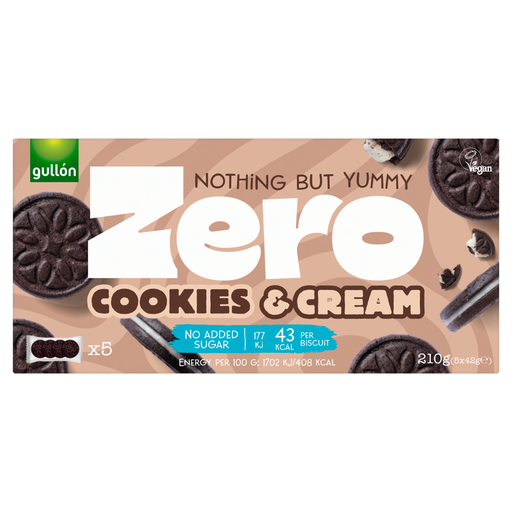
Gullon Zero No Added Sugar Cookies and Cream 210g
Consider this 210g cookies-and-cream biscuit only if a different format from a digestive suits the shop. ‘No added sugar’ is not a substitute for checking the total-sugars line, ingredients and allergens on the pack.
View on Joybuy
 No image available
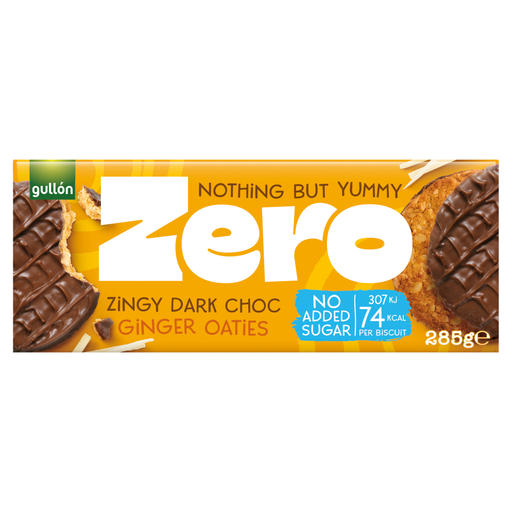
Gullon Zero Dark Chocolate Ginger Oaties 285g
These 285g dark-chocolate-and-ginger oaties are an alternative biscuit format, not a traditional digestive. Compare the current sugars-per-100g figure and ingredient label if you are considering them instead of digestives.
View on Joybuy
Frequently asked questions
Does ‘reduced sugar’ mean a digestive is low in sugar?
No. Tesco Groceries lists McVitie's The Light One at 8.9g sugars per 100g despite its 30%-less-sugar statement. The NHS guide for describing a solid food as low in sugar is 5g or less per 100g, so check the total-sugars figure rather than relying on the comparative claim.
What should I check before buying sugar-free digestives regularly?
Check total sugars per 100g, the sweetener ingredients and any excessive-consumption warning. The Asda listing for Gullón Zero shows less than 0.5g sugars per 100g, and the Sainsbury's listing for Siro shows 0.5g; both listings warn that excessive consumption may produce a laxative effect.
Can I assume a reduced-sugar digestive meets an allergy requirement?
No. Check the exact product's current physical pack for declared allergens and may-contain statements. The Joybuy listing for McVitie's The Light One, for example, declares wheat and says it may contain milk; its reduced-sugar description does not change those declarations.
How does a standard digestive compare in the weekly shop?
Compare the specific pack's total sugars per 100g and how many biscuits you expect to serve. Marks & Spencer lists 18.2g sugars per 100g for its 400g Digestive Biscuits, while Tesco Groceries lists 8.9g per 100g for McVitie's The Light One; those figures describe the named products, not every standard or reduced-sugar digestive.


