Planning food for a longer ride
If you intend to carry biscuits, the total carbohydrate in the amount you will eat matters more to that plan than a sugar claim alone.


Choose a reduced-sugar digestive if you want less sugar in your biscuits and its total carbohydrate, energy, ingredients and portion size fit what you plan to eat. Do not treat a reduced-sugar claim as a ride-fuelling plan: British Cycling says rides up to about 90 minutes generally need no additional fuel, while longer rides call for a deliberate choice of carbohydrate-containing food. Standard and sugar-free digestives offer different formulations, so compare their labels and consider how you would use them.
If you intend to carry biscuits, the total carbohydrate in the amount you will eat matters more to that plan than a sugar claim alone.
You can compare sugars on a per-100g basis, then check energy, total carbohydrate and your usual portion before choosing a recipe.
Wheat or milk information and the sweeteners in a sugar-free recipe may affect which biscuit you choose to carry. Read the current pack before eating.
Start with whether the ride calls for food, then compare biscuit labels on the same basis and work out the portion you would actually eat.
| Priority | What to check | Your needs |
|---|---|---|
| Sugar and carbohydrate | Compare sugars and total carbohydrate separately, per 100g. Check energy separately too; less sugar does not establish less energy. | I want less sugar in a biscuit without confusing its sugar figure with all the carbohydrate I would eat. |
| Ride duration | Consider whether you need food during the ride. British Cycling says rides up to about 90 minutes generally need no additional fuel; for longer activity, University College London Hospitals NHS Foundation Trust advises that a carbohydrate-containing snack may be needed. | For a shorter ride, I may not need to carry a biscuit as fuel. On a longer ride, I want to plan the food I will take rather than rely on its front-of-pack wording. |
| Ingredients | Read the current ingredients and allergen wording. Gullón lists isomalt, maltitol and wheat flour in its Zero Sugar Free Digestives; a sugar-free name does not settle questions about total carbohydrate or tolerance. | If an ingredient matters to me, I want to check the pack before taking the biscuits on a ride. |
| Portion size | Use per-100g figures for like-for-like comparisons, then use per-biscuit figures where supplied or the weight you intend to eat. Check the current pack if online details differ. | How many biscuits would I actually eat? That portion is more useful to my plan than the packet weight alone. |
Joybuy lists McVitie's The Light One at 8.9g sugars, 61.6g total carbohydrate and 464kcal per 100g. These figures describe different parts of its nutrition information.
Compare sugars, total carbohydrate and energy separately on a per-100g basis, then consider your portion.
Gullón lists isomalt and maltitol in its Zero Sugar Free Digestives. The sugar-free description alone does not tell you how the biscuit fits a carbohydrate plan or whether those ingredients suit you.
Check the full nutrition and ingredients against the amount you intend to eat before carrying them on a ride.
Sainsbury's notes that product formulations and ingredients can change. An online listing may therefore differ from the pack you receive.
Read the current pack for nutrition, ingredients and allergen wording before eating.
These named products illustrate different formulations and label details; a brand name alone does not establish that a biscuit is reduced-sugar.
The Light One is a reduced-sugar digestive alongside the brand's standard digestives.
Tesco Digestives 400g provide a labelled standard-biscuit comparison.
Sainsbury's Digestives 400g offer another standard-biscuit label to compare.
M&S Digestive Biscuits are a standard recipe described as containing demerara sugar.
Asda Digestive Biscuits 400g are a standard own-label reference.
Crawford's Digestives 400g are a standard biscuit listed by Iceland Foods.
Zero Sugar Free Digestives offer a sugar-free formulation to consider separately from reduced-sugar biscuits.
These Joybuy options show a sugar-free recipe and a standard digestive for comparing ingredients and portions when planning food for a ride.
 No image available
A sugar-free digestive to consider if you are comparing biscuit formulations. Gullón lists isomalt, maltitol and wheat flour in its Zero Sugar Free Digestives; check the current pack's full nutrition, ingredients and intended portion before taking them on a ride.
 No image available
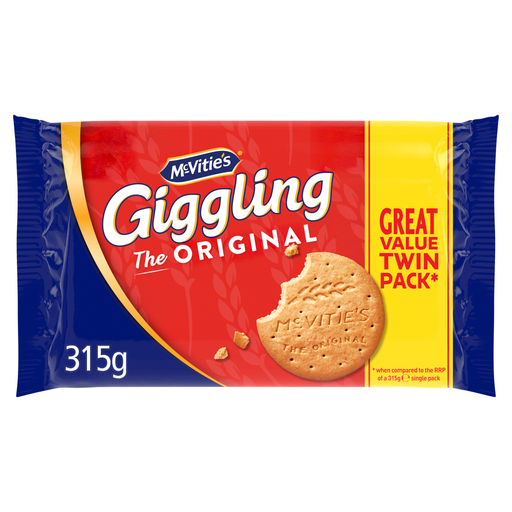
A standard digestive in a 2x315g pack, rather than a reduced-sugar recipe. If you plan to carry some on a ride, use the current pack's carbohydrate and sugar figures for the number of biscuits you intend to eat.
Not necessarily. British Cycling advises that rides up to about 90 minutes generally do not require additional fuel; consider the ride and your circumstances before buying biscuits specifically to eat while cycling.
Use total carbohydrate and the amount you intend to eat, rather than treating “of which sugars” as the entire carbohydrate figure. University College London Hospitals NHS Foundation Trust advises that activity lasting longer than 60 minutes may call for a carbohydrate-containing snack.
No. Gullón lists isomalt and maltitol in its Zero Sugar Free Digestives, and the sugar-free name does not tell you the total carbohydrate in your portion. Check the nutrition panel, ingredients and whether the recipe suits you before taking it on a ride.
Read the ingredients and precautionary allergen wording on the current pack before eating. Joybuy's listing for McVitie's The Light One states wheat and “may contain: milk”; other recipes can differ, and Sainsbury's cautions that formulations can change.
No: a comparison with another biscuit is different from a low-sugar label value. The NHS food-label guide identifies 5g total sugars or less per 100g as low for foods. Joybuy lists McVitie's The Light One at 8.9g sugars per 100g, while McVitie's compares its sugar content with the average digestive biscuit.