Organisers controlling recipe sweetness
Choose a plain oat base with no added sugar when you want the recipe, rather than a flavoured sachet, to determine how sweet the finished bake becomes.


For a school bake sale, choose plain no-added-sugar instant oats when you want to control the sweetness added by the recipe. Compare sugars on the dry-product nutrition panel, check the exact pack’s allergen declaration, and use a clearly labelled gluten-free oat product only where the recipe or school policy requires it.
Choose a plain oat base with no added sugar when you want the recipe, rather than a flavoured sachet, to determine how sweet the finished bake becomes.
Check the current ingredient and allergen declaration on every pack, keep an ingredient record for each batch, and separate allergy-friendly bakes from products containing relevant allergens.
Use a specifically labelled gluten-free oat product where the recipe or school policy calls for it; standard oat products should not be assumed suitable for coeliac customers.
Choose this when: You need quick, individually portioned oats and plan to add measured fruit, spices or other recipe ingredients yourself.
Check first: Compare dry-product figures, as values shown after preparation with milk can be higher; also review the pack’s allergen statement.
Choose this when: The specific flavour is an intended part of the bake and its ingredients fit the recipe.
Trade-off: A flavoured sachet gives you less control over the sweetness and ingredients contributed by the oat base.
Choose this when: A verified gluten-free recipe, school policy or intended customer group requires a clearly labelled gluten-free oat ingredient.
Trade-off: Traditional gluten-free oats are not necessarily a like-for-like replacement for instant sachets, and the rest of the recipe and handling still need checking.
| Priority | What to check | Your needs |
|---|---|---|
| Recipe-controlled sweetness | Look for an unflavoured product and compare sugars per dry serving. Keep prepared-with-milk values separate from as-sold values. | I want to decide how much fruit, syrup, chocolate or icing goes into the finished bake, rather than start with a sweetened porridge flavour. |
| Allergen suitability | Read the exact current pack label for cereals containing gluten and any other declared allergens. Check the whole recipe, not the oats alone. | I need ingredient information for each batch and a clear separation plan if allergy-friendly bakes are offered alongside other items. |
| Batching and portioning | Compare sachet weights with bag sizes, and confirm the amount needed for the planned trays. Recheck availability before relying on a particular product. | For recipe testing, repeatable sachet portions can be convenient; for larger batches, I may prefer oats that can be weighed from a bag. |
Milk, fruit, syrups, chocolate, icing and flavoured sachets can all change the sugars in the final recipe. Prepared-porridge values can also be higher because milk has been added.
Choose a plain oat base, compare dry-product sugar values, and assess sweetness across the complete recipe rather than from the oats alone.
Checked Quaker and White’s instant-oat products include gluten-related allergen information. A gluten-free oat ingredient also does not prevent allergens entering through other ingredients or cross-contact.
Read the current pack statement, use specifically labelled gluten-free oats only where required, and keep ingredient records for every finished batch.
Food-information duties can differ according to how the event is organised and whether the activity is a food business. GOV.UK states that prepacked and PPDS food sold by a food business requires the food name and a full ingredients list with mandated allergens emphasised.
Ask the school or event lead how the sale is being run, retain ingredient information, and provide clear allergen details for each bake.
A widely listed instant-porridge option. Original no-added-sugar sachets are the more relevant format when the recipe needs to control added sweetness.
A plain instant-oat alternative for shoppers looking for no added sugar and an unflavoured oat base in 30g sachets.
An own-label route for shoppers able to compare the current label of the exact instant-oat product against branded sachets.
A useful alternative where the recipe or school specifically requires gluten-free oats rather than a like-for-like instant-oat sachet.
These Joybuy options cover plain oat bases for recipe-controlled sweetness, including an instant-sachet option, a gluten-free baking oat option and a bulk instant-oat bag.
 No image available
Individually portioned sachets can make small recipe tests easier to measure.
Six 38.5g sachets; listed dry-product sugars are 0.4g per sachet. The stated ingredient is Quaker wholegrain rolled oats.
Check the current pack’s allergen statement and confirm that six sachets provide enough oats for the planned trays.
 No image available
This option suits a gluten-free recipe route when every other ingredient and handling step is also controlled.
1kg gluten-free, wheat-free oat flakes; the stated nutrition panel lists 0.4g sugars per 40g portion.
It is not confirmed as an instant-oat product, so its preparation may differ from instant porridge sachets.
 No image available
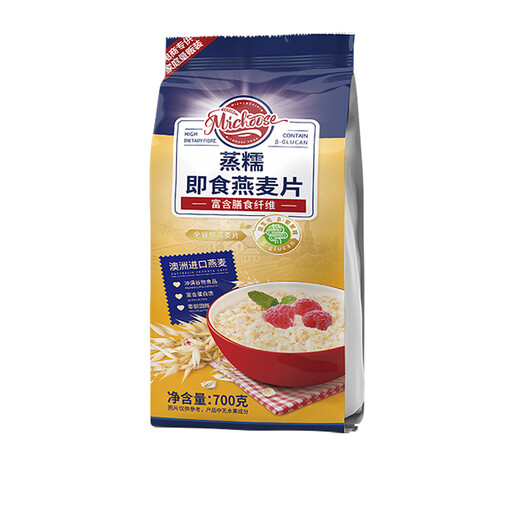
A bulk bag can suit larger baking batches where oats are weighed for each recipe.
700g bag; the description states 100% pure oatmeal and one-minute hot-water preparation.
Check the purchased pack for its allergen declaration and dry-product sugars before using it for a school bake sale.
No. It means sugar has not been added as an ingredient under the product’s claim conditions. Tesco lists Quaker Original sachets as having no added sugar while showing 0.3g sugars per dry 27g sachet; values can be higher when porridge is prepared with milk. Compare the as-sold nutrition panel when choosing an oat base for baking.
Do not assume so. The checked White’s instant oats declare cereals containing gluten, while Quaker Original sachets state that they may contain wheat, barley and soya. If the recipe needs to be gluten-free, choose an explicitly gluten-free product and check every other ingredient and the handling process.
It depends on how the event is organised and whether the activity is a food business. GOV.UK states that prepacked and PPDS food sold by a food business requires the food name and a full ingredient list with mandated allergens emphasised. For limited, infrequent community or charity events that do not require registration, allergen information may not be legally required, but organisers are encouraged to provide it where possible.
Keep the original ingredient packaging or a complete ingredient record for each batch, label current allergens, keep allergy-friendly bakes separate and use separate serving utensils. Anaphylaxis UK also advises cleaning surfaces with hot water and detergent to help reduce cross-contact.