Older adults reducing added sugar
For regular porridge eaters who want a simple base with little or no added sugar. Plain oats or unflavoured oat sachets allow toppings to be chosen deliberately instead of relying on sweetened flavours.


For an older adult aiming to reduce added sugar, plain 100% oats or an unflavoured oat sachet is usually the clearest starting point: check the ingredient list and compare dry values per 100g and per serving rather than relying on flavour names. NHS guidance and Age UK advice also indicate that poor appetite, unintended weight loss, swallowing difficulties, allergies or a prescribed low-fibre diet can change what is suitable, so reduced sugar should not become the only buying rule.
For regular porridge eaters who want a simple base with little or no added sugar. Plain oats or unflavoured oat sachets allow toppings to be chosen deliberately instead of relying on sweetened flavours.
For people and carers who value measured portions and short cooking times. Plain instant sachets can simplify preparation, but milk used in the bowl should still be considered separately.
For anyone who prefers smoother porridge, or has poor appetite, weight loss, swallowing difficulty or a clinical diet. Texture and the overall meal need individual consideration, not just a reduced-sugar label.
Start with the ingredient list, then compare dry nutrition values and choose a format that fits the person’s preparation, texture and dietary needs.
| Priority | What to check | Your needs |
|---|---|---|
| Added sugar and labels | Check whether oats are the only ingredient or whether sugar, syrup or honey appears in the list. Compare sugars per 100g and per dry serving. Treat milk-prepared figures separately. | I want a plain breakfast base and need to see what has been added before choosing flavourings or toppings. |
| Fibre suitability | Check the fibre declaration where available and confirm whether a low-fibre diet has been prescribed. Porridge and oatmeal may be unsuitable for some specified low-fibre diets. | I need porridge that fits the person’s current dietary plan rather than assuming oats suit every medical requirement. |
| Overall intake and texture | Consider texture, chosen milk and additions, plus the total meal where appetite is poor. Seek clinical or dietetic advice if there is unintended weight loss or swallowing difficulty. | A smoother cereal may be easier to manage, but I do not want a reduced-sugar choice to limit suitable energy or nutrition when intake is declining. |
| Preparation | Check portion size, hob or microwave instructions and safe handling of hot liquid. Follow the packet directions for the exact product and do not reheat where the pack advises against it. | I need a breakfast that the person or carer can prepare reliably and safely at home. |
Oat-based products can include sugar, syrup, dried fruit or sweet flavourings. Waitrose lists sugar as an ingredient in its Golden Syrup Porridge Pot, which has 14.5g sugars per 70g pot.
Start with the ingredient list and compare sugars per 100g and per dry serving. Choose plain or no-added-sugar oats when reducing added sugar is the aim.
Nutrition panels may show both dry and prepared values. Milk changes the sugars, calories, fat and saturated fat in the finished bowl.
Compare dry ingredient lists and dry nutrition values when selecting the product, then choose milk and toppings to suit the person’s wider nutrition plan.
Age UK notes that unintended weight loss and poor appetite need attention, and standard restrictive advice may not suit someone trying to maintain or regain weight.
If there is poor appetite, weight loss, swallowing difficulty or an existing medical diet, ask a GP, nurse or dietitian before using general reduced-sugar guidance as the purchasing rule.
Porridge or oatmeal may not fit a prescribed low-fibre diet, while oat products can carry cereal or nut cross-contact warnings.
Match fibre and texture to assessed needs, and read the current allergen statement every time a product is bought or reformulated.
A reference point for traditional rolled oats and plain Oat So Simple sachets, covering longer cooking and a short-cook portioned format.
A traditional oatmeal option for shoppers looking for a plain rather than flavoured porridge format.
A reference for plain organic rolled oats and natural portioned oat sachets.
An organic plain rolled-oat porridge reference where cross-contact information needs particular attention.
A retailer own-label reference for plain instant sachets and flavoured oat products that need close label comparison.
A comparison reference for oat-based breakfast cereals rather than a verified plain-porridge route.
Joybuy product options for plain oat and unflavoured instant-oat breakfast choices, including one oatbran cereal for diets where its fibre level is suitable.
 No image available
A portioned plain-oat option for quick microwave preparation.
The ingredient list contains wholegrain rolled oats only and lists 0.4g sugars per 38.5g dry sachet. The stated microwave method takes 2½ minutes.
Prepared-with-milk values differ from the dry oats. It is not an automatic choice for a prescribed low-fibre diet; check the current pack for allergen information.
 No image available
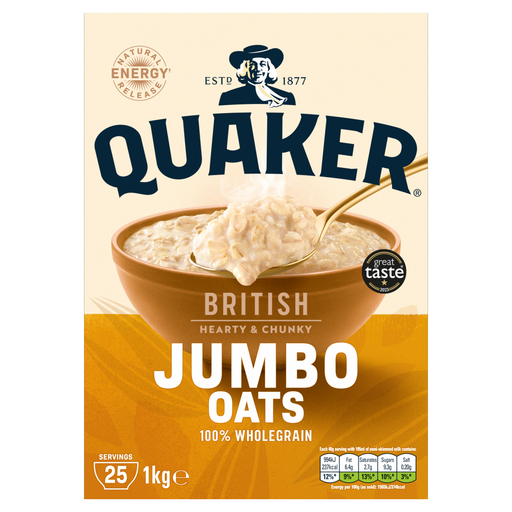
A plain rolled-oat base for households that want control over milk and toppings.
The listing states 100% rolled oats and 1.1g sugars per 100g, with hob and microwave preparation methods.
It may contain wheat and barley. Check its texture against individual dentition or swallowing guidance, and avoid it where a low-fibre diet has been prescribed.
 No image available
A plain organic oat option for choosing additions separately.
The listing states 100% organic wholegrain oat flakes and 0.4g sugars per 40g dry serving, with dry fibre, protein, iron and thiamine information.
Check the current full allergen statement before purchase. Confirm pack instructions and the resulting texture if these are important to the person.
 No image available
A plain wholegrain-oat base for porridge, overnight oats or baking.
The listing states 100% wholegrain oat flakes, with 1.0g sugars and 9.0g fibre per 100g.
It may contain traces of wheat. Confirm preparation instructions and texture on the pack, and do not treat it as suitable for a prescribed low-fibre diet.
 No image available
An oatbran breakfast cereal rather than standard rolled porridge oats.
The listing states 100% oatbran, with 1.5g sugars, 19.4g fibre and 16.0g protein per 100g.
It is not suitable for wheat or barley allergy sufferers according to the listing, and its fibre level makes it unsuitable as a default option for a prescribed low-fibre diet.
No. Check the ingredient list for sugar, syrups or honey, then compare nutrition per 100g and per dry portion. Total sugars can include naturally occurring sugars, and milk raises the figure for a prepared bowl. NHS food-label guidance describes 5g or less total sugars per 100g as low.
Usually, if reducing added sugar is the priority. Plain products such as Quaker Traditional Rolled Oats and Mornflake Stoneground Oatmeal Fine list oats as the only ingredient and 0.4g sugars per 40g dry portion, while Waitrose Golden Syrup Porridge Pot lists sugar as an ingredient and 14.5g sugars per pot.
It may be part of a suitable meal, but the lowest-sugar or lowest-fat option is not automatically the right choice. Age UK advises seeking medical advice where there is unintended weight loss, poor appetite or swallowing difficulty, as people trying to regain weight may need more energy-dense foods.
Not without checking their clinical advice. North Tees and Hartlepool NHS Foundation Trust guidance lists porridge and oatmeal among foods to avoid for specified low-fibre indications, including some bowel and gastrointestinal conditions and preparation for certain procedures.
Follow the exact instructions for the chosen product, use a large microwave-safe bowl where required and handle hot liquid carefully. Check the current package for allergens and recipe changes, especially where milk, nut, wheat or barley allergies are relevant.