What to check before buying
Compare the dry product first, then check whether the format can be prepared safely within the school-day routine.
| Priority |
What to check |
Your needs |
| Dry-cereal sugars |
Compare “of which sugars” per 100g on dry products; read the ingredients list; do not compare a milk-prepared serving with dry oats. |
I want a plain oat base rather than relying on flavour or “no added sugar” wording. The NHS notes that total sugars include naturally occurring sugars, so the nutrition panel and ingredients both matter. |
| Allergen suitability |
Read the current pack for oat, wheat, barley and nut information; check any gluten-free claim on the exact product; follow the school’s lunchbox arrangements. |
My choice needs to work with the pupil’s allergy requirements and the school’s own safety expectations. Gluten-free oats can still be unsuitable for someone with an oat allergy. |
| Preparation at school |
Confirm whether hot water, a microwave, a bowl and supervision are permitted; check cooking and reheating instructions; compare dry portions as well as sachet size. |
I need a format that fits the actual school routine. A pre-portioned sachet may be convenient where preparation is allowed, while a bag of oats needs measuring and a practical cooking plan. |
Joybuy product options
Joybuy product options for plain oats, unsweetened instant sachets and gluten-free oats in a secondary-school packed-lunch scenario.
 No image available
Quaker Oat So Simple Big Bowl Original 6 Pack, 231g
Individual 38.5g sachets can suit school-day portioning where microwave or hot-liquid preparation is permitted.
100% wholegrain rolled oats; 1.0g sugars per 100g and 0.4g per dry sachet.
Check the school’s preparation and allergy arrangements; milk and toppings change the sugars in the prepared meal.
View on Joybuy
 No image available
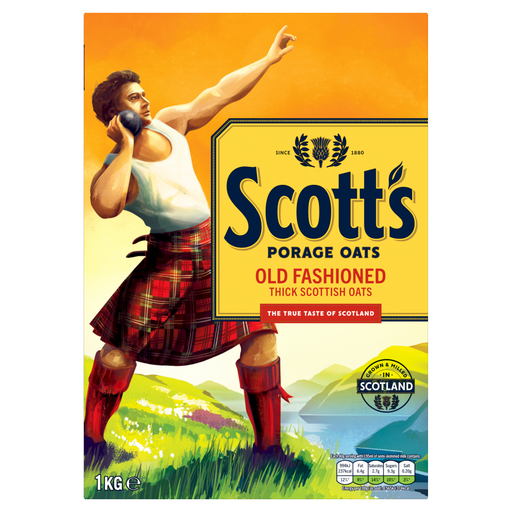
Scotts Porage Oats Old Fashioned Porridge Oats, 1kg
A plain rolled-oat option for households able to portion dry oats and prepare them with suitable equipment.
100% rolled oats; 1.1g sugars per 100g. Directions specify cooking with water or milk on a stovetop or in a microwave.
May contain wheat and barley; check the current pack and the school’s allergy arrangements before packing.
View on Joybuy
 No image available
Flahavan's Organic Porridge Oats, 2kg (2 x 1kg)
A larger plain-oat supply for households that portion oats themselves for school lunches.
100% organic wholegrain oat flakes; 0.9g sugars per 100g.
Contains oats; confirm the pack allergen statement and a workable school-day preparation method.
View on Joybuy
 No image available
Flahavan's Organic Porridge Oats, 1kg
A parent-portioned plain-oat base before milk or toppings are added.
100% organic wholegrain oat flakes; 0.9g sugars per 100g.
Contains oats; check the current pack and whether the school permits safe porridge preparation.
View on Joybuy
 No image available
Morrisons Free From Gluten Free Oats, 1kg
A plain gluten-free oat option where gluten avoidance is specifically required.
100% gluten-free oats; 1.1g sugars per 100g and 0.4g per 40g portion.
Gluten-free does not mean oat-allergen-free; check the current pack and the school’s allergy arrangements.
View on Joybuy
Frequently asked questions
Does “no added sugar” mean the porridge oats are the lowest-sugar choice?
No. The NHS explains that the total-sugars value includes naturally occurring sugars as well as sugars relevant to reducing free sugars. Compare “of which sugars” per 100g and inspect the ingredients: Tesco Groceries lists 1.1g sugars per 100g for Quaker Jumbo Porridge Oats, while Quaker Summer Fruits & Nothing Else lists 6.0g per 100g and includes date juice powder and fruit powders.
Can cooked porridge be sent in a packed lunch for reheating later?
Do not assume that it is suitable. Waitrose & Partners’ instructions for Scottish and Essential porridge oats say not to reheat once cooled or, for Essential, not to store or reheat once prepared. Check the exact product instructions and the school’s facilities and food policy; sending dry oats is a different use case from sending cooked porridge.
Do secondary schools have to consider allergens in food brought from home?
In England, the Department for Education’s statutory allergy-safety guidance says food brought from home, including packed lunches, should be considered in allergy-safety approaches. It says schools should set clear expectations for lunchboxes to be clearly labelled, prepared and stored safely. For Scotland, Wales, Northern Ireland and an individual school’s own rules, confirm directly with the school.
Are gluten-free oats suitable for everyone avoiding allergens?
No. In Great Britain, a gluten-free food must contain no more than 20mg/kg gluten, but the Food Standards Agency states that oats must still be emphasised because oat is an allergen in its own right. A gluten-free product may suit gluten avoidance but is not automatically suitable for an oat allergy or every school allergy plan.
How should an instant sachet be compared with a bag of plain oats?
Use per-100g figures first, then check the actual portion. Mornflake lists 1.0g sugars per 100g and 0.3g per 27g sachet for its Original Instant Sachets, while its Organic Porridge Oats list 1.0g per 100g and 0.4g per 40g portion. The lower per-sachet figure mainly reflects the smaller amount of cereal.


