If reducing free or added sugar is the priority, start with plain oats whose ingredient list contains only oats, then choose toppings separately. Compare dry products on the same per-100g basis: total sugars can include naturally occurring sugars from milk or fruit, so a milk-prepared bowl is not directly comparable with dry oats. Quick oats and plain sachets suit faster breakfasts, while traditional or jumbo rolled oats suit shoppers who value texture over speed.
Who these oats suit
Winter porridge eaters reducing added sweetness
Choose plain oats and compare ingredients before adding flavour. Milk and fruit can contribute naturally occurring sugars to the finished bowl, so their sugars should be considered separately from the dry oat base. NHS guidance distinguishes naturally occurring sugars from free sugars in honey, syrups and similar sweeteners.
Busy households wanting a quick hot breakfast
Smaller-cut quick oats and plain original sachets can make a warm breakfast faster while leaving toppings under your control. Check whether nutrition is shown for dry oats or for a bowl prepared with milk before comparing products.
Shoppers with gluten or cereal-allergy requirements
A low-sugar oat product is not automatically suitable for a gluten-free diet or a cereal allergy. Choose oats explicitly labelled gluten free where required, and read the allergen statement on the exact pack.
What to check before buying
Start with the dry oat base, then compare preparation method, texture and dietary requirements for the bowl you want to make.
| Priority |
What to check |
Your needs |
| Added sweetness |
Compare dry products per 100g; read the ingredient list for sweeteners; distinguish no-added-sugar wording from total sugars. |
I want to control sweetness myself, rather than start with a flavoured oat mix. Milk, fruit, honey and syrups can all change the finished bowl. |
| Speed and texture |
Check whether oats are quick-cooking, traditional or jumbo; follow the stated hob or microwave method; compare portion and liquid instructions. |
A smooth bowl in a few minutes may suit a busy morning, while thicker rolled oats can suit a slower winter breakfast. |
| Gluten and allergens |
Look for an explicit gluten-free label where needed; read may-contain statements; check for wheat, barley, soya or nuts on the individual pack. |
I need an oat product that fits a specific dietary requirement, not simply one with a short ingredient list. |
| Nutrition basis |
Check whether values are for dry oats, a dry portion or a prepared bowl; compare serving sizes in grams; use the same basis across products. |
I want to know what comes from the oats themselves and what is added through milk or toppings. |
Common buying mistakes
-
Comparing dry oats with a serving prepared using milk
The liquid can substantially change the total-sugars figure. Quaker UK lists 0.3g sugars in a 27g dry portion of Oat So Simple Original, compared with 8.4g in its milk-prepared serving.
For an oat-base comparison, use dry per-100g values first, then decide separately whether water, dairy milk or a plant drink suits your bowl.
-
Treating “no added sugar” as the same as low total sugars
Fruit-containing breakfast products can have no added sugar while still declaring more total sugars than plain oats. Dorset Cereals Simply Delicious Muesli lists 14.7g sugars per 100g and includes dried fruit.
Read both the ingredients and the per-100g sugars value. Plain oats are the more direct choice when controlling added sweetness matters more than fruit-and-nut flavour.
-
Assuming all oats suit a gluten-free or cereal-allergy diet
Standard oats can be contaminated with gluten-containing cereals, and individual products may also carry warnings for wheat, barley, soya or nuts. Coeliac UK advises choosing gluten-free oats where gluten-free suitability is required.
For coeliac disease, select oats explicitly labelled gluten free and check the exact pack. For allergies, rely on the product-specific allergen statement rather than the category name.
-
Leaving sweet winter toppings out of the sugar decision
Honey and syrups count as free sugars under NHS guidance, so repeated additions can change the reason for choosing a plain oat base.
Build flavour first with suitable unsweetened additions such as cinnamon or fruit, and treat honey or syrups as deliberate sweeteners rather than sugar-free toppings.
Relevant brand references
Mornflake
A reference for quick-cooking plain oats. Mornflake describes Creamy Superfast Oats as 100% wholegrain oats cut and rolled for faster water or milk absorption.
- Mornflake lists 1.0g sugars per 100g and 0.4g per 40g portion for Creamy Superfast Oats.
- The manufacturer states that this product is not suitable for wheat or barley allergy sufferers because of its manufacturing methods.
Quaker
A relevant option for traditional oats, gluten-free oats and portable plain original porridge sachets.
- Quaker Oat So Simple Original lists wholegrain rolled oats and gives a two-minute microwave method.
- Its dry-oat sugars and milk-prepared serving figures use different bases; the product may contain wheat, barley and soya.
Flahavan's
A reference for organic, wholegrain rolled porridge oats with a traditional creamy texture.
- Flahavan's describes its Organic Oats as 100% organic wholegrain rolled porridge oats and labels them sugar free.
- Check the current pack nutrition and allergen panel when comparing an exact product variant.
Jordans
A relevant reference for organic jumbo-style porridge oats where a more substantial rolled-oat texture is wanted.
- Jordans Organic Porridge lists organically produced wholegrain rolled oats and 1.0g sugars per 100g.
- The product may contain other gluten sources and nuts, and Jordans states that it is made where several nuts are handled.
Waitrose
A retailer own-label route covering standard Scottish oats, oats with added wheat bran and a specifically gluten-free oat option.
- Waitrose Scottish Porridge Oats list wholegrain oat flakes and declare 0.9g sugars per 100g.
- Oats with wheat bran contain wheat bran, while the gluten-free product is a separate format for shoppers who need that claim.
Dorset Cereals
A no-added-sugar muesli alternative for shoppers who prefer a cold or soaked oat breakfast rather than plain hot porridge.
- Simply Delicious Muesli is labelled no added sugar and includes dried fruit, grains and nuts.
- It declares 14.7g sugars per 100g and contains wheat, barley and nuts, so it is not equivalent to plain porridge oats.
Joybuy porridge oat options
These Joybuy options cover plain sachets, traditional rolled oats, gluten-free oats and organic oat bases for a warm winter breakfast where you want to control added sweetness.
 No image available
Quaker Oat So Simple Big Bowl Original 6 Pack 231g
A portioned option for busy winter breakfasts when you want a plain oat base.
The 38.5g sachets contain wholegrain rolled oats and list 1.0g sugars per 100g. The listing gives a 2½-minute hot preparation method with water or milk.
The 12g sugars figure applies to a portion prepared with 245ml semi-skimmed milk, not the dry oats. Check the current pack if gluten-free suitability is required.
Joybuy
 No image available
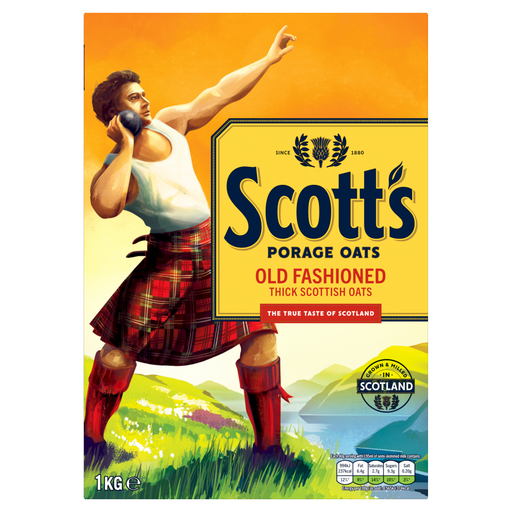
Scotts Porage Oats Old Fashioned Porridge Oats 1kg
A traditional rolled-oat option for shoppers who prefer a thicker warm porridge.
The listing states 100% rolled oats and 1.1g sugars per 100g as sold, with 4–5 minutes on the hob or 2–3 minutes in the microwave.
It may contain wheat and barley, so it is not a confirmed gluten-free option. Prepared-bowl nutrition changes according to whether you use water or milk.
Joybuy
 No image available
Morrisons Free From Gluten Free Oats 1kg
A plain oat option for shoppers who need an explicitly gluten-free and wheat-free product.
The listing specifies gluten-free oat flakes and lists 1.1g sugars per 100g and 0.4g per 40g portion.
If preparation speed matters, check the current pack directions. A gluten-free claim does not establish suitability for every individual sensitivity.
Joybuy
 No image available
Flahavan's Organic Porridge Oats 2kg (2 x 1kg)
An organic plain-oat base for a traditional winter porridge bowl.
The listing specifies 100% organic wholegrain oat flakes, 0.9g sugars per 100g, 8.3g fibre per 100g and 11g protein per 100g.
The product is not a confirmed gluten-free option. Check the current pack if hob or microwave preparation time is important.
Joybuy
 No image available
Flahavan's Organic Porridge Oats 1kg
An organic, plain oat option when you want to choose your own toppings.
The listing states 100% organic wholegrain oat flakes, with 0.9g sugars per 100g and 0.4g per 40g serving.
The listing identifies oats as containing gluten, so it is not a confirmed gluten-free option. Check the current pack for cooking directions if you need a quick breakfast.
Joybuy
Frequently asked questions
Does “no added sugar” mean a porridge product has no sugar?
No. Total sugars on food labels include naturally occurring sugars in milk, fruit and vegetables as well as free sugars, according to the NHS. Dorset Cereals Simply Delicious Muesli, for example, is labelled no added sugar but declares 14.7g sugars per 100g because it contains dried fruit.
Why can an oat sachet show more sugar when prepared than in the packet?
The preparation liquid changes the basis of the nutrition figure. Quaker Oat So Simple Original lists 0.3g sugars in a 27g dry portion and 8.4g in a serving prepared with 180ml semi-skimmed milk; Quaker identifies the prepared-serving sugars as naturally occurring. Compare dry products per 100g when choosing an oat base.
How can plain porridge taste sweeter without table sugar?
The NHS suggests options such as chopped dried apricots, sliced or mashed banana, or gradually reducing the sugar added. Honey and syrups count as free sugars, so they do not fit a strict aim to reduce free sugars.
Are ordinary porridge oats suitable for coeliac disease?
Do not assume so. Coeliac UK explains that standard oats can be contaminated with wheat, barley or rye; choose oats labelled gluten free where gluten-free suitability is required. It also notes that a small number of people may be sensitive to gluten-free oats because of avenin.


