Hosts looking to reduce sugar
McVitie’s lists 12.8g sugars per 100g for Rich Tea The Light One. Its Classic biscuit lists 18.6g per 100g, making the nutrition panel a useful starting point when choosing between those two packs.


For a reduced-sugar rich tea biscuit, McVitie’s Rich Tea The Light One lists 12.8g sugars per 100g, compared with 18.6g for McVitie’s Classic, according to their product panels. A standard rich tea pack is an option when sugar reduction is not required; for guests needing gluten-free biscuits, Schär Gluten Free Rich Tea is a separate option, but it contains milk and eggs. Check the current pack labels against guests’ requirements before serving.
McVitie’s lists 12.8g sugars per 100g for Rich Tea The Light One. Its Classic biscuit lists 18.6g per 100g, making the nutrition panel a useful starting point when choosing between those two packs.
Pack size and approximate biscuit count help when planning how many to put out. McVitie’s describes its 300g Light One pack as containing a typical 36 biscuits; counts are approximate.
Schär Gluten Free Rich Tea is labelled gluten and wheat free, according to its product listing. It contains milk and eggs, so its allergen panel still needs checking against each guest’s requirements.
Compare sugars on the same per-100g basis, then check allergens and how many biscuits the pack is likely to provide.
| Priority | What to check | Your needs |
|---|---|---|
| Sugars | Read “of which sugars” per 100g for a like-for-like comparison, then check the amount per biscuit. McVitie’s lists 12.8g per 100g and 1.1g per biscuit for The Light One, against 18.6g and 1.5g for Classic. | I want to choose between familiar rich tea biscuits without treating “reduced sugar” as “sugar free”. |
| Allergens | Read the current ingredients and allergen panel, including any “may contain” statement. McVitie’s Light One contains wheat and barley gluten; Schär Gluten Free Rich Tea contains milk and eggs. | One guest needs a gluten-free biscuit, but I also need to account for other guests’ allergen requirements. |
| Pack quantity | Check pack weight and any stated approximate biscuit count. McVitie’s gives a typical count of 36 for a 300g Light One pack; Waitrose describes its 250g Rich Tea Fingers pack as approximately 50 biscuits. | There should be enough biscuits to serve, whether I choose standard rounds or smaller fingers. |
| Storage | Check the pack’s storage instructions when buying ahead. McVitie’s and Waitrose advise cool, dry storage and an airtight container after opening. | I may open the biscuits before guests arrive and need a suitable way to store the remainder. |
The two descriptions refer to different nutrients. Tesco labels its own Rich Tea product “Reduced Fat”, while McVitie’s describes The Light One using a reduced-sugar comparison.
Use the sugars figure per 100g on the current nutrition panels when sugar reduction is the deciding factor.
Conventional rich tea biscuits can contain wheat and barley gluten. The Schär gluten-free rich tea product contains milk and eggs, and M&S says its Rich Tea is unsuitable for people with milk, nut or peanut allergy.
Check each product’s current allergen information against the needs of the guests who will eat it.
Department for Education guidance addresses food provided in state-funded schools in England; it does not establish a blanket HFSS classification for every rich tea biscuit served at a private afternoon tea.
If the gathering is at a school, ask the school or caterer to check the current rules and menu requirements for the specific event and product.
Its Rich Tea range provides a direct comparison between The Light One and Classic.
Tesco lists McVitie’s The Light One alongside an own-label Reduced Fat Rich Tea product.
Sainsbury’s lists McVitie’s The Light One and its own standard Rich Tea biscuits.
ASDA’s 300g Rich Tea is a standard biscuit option rather than the reduced-sugar product discussed here.
M&S lists a standard Rich Tea biscuit with 19.3g sugars per 100g.
Waitrose lists McVitie’s The Light One and its own Rich Tea Fingers format.
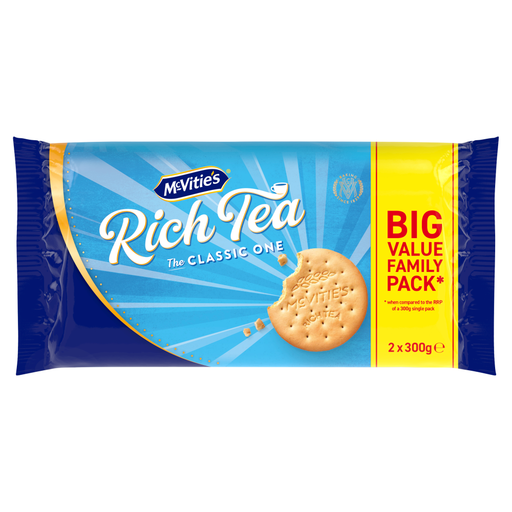
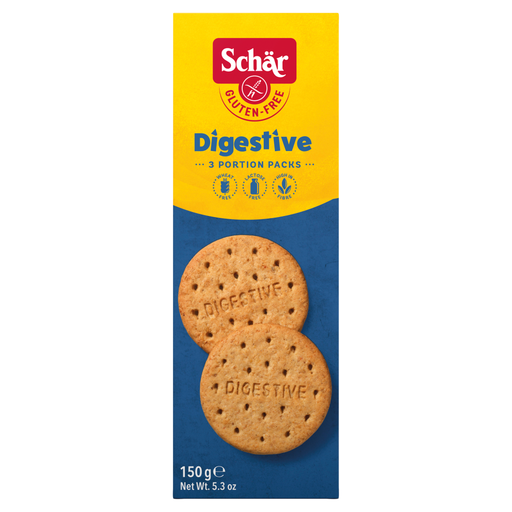
These options cover a standard rich tea twin pack and a gluten-free digestive biscuit. The digestive is not a rich tea biscuit, and neither listing is a reduced-sugar rich tea choice.
 No image available
Two 300g packs provide a standard rich tea option when serving a group, rather than a reduced-sugar selection. Check the current sugars figure and allergen panel if either affects your guests’ choice.
 No image available
This 150g gluten-free digestive pack offers a different biscuit type for the tea table; it is not a gluten-free rich tea or a reduced-sugar rich tea. Check its full current allergen panel for the guests you are serving.
No. McVitie’s lists 12.8g sugars per 100g and 1.1g per biscuit for Rich Tea The Light One. Its “30% less sugar” statement compares the product with a typical semi-sweet biscuit; it is not a sugar-free claim.
McVitie’s gives a typical count of 36 biscuits in its 300g pack. Treat that as an approximate figure when planning for guests.
Not necessarily. Schär Gluten Free Rich Tea contains milk and eggs and may contain lupin and soya, according to its product listing. Read the current label against the particular guest’s allergen requirements.
The Department for Education’s school-food guidance concerns food provided in state-funded schools in England, not a private afternoon tea. It does not establish that every rich tea biscuit has the same HFSS classification. For an event at a school, ask the school or caterer to check the current applicable requirements for the specific product and menu.
Keep them in a cool, dry place and use an airtight container after opening, in line with the storage guidance given by McVitie’s and Waitrose. Check the instructions on the pack you buy.