Runners planning long-run fuel
If you eat or drink carbohydrate while running, choose portions you can count towards an hourly plan and practise using them in training.


For a long run, use a measurable carbohydrate plan rather than choosing reduced-sugar shortbread as your main fuel. World Athletics advises 30–60 g of carbohydrate per hour for events lasting 1–2.5 hours and up to 90 g per hour beyond 2.5 hours; a biscuit’s reduced-sugar wording does not tell you how much total carbohydrate it supplies. Shortbread can remain a planned snack outside the main in-run fuelling window if its portion and ingredients suit you.
The useful choice depends on whether you need fuel during a long run or simply want a biscuit around training.
If you eat or drink carbohydrate while running, choose portions you can count towards an hourly plan and practise using them in training.
Compare sugars with total carbohydrate per serving. A reduced-sugar label addresses a different question from how much carbohydrate a product contributes during a run.
If shortbread is a familiar snack before or after training, check the biscuit’s portion size, carbohydrate, fat and allergens rather than treating every pack as interchangeable.
Decide what you need during the run first; then compare carbohydrate per serving, the number of portions required and whether the food is practical for you to use.
Consider it when: You need to measure and repeat carbohydrate intake during a long run or race.
Plan for: Trialling the product, portion and timing in training; World Athletics recommends practising competition eating before an event.
Consider it when: You want a familiar biscuit outside your main in-run fuelling plan.
Bear in mind: The shortbread labels from Walkers, Dean’s and Waitrose show that each portion brings fat as well as carbohydrate, so count the actual serving rather than relying on the word “shortbread”.
| Priority | What to check | Your needs |
|---|---|---|
| Carbohydrate during the run | Check carbohydrate grams per serving and how many servings your plan would require each hour. World Athletics gives 30–60 g per hour for 1–2.5 hours and up to 90 g per hour beyond 2.5 hours, when it describes a mix of drinks and more concentrated carbohydrate sources. | I need portions I can carry, consume and count repeatedly while running. |
| Sugar and total carbohydrate | Read both figures on the exact pack; a reduced-sugar claim alone does not establish its total carbohydrate per serving. Check the serving size used for each figure. | If I am cutting sugar, I still want to know what the product contributes to my separate long-run carbohydrate plan. |
| Portion and format | Compare carbohydrate and fat per biscuit or prepared serving. Consider whether the product needs mixing and whether the intended number of portions is practical to take on a run. | A familiar snack may suit my routine, but I do not want “one biscuit” to stand in for a measured serving of fuel. |
| Ingredients and tolerance | Read the current pack’s ingredients and allergen statement. Trial the exact product and portion in training before planning to use it during an event, as World Athletics advises for competition eating. | I need to check ingredients that matter to me and find out whether the planned portion works in my training routine. |
That wording does not state the total carbohydrate delivered by a serving or how many servings you would need during a run.
Work out your session’s carbohydrate plan, then compare it with the exact product’s carbohydrate per serving.
Tesco Shorties list 8.4 g carbohydrate per 13 g biscuit, while Waitrose Shortbread Fingers list 12.2 g per finger. Those servings cannot be counted as equivalent, and both also contain fat.
Use the pack’s serving values to calculate what the portion contributes to your hourly plan.
A planned portion and timing still need to work for you while running. World Athletics recommends practising competition eating in training.
Try the exact product and amount on a suitable training run before deciding whether to carry it on race day.
The reviewed shortbread products include wheat and milk, and some carry possible-nut warnings. Ingredients and allergen statements matter for the particular pack you will eat.
Check its current ingredients, allergen statement, serving information and best-before date before use.
These named products provide label examples for comparing portions; brand inclusion does not mean every shortbread in a range has the same recipe or nutrition.
Walkers’ individually wrapped Single Shortbread Finger is a 20 g biscuit that can be counted by portion.
Dean’s Traditional Shortbread Fingers come in a 125 g pack and offer another conventional label for comparison.
Waitrose Shortbread Fingers have nutrition stated per finger, making a planned portion easier to calculate.
Tesco Shorties provide a per-biscuit comparison with all-butter shortbread fingers.
Its shortbread range includes plain shapes and chocolate variants whose per-biscuit values differ.
M&S lists all-butter, chocolate and toffee shortbreads, alongside Made Without Wheat All Butter Shortbread Rounds.
These powders, gels and cream-of-rice product offer carbohydrate-focused options to consider for a training plan; they are not reduced-sugar shortbread. Compare their pack instructions and nutrition per serving with the amount and format you intend to use.
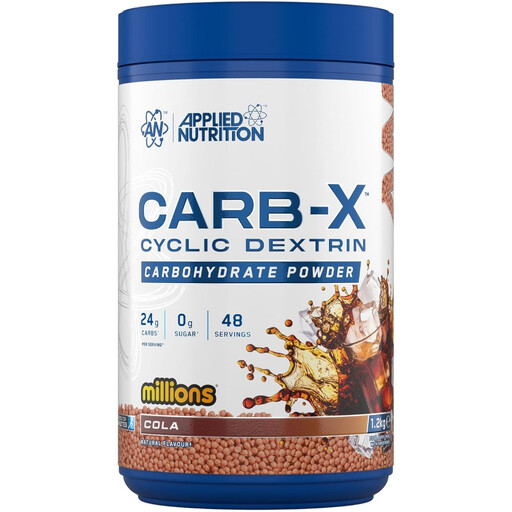 No image available
A powder option if you prefer to prepare a drink rather than carry biscuits. Check the pack’s mixing directions and carbohydrate per prepared serving for your plan.
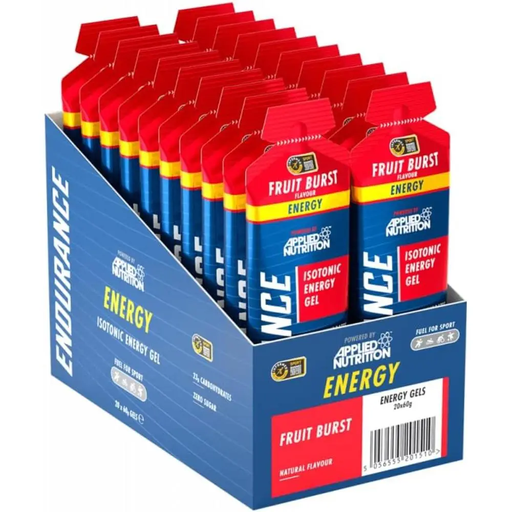 No image available
The gel format offers individual portions to count during a run. Check carbohydrate per sachet and trial the flavour, texture and planned number of sachets in training.
 No image available
This is another individually portioned gel option. Its pack states 20 x 60g; use this variant’s own carbohydrate-per-sachet figure when planning intake, and trial it during training.
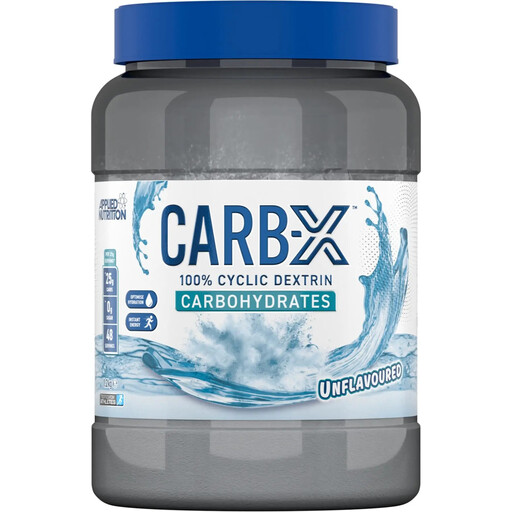 No image available
An unflavoured powder if you want to prepare a drink. It needs mixing before use; check the directions and nutrition for the exact prepared portion you intend to carry.
 No image available
This prepared cream-of-rice option is more suited to planning a portion outside the run than carrying a ready-to-eat snack. Check its preparation instructions and nutrition per serving.
Do not use the reduced-sugar claim as the basis of your main in-run plan: it does not tell you whether each portion supplies enough total carbohydrate. World Athletics describes 30–60 g carbohydrate per hour for 1–2.5 hours and up to 90 g per hour beyond 2.5 hours. Compare measurable portions of the foods and drinks you have practised using in training.
Biscuit sizes and recipes differ. Tesco lists 8.4 g carbohydrate and 3.0 g fat per Shorties biscuit, while Waitrose lists 12.2 g carbohydrate and 5.3 g fat per Shortbread Finger. Count the grams in your actual portion, including the fat that comes with additional biscuits.
It can be a planned snack if it is familiar to you and its portion fits your wider food and carbohydrate plan. Trial the timing and amount in training rather than trying a new biscuit or fuelling routine for the first time on race day; World Athletics recommends practising competition eating.
Check serving size, total carbohydrate, sugars, fat, ingredients and the allergen statement—not just the front-of-pack sugar wording. Use the current physical pack when deciding what to eat or take to an event.
Check the exact product’s current allergen statement against your requirements. The reviewed Walkers, Dean’s and Waitrose shortbreads contain wheat and milk, and some products warn of possible nuts. M&S lists Made Without Wheat All Butter Shortbread Rounds, but that range name does not replace a check for every allergen relevant to you.