Parents comparing sugar claims
If you want a shortbread-style treat with less sugar, check the claim and nutrition on the exact pack. An all-butter recipe or a small pack is not, by itself, a reduced-sugar option.


Choose shortbread as a reduced-sugar after-school snack only if the exact pack makes a relevant claim and its nutrition and allergen information suits the child. All-butter shortbread and smaller packs do not establish a sugar reduction. If another biscuit style is acceptable, compare its label on the same per-100g and serving basis, and check any sweeteners and school or club snack policies before packing it.
If you want a shortbread-style treat with less sugar, check the claim and nutrition on the exact pack. An all-butter recipe or a small pack is not, by itself, a reduced-sugar option.
Check the pack before a biscuit is eaten or shared. Walkers mini shortbread fingers declare wheat and milk and carry a possible-nuts warning; a retailer listing for Gullón Sugar Free Shortbread identifies wheat and milk proteins and says it may contain soya. Those details apply to the named products, not every biscuit in either range.
Ask the school or activity provider about its snack, allergy and food-sharing policy. England’s rules on promoting and placing certain less-healthy foods in shops and online marketplaces, described in GOV.UK guidance, address a different setting.
Start with the kind of biscuit the child will eat, then compare the exact packs rather than treating recipe descriptions or claim wording as a complete nutrition comparison.
| Priority | What to check | Your needs |
|---|---|---|
| Sugar claim | Read the wording on the exact variant. Compare sugars per 100g on the same basis; check what a reduced-sugar claim is comparing. | I want shortbread with a substantiated reduction, not a conventional all-butter biscuit or a smaller pack mistaken for one. |
| Serving size | Check sugars per serving, how many biscuits make that serving and how many will be packed. Nutrition-label sugars and free sugars are not interchangeable measures. | A per-100g figure alone does not tell me the amount in the portion I am packing. For daily context, the NHS gives free-sugar limits of 19g for ages 4–6 and 24g for ages 7–10. |
| Ingredients and allergens | Read the current ingredients, declared allergens and any precautionary statements on the exact pack. Check again when changing size or flavour. | If wheat, milk, nuts or another allergen matters in our household, I need the details for this biscuit—not an assumption based on its brand or sugar claim. |
| Sweeteners | Check which sweeteners are listed and read any on-pack guidance or warnings. Compare the nutrition panel rather than assuming a sugar-free claim settles the choice. | If I choose a sugar-free alternative, I want to understand its ingredients before making it a regular after-school option. A retailer listing for Gullón Sugar Free Shortbread, for example, lists maltitol and isomalt. |
| Where it will be eaten | Check the school or club’s snack and food-sharing policy, as well as the pack’s allergen information. | What I pack for an activity must fit that setting’s rules. England’s retail promotion and placement rules do not tell me what an individual school or club permits. |
Those descriptions do not make a sugar claim. Walkers lists sugar in its mini shortbread fingers, while Dean’s lists 17.1g sugars per 100g for its traditional fingers.
Look for the claim on the exact pack and compare nutrition figures per 100g and for the portion you intend to serve.
GOV.UK guidance and the Food (Promotion and Placement) (England) Regulations 2021 address promotion and placement of specified foods in shops and online marketplaces in England. They do not supply an individual school’s snack policy.
Ask the school or activity provider about snacks and food-sharing before packing biscuits.
A change in sugar claim does not remove ingredient concerns: Walkers mini fingers declare wheat and milk and may contain nuts, while the retailer-listed Gullón Sugar Free Shortbread contains wheat and milk proteins and may contain soya.
Check the current pack for the particular size and flavour you are buying.
The retailer-listed Gullón Sugar Free Shortbread uses maltitol and isomalt. Its sugar-free description alone does not describe its full nutrition or establish a portion for a child.
Read the pack’s nutrition panel, serving information and any sweetener warnings before deciding how much to pack.
These examples help distinguish conventional shortbread and ingredient-related choices; a brand name alone does not establish that a particular pack is reduced sugar.
Traditional shortbread, including mini fingers.
Traditional Scottish all-butter shortbread, including fingers.
A shortbread range that includes all-butter products and Made Without Wheat All Butter Shortbread Rounds.
A shortbread assortment that lists Tesco Finest Scottish Shortbread Fingers and Tesco Shorties.
A shortbread range that includes own-label and Walkers products.
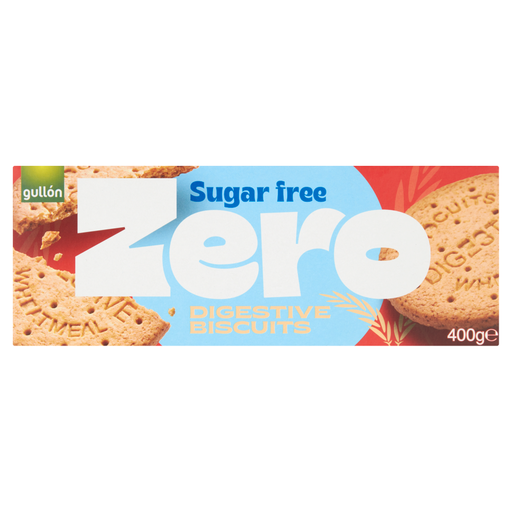
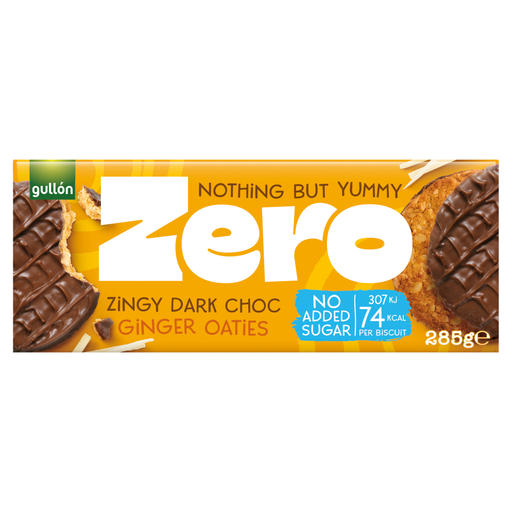
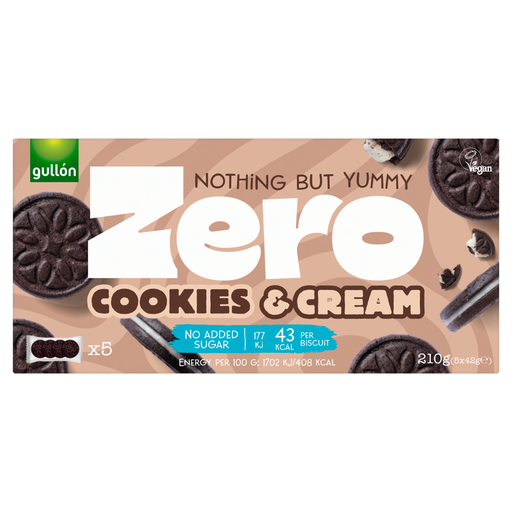
These Gullon Zero biscuits offer other styles to consider if shortbread texture is not essential. They are digestives, oaties and cookies—not reduced-sugar shortbread—so compare the exact pack’s claim, nutrition, ingredients and serving information before choosing an after-school snack.
 No image available
A digestive rather than shortbread, for households open to a different biscuit style. Check the pack’s serving information, allergens and any sweetener warnings before packing it.
 No image available
An oat and ginger biscuit with dark chocolate, rather than a shortbread-style option. Compare sugars per 100g and per serving on the pack, and check its allergens and sweetener information.
 No image available
A cookies-and-cream biscuit rather than shortbread. ‘No added sugar’ is not the same claim as ‘sugar free’ or ‘reduced sugar’; read the pack’s nutrition, portion, allergen and sweetener information for the comparison you need.
No: ‘all-butter’ describes the recipe, not a sugar reduction. Walkers mini fingers list sugar as an ingredient, and Dean’s Traditional Shortbread Fingers list 17.1g sugars per 100g. Check the exact pack for a specific claim and its nutrition information.
The NHS advises no more than 19g of free sugars a day for children aged 4–6 and 24g for ages 7–10. These are daily limits, not biscuit portions. Check the pack’s serving size and remember that its ‘of which sugars’ figure is not necessarily a measure of free sugars.
No. A retailer listing for Gullón Sugar Free Shortbread identifies maltitol and isomalt, wheat and milk proteins, and possible soya. Check the exact pack’s nutrition, serving guidance, allergens and any warnings before choosing it.
Check that school or club’s snack, allergy and food-sharing policy. England’s HFSS promotion and placement rules concern specified foods in retail stores and online marketplaces; they do not set an individual club’s policy for a parent-packed snack.
Some shortbread contains wheat flour: Walkers mini fingers declare wheat and milk. The Food Standards Agency identifies wheat among cereals containing gluten. Check the exact biscuit’s ingredients and precautionary statements rather than relying on the category name.