Home bakers planning portions
If you want to choose a recipe with a stated serving size, Silver Spoon’s reduced-sugar shortbread recipe lists 2.6g sugars per 25g serving and makes 20 biscuits. Follow its portion guidance when using that figure.


For control over sugar per serving, follow a reduced-sugar recipe with stated nutrition and portion the batch as directed: Silver Spoon lists 2.6g sugars per 25g serving. If you buy biscuits instead, check sweeteners, carbohydrates and allergens on the current pack; compare conventional shortbread using sugars per 100g without assuming a lower figure makes it a reduced-sugar product.
If you want to choose a recipe with a stated serving size, Silver Spoon’s reduced-sugar shortbread recipe lists 2.6g sugars per 25g serving and makes 20 biscuits. Follow its portion guidance when using that figure.
If convenience matters more than baking, check the current pack’s sweetener, carbohydrate information and allergens. As Diabetes UK explains, polyol sweeteners still contain carbohydrate and calories; “no added sugar” does not answer every dietary question.
If you prefer conventional shortbread, compare sugars per 100g before looking at portion sizes. Dean’s Shortbread Rounds list 17.1g sugars per 100g, while the cited Sainsbury’s double-chocolate shortbread lists 24.7g per 100g; neither figure is a reduced-sugar claim.
Consider this when: you want a stated sugar amount per serving and are willing to make and portion a batch.
Bear in mind: Silver Spoon’s recipe uses margarine, egg and baking powder rather than the ingredients of a plain all-butter shortbread.
Consider this when: you would rather buy a packet and its current label gives you the information you need.
Bear in mind: sweeteners need checking too; Diabetes UK notes that polyols contain carbohydrate and calories.
Consider this when: you want conventional shortbread and can compare the sugar figures on the packs available to you.
Bear in mind: a lower per-100g figure than another biscuit does not, by itself, make a product reduced sugar.
Start with the kind of biscuit you want, then compare its nutrition on a consistent basis and check the portion you will use.
| Priority | What to check | Your needs |
|---|---|---|
| Comparable sugar figures | Compare sugars per 100g across packs. Then check the weight and sugars figure for the portion you intend to eat; use traffic-light labelling, where present, alongside the nutrition table. | I want to compare different biscuit sizes without mistaking a smaller portion for a different recipe. In a Food Standards Agency and Ipsos Northern Ireland survey of 611 adults interviewed from September to November 2024, 49% said they actively used traffic-light labelling when shopping for food. |
| Home-baking recipe | Look for sugars per stated serving, serving weight and batch yield. Follow the recipe rather than assuming sugar and sweetener can be swapped in equal amounts; Diabetes UK notes that sugar also affects baking texture. | If I bake a batch, I want to know what the stated serving represents. Silver Spoon’s recipe gives 2.6g sugars per 25g serving and a yield of 20 biscuits. |
| Sweeteners and carbohydrate | Read the ingredient list for the sweetener type and the nutrition table for both sugars and carbohydrate. Check the figures against the portion you plan to use. | A no-added-sugar claim alone is not enough for me to assess a biscuit. Diabetes UK explains that polyols, including the maltitol named in Boots’ older shortbread listing, contain carbohydrate and calories. |
| Ingredients and allergens | Check the current pack or recipe for ingredients, declared allergens and any precautionary allergen statement. Do not rely on an older listing for a current formulation. | I need to know whether a particular recipe or packet contains ingredients I must avoid, regardless of its sugar claim. |
A sweetener-based biscuit can still contain carbohydrate and calories. Diabetes UK notes that this includes polyols such as maltitol.
Read both the ingredients and the full nutrition table. If you adjust insulin, seek individual advice from your diabetes healthcare team, as Diabetes UK recommends.
Biscuits of different weights can have different per-serving figures even when a per-100g comparison tells a different story.
Compare sugars per 100g first, then check the stated serving weight or weigh the portion you intend to use.
The cited products differ: Dean’s Shortbread Rounds list 17.1g sugars per 100g, while Sainsbury’s All Butter Double Chocolate Shortbread lists 24.7g per 100g.
Check each flavour’s own nutrition table rather than transferring a figure from the plain version.
Boots’ no-added-sugar shortbread page says its product information was updated in February 2017 and describes temporary online unavailability. It is not a dependable statement of a pack’s present formulation or availability.
Before buying, check the current pack’s ingredients, allergens, nutrition and best-before date.
These examples illustrate different ways to assess shortbread; a brand reference does not establish what is currently on sale.
Its reduced-sugar shortbread recipe is a home-baking example with a stated serving size and sugar figure.
Dean’s Shortbread Rounds provide a conventional packaged-shortbread reference for label comparisons.
An older Boots listing illustrates a packaged, sweetener-based shortbread rather than a current purchasing recommendation.
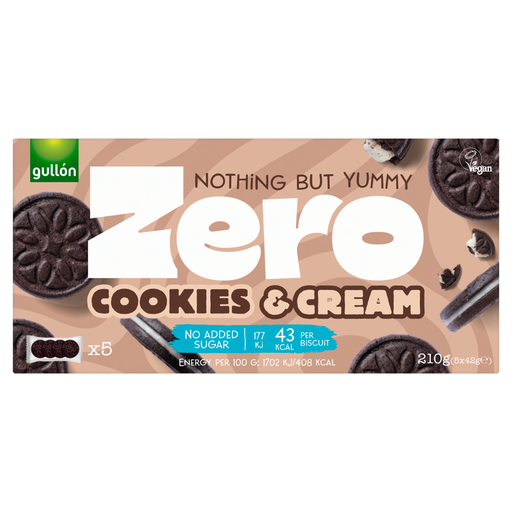
This no-added-sugar cookies-and-cream biscuit is an alternative to consider alongside shortbread, not a plain shortbread option. Use its current packet information for any nutrition comparison.
 No image available
A packaged cookies-and-cream biscuit for shoppers considering a no-added-sugar alternative to home baking. It is not plain shortbread; check the packet’s ingredients, allergens, sugars and carbohydrate per 100g before comparing it with shortbread.
No: the claim alone does not tell you its full sugar or carbohydrate content. Check the current nutrition table and ingredients; Diabetes UK explains that polyol sweeteners contain carbohydrate and calories.
Start with sugars per 100g when comparing different shortbread products. Then check each biscuit’s weight or stated serving to understand the portion you intend to eat.
Do not assume a direct substitution will give the same result. Diabetes UK notes that sugar contributes to baking texture as well as sweetness, so follow a recipe formulated for the change and use its stated nutrition only for the specified recipe and serving.
Check the particular recipe or current packet rather than assuming all shortbread has the same ingredients. The older Boots no-added-sugar listing declares wheat and milk and mentions possible nut traces; Dean’s Shortbread Rounds also list wheat and milk.