
24/7 Customer Support

Free returns

Same-day & Next-day Delivery

Quality Guaranteed

Unlock Your Welcome Offers: FREE Delivery | Up to 80% OFF | Free 30-day JoyPlus trial
Download the APP
Making the switch to a refillable natural deodorant is a commendable step towards a more sustainable and health-conscious lifestyle. However, the growing popularity of these products has led to a crowded market, making it difficult to distinguish genuine quality from clever marketing. As a Joybuy Product Recommendation Officer, my role is to help you navigate this landscape and find a product that truly works for you, without the frustration or wasted expense.
Before you commit, it is important to be aware of a few common pitfalls. Many UK consumers find themselves disappointed when their new deodorant doesn't live up to its promises. Here are the key issues to watch for:
To ensure your choice is a lasting one, focus on a few core parameters. These are the non-negotiable factors that separate a reliable daily staple from a regrettable purchase.
The primary reason many people seek out a refillable natural deodorant is to avoid aluminium salts, which work by blocking sweat ducts. Effective alternatives work differently, typically by neutralising odour-causing bacteria and absorbing moisture.
Look for these ingredients on the label:
A truly vegan deodorant will also be free from any animal-derived ingredients, such as beeswax and will carry a cruelty-free certification.
An eco-friendly deodorant is about more than just the formula; the refill mechanism is just as important. A well-designed system should be both sustainable and user-friendly.
When assessing a refillable deodorant, consider:
Instead of a generic list, we match products to specific needs. Based on our analysis of what UK shoppers are looking for, here is a standout option that aligns with a common user profile.
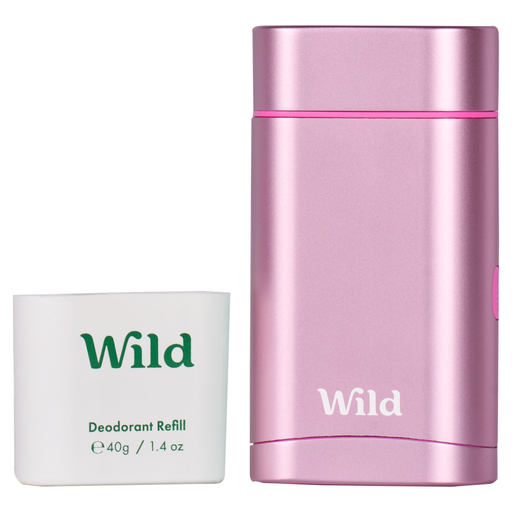
Why This Fits Their Persona: This is ideal for the busy individual who needs reliable performance from the office to the gym, but refuses to compromise on their ethical and environmental values. The sophisticated cherry blossom deodorant scent is subtle and fresh, suitable for a professional setting, while the refill system fits seamlessly into a low-waste lifestyle.
It directly addresses the performance gap with a formula that provides 24-hour odour protection. The ingredient list is transparent and free from aluminium, parabens and sulphates, avoiding the "natural illusion". The refill system is well-established, easy to use and packaged in compostable cardboard.
The formula combines tapioca starch for absorption with sodium bicarbonate for odour control, all in a nourishing shea butter base. It is a certified vegan deodorant and the brand is committed to reducing single-use plastic across its range.
We have compiled a complete, real-time list of products that fully satisfy these strict selection criteria and UK safety regulations.
Here are answers to a few common questions that arise when switching to a natural deodorant.
Some people report a transition period of one to two weeks where they feel they sweat more or have a stronger body odour. This is simply your body adjusting to sweating naturally again after pores are no longer blocked by antiperspirants. This phase is temporary and sticking with it allows the natural deodorant to work as intended.
This comes down to personal preference. Sticks offer a familiar, no-mess application. Balms, which are applied with your fingertips, can feel more nourishing and allow you to control the amount of product more precisely. Both can be equally effective if formulated correctly.
While the initial purchase of a reusable case and first deodorant may be higher than a standard disposable one, the long-term cost is often lower. Refills are typically priced more economically than a full new product, leading to savings over the course of a year while also significantly reducing your plastic waste.